
Language and communication: find your way around more easily
A few prepared words, saved addresses, and a reliable way to find your bearings make getting around abroad easier. For important destinations, keep the full address, an offline map, and a simple phrase for asking directions. This helps you arrange your arrival, accommodation, and meeting points clearly, even when your connection temporarily drops out.
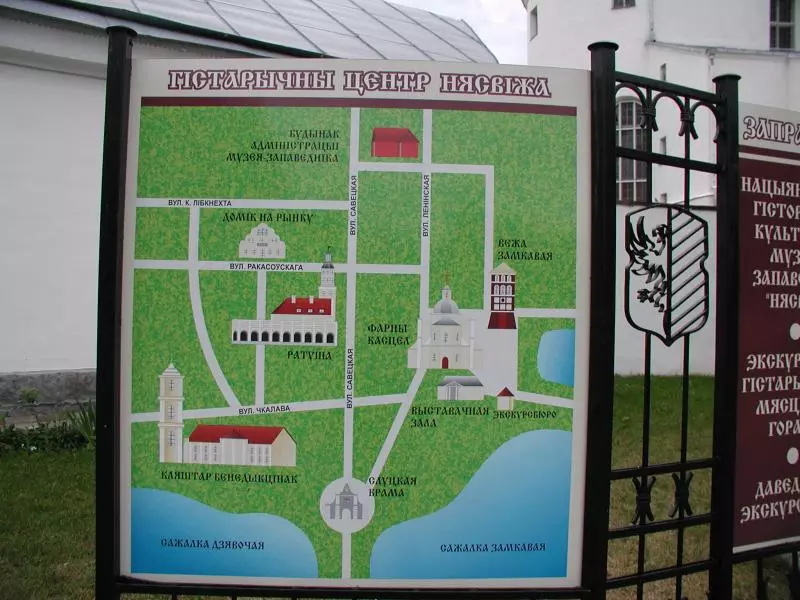 Öffentlicher Lageplan mit kyrillischer Beschriftung.
Photo: Markus Lenk
Quick facts: language and communication on the go
- Save your accommodation address, meeting point, and destination as text you can copy.
- Download map areas and important documents for offline use.
- Make a note of a few words for greetings, directions, food, and asking for help.
- Keep important contact details written down as well as saved in an app.
- Offline maps may not be available in some countries or regions.
- A map used without a connection does not offer all real-time and traffic features.
Get your bearings before setting out
Save the address of your first accommodation, a meeting point, or a station in a format you can show or copy. A street map and brief directions can help even without a connection. For arriving in Vilnius, Prague or Sofia, it helps to save your destination address in advance. Staying near a station or central transport hub can make your first journey easier; the accommodation search offers options by destination.
Save your accommodation’s name in the local script as well, if it differs from the Latin alphabet. A second note with the street name, building number, and a nearby square or landmark can help distinguish places with similar names. An address and phone number written on paper are still accessible if your mobile device runs out of battery.
Navigating different scripts and languages
A few words for greetings, directions, payment, food, and asking for help are more useful than long vocabulary lists. In destinations that use a different script, saving a place name makes it easier to show and recognize. When travelling to Russia, Georgia or Uzbekistan, it can be useful to save an address in the local script as well as in Latin letters.
Short, specific sentences make communication easier: “I’d like to go to this address” or “Could you show me the way on the map?” can be translated in advance and saved as text. When someone gives you directions aloud, look out for easy-to-recognize landmarks such as a station, bridge, or main square. Show the address and ask them to confirm the destination on a map if street names sound similar.
Staying connected and using offline maps
Mobile service, SMS, data, and Wi-Fi are different services; having mobile coverage does not automatically mean mobile data is enabled or included in your plan. Using a SIM or eSIM depends on your device, destination, and provider. It’s best to keep your accommodation’s contact details and important booking information accessible outside messaging and email apps too.
Offline maps can guide you along a route if you have downloaded the entire destination area. A map is therefore best used alongside a written-out address, an agreed meeting point, and an emergency contact.
Stay calm when something is unclear
Show the address, ticket, or map, speak in short sentences, and give the other person time. For a trip to Minsk, having the place name ready is just as useful as it is in other cities. A place name written in both Latin and the local script can help when names are similar or spellings vary. If you haven’t understood directions, ask someone to show you on a map before continuing your journey.
A short offline note can include an address, the nearest stop, the opening hours of a meeting place, and a phone number. For longer journeys, also plan your return trip and an alternative meeting point. You can save these few details as text and show them when needed.
Frequently asked questions about language and communication
Do I need to speak the local language?
A few words prepared in advance, a clear address, and a map can make many everyday situations easier. You can show someone a short translated question as text.
What should I save for offline use?
Your address, map area, booking details, important contacts, and your first connection after arrival. A written-out address can also be used on paper.
How can I prepare for a different script?
Save place names and addresses in the local script as well as in copyable text. This way, a name can be read or shown to someone.
Which features are unavailable on offline maps?
Google Maps does not offer walking, cycling, or public transport routes offline. For driving, real-time traffic information and alternative routes are unavailable; downloads are also not available in all regions.
