
Plan your travel funds and daily budget realistically
A realistic daily budget does not make a trip more restrictive; it makes it easier to manage. Dividing expected expenses into a few categories in advance helps you spot early on where you may need a reserve. You do not need to predict exact prices: what matters is labeling your estimates, setting your own limits, and keeping track of spending while you travel.
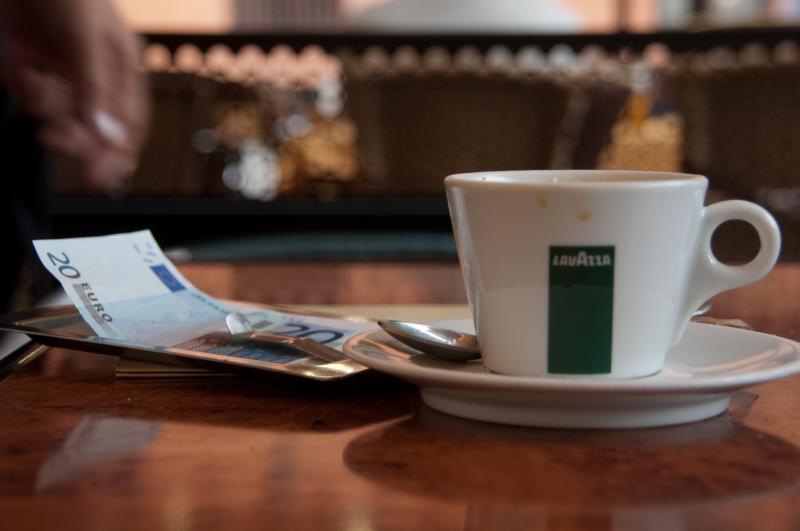 Kaffeetasse und 20-Euro-Schein auf einem Tisch als sichtbares Beispiel für eine Reiseausgabe.
Photo: A.Janßen
Kaffeetasse und 20-Euro-Schein auf einem Tisch als sichtbares Beispiel für eine Reiseausgabe.
Photo: A.Janßen
Quick facts: travel funds and daily budget
- Separate fixed costs, daily expenses, and a reserve for changes.
- Allow for getting there, local transport, food, admission fees, shopping, and possible extra costs.
- Do not plan around a single figure if several people or trip segments are involved.
- Check current prices and fees with the relevant providers shortly before your trip.
- Keep a separate reserve within reach without exposing all your travel funds.
- Brief notes or daily totals are enough to spot discrepancies in time.
Divide expenses into sensible categories
Start with costs that are already set: transport, accommodation, booked admission tickets, or reserved transfers. Then consider daily expenses such as food, local transport, and small purchases. The guidance on Money and payments overview is useful for preparing payment methods and shared expenses together. For your arrival and departure, Getting there and transport and Long-distance buses and ferry connections can help identify potential costs.
A daily budget is not a promise of local prices. Restaurants, markets, and transport vary depending on the location, season, and personal choice. Existing destination pages such as Restaurants in Vilnius or Restaurants in Kaliningrad can provide a concrete point of reference when planning your trip, but they do not replace checking prices locally at the time.
Work with estimates and a reserve
First estimate what you are likely to spend each day, and note which costs have already been paid. Do not simply add a small reserve to your daily budget; keep it separate. It can help cover a delay, an extra journey, a replacement purchase, or an unplanned overnight stay. Reserves, contacts, and Plan B explains how to prepare for such changes.
If you are traveling with others, agree on who will cover which expenses and how you will track shared costs. If you will arrive with luggage, include Transfers and local public transport in your budget early on. If you plan to rent a car, also account for fuel, parking, tolls, and possible contract fees with Car rentals and local driving.
Keep track of spending during your trip
A brief daily note is enough: amount, purpose, and payment method. For shared expenses, also note who paid. This makes it easy to see whether your estimates still hold without having to document every little thing in detail. The guidance on Storing travel documents digitally is useful for keeping booking details, receipts, and important contacts organized and accessible.
Before departure, check which cards, cash reserves, and payment methods you can actually use. Cards, cash, and a backup payment option offers further guidance on splitting up and storing your money separately. Check current exchange rates, fees, and card acceptance shortly before you need them with your own provider or another reliable, up-to-date source.
Adapt your budget to your trip
Your daily budget may look different on arrival and departure days than on quieter days at your destination. So do not plan to spend the same amount every day. If you have a long journey involving Train travel and railway stations or a late transfer, you may need a larger reserve than on a day without a change of location. For overall trip preparation, Practical information is the place to start.
For families or groups, it can help to track shared and personal expenses separately. On a longer trip, do not use up the entire reserve during the first few days. After a few days, check whether actual spending differs significantly from your original estimates, and adjust your plans for the days ahead accordingly.
Even small recurring expenses can add up. So keep at least a rough note of local transport, drinks, fees, and spontaneous purchases. The goal is not to account for every last cent, but to make decisions in time: should you postpone an activity, choose a cheaper connection, or deliberately dip into your reserve?
Frequently asked questions
How do I calculate a daily budget?
Break expected daily expenses into categories and add fixed costs and a separate reserve. Be sure to check current prices for anything with a set cost.
How large should my reserve be?
That depends on your route, trip length, fellow travelers, and the coverage you already have. It should cover a plausible change without serving as a precise rule for every trip.
How can I keep track of expenses while traveling?
A brief daily note showing the amount and purpose is often enough. If you are traveling with others, also note who covered each expense.
Which costs are often overlooked?
Local transport, luggage, parking, tolls, tips, small purchases, and an extra night or journey if plans change.
