
Practical planning for long-distance buses and ferries
Long-distance buses and ferries can conveniently connect destinations over long distances when the entire journey to your destination is planned. It is not just the departure time and ticket that matter, but also getting to the bus station or port, luggage, possible checks, waiting times and onward travel after arrival. Careful planning is especially helpful when several modes of transport are involved.
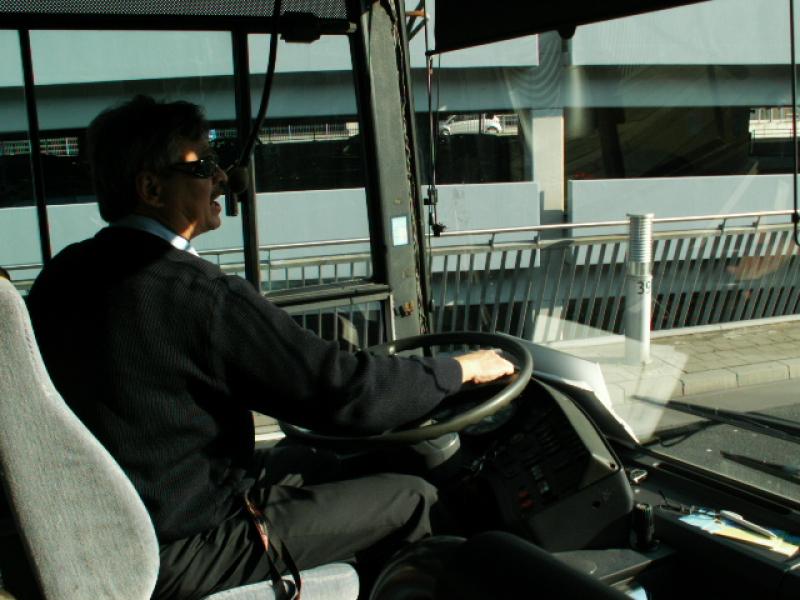 Busfahrer am Steuer eines Reisebusses während einer Fahrt.
Photo: Voyagemedia - RRinnau
Busfahrer am Steuer eines Reisebusses während einer Fahrt.
Photo: Voyagemedia - RRinnau
Quick facts: long-distance buses and ferry connections
- Check the departure location, exact stop, check-in time and the operator’s luggage rules.
- For ferries, the port, whether you are travelling with a vehicle or on foot, and onward travel on land are all part of the journey.
- A ticket may include fixed times, reservations or special conditions for luggage and vehicles.
- For overnight journeys and long trips, keep documents, water, medication and a charger within reach.
- Allow realistic extra time for getting to the departure point, boarding, transfers and the first leg at your destination.
- Check current passenger rights and transport conditions directly with the operator or the relevant authorities.
Plan your departure and arrival together
A bus station may be outside the city centre, while a port may have several terminals or entrances. Note the exact address, the right stop and how to get there from the railway station or airport. Under Getting there and transport, you can plan the first and last parts of your journey together. The travel checklist and itinerary are a good starting point for getting to your departure location.
For a connection with a transfer, note each leg separately: departure, arrival, any change of platform or terminal, and the route to the next vehicle. The guide to train travel and railway stations explains why a tight connection depends on more than just travel time. If you are switching from a plane to a bus or ferry, also plan for air travel and arrival at the airport as a separate part of your schedule.
Tickets, luggage and check-in
Before departure, check the name, date, departure location, destination, seat and any booking reference numbers. On ferries, procedures may differ for foot passengers, bicycles and vehicles. Bus operators have their own rules for suitcases, hand luggage, strollers and bicycles. Luggage and hand luggage can help you distribute your essentials so they remain within reach during the journey.
For a long journey, keep water, essential medication, a charger, documents and a small supply of essentials out of any hard-to-reach suitcase. Keep tickets, addresses and contacts available offline too, following the advice on saving travel documents digitally. For international journeys, also check entry requirements and documents, as transit countries and your destination may have different requirements.
Prepare for ferries and border crossings
A ferry journey includes a stop at a port. Check when you need to be at the terminal, whether check-in closes at a specific time, and where to go or how to continue your journey after arrival. If you are taking a vehicle, check its documents, dimensions and reservation, as well as the operator’s instructions. The official overview of passenger rights is a useful starting point for bus passenger rights; different rules may apply to ferries depending on the route.
If you have bought separate tickets for different legs, do not assume that the next operator will take responsibility if you miss a connection. Extra time, contacts and a plan B can help you prepare an alternative in case of a delay or an additional overnight stay. A second payment method can also be useful if plans change unexpectedly; see Cards, cash and a second payment option.
In case of a delay or cancellation
Keep your ticket, booking reference, messages from the operator and any relevant receipts. First, ask the transport company about your specific onward travel arrangements and record the information you receive. If you arrive late, having a saved address and a transfer arranged in advance makes it easier to find your way. The advice on transfers and local public transport is useful for the first leg at your destination. The advice on language and communication can help if you need to ask questions in another language.
The key steps for check-in, luggage, documents and extra time can be brought together in the Practical information. This turns a long bus or ferry journey into a clear itinerary from start to finish.
Transfers, buffer time and onward travel
For a journey involving a bus and a ferry, plan each transition as a separate leg. Allow time between arrival and departure for luggage, getting to the next terminal, checks and possible delays. A tight connection may work on paper but leaves little room for disruption. If you arrive later than expected, having an available transfer or nearby place to stay is a useful backup.
Before departure, save the departure location, boarding deadline, luggage rules and the transport company’s contact details. For international journeys, check documents and transit requirements alongside your ticket. If you are travelling with a bicycle, stroller or vehicle, check the required registration separately from your standard passenger seat. This helps avoid surprises at the terminal.
Take the same care when planning your return journey as you do for the outward trip. After arriving by ferry, the port may be a long way from the city centre; after a bus journey, the destination station may be outside the area where you are staying. An offline address, a second payment option and a plan for the last mile make onward travel manageable even with a weak connection. Saving an alternative connection makes it easier to decide what to do if the original plan changes at short notice, and avoids unnecessary stress on the way.
Frequently asked questions
How early should I arrive at the bus station or port?
It depends on the operator, route, terminal and luggage. Follow the details on your ticket and the operator’s latest guidance. Allowing extra time to find your way around and board is advisable at large terminals.
What should I pack in my hand luggage for a long journey?
Keep your ticket, ID, money, medication, charger, water and destination address within reach during the journey.
What should I bear in mind if my onward journey is booked separately?
Check whether the tickets are valid independently of one another, and have an accessible alternative in mind in case of delays.
Where can I find the latest rules for buses and ferries?
Check with the transport company, terminal and relevant official authorities. General advice based on other travellers’ experiences does not replace the conditions for your specific connection.
