
Prepare for Transfers and Local Public Transport
After arriving, the most difficult part of a journey often begins: getting from the airport, train station, port, or bus station to your first address. Planning your transfer in advance takes the pressure off this moment. It is not just about choosing the right mode of transport, but also about the meeting point, luggage, time of day, ticket, payment options, and a clear alternative.
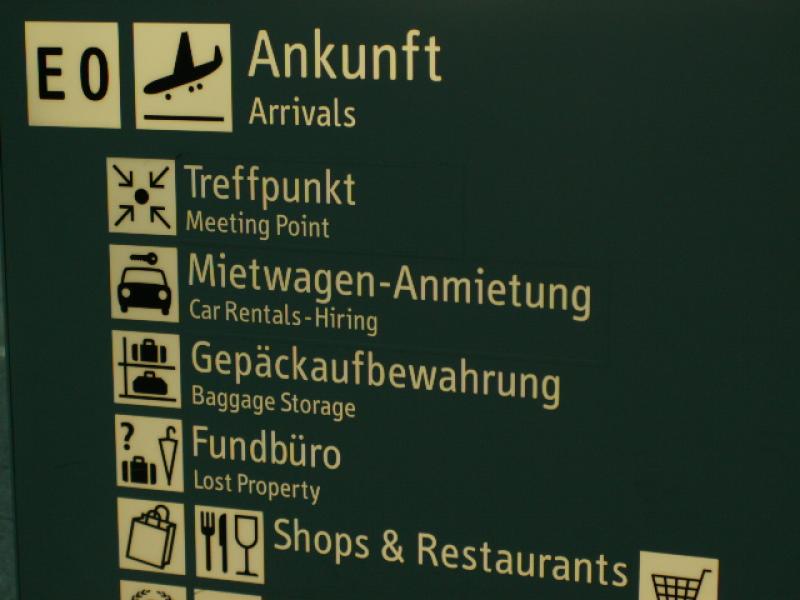 Flughafenschild mit Ankunft, Treffpunkt, Mietwagen-Schalter und Gepäckaufbewahrung.
Photo: Voyagemedia - RRinnau
Flughafenschild mit Ankunft, Treffpunkt, Mietwagen-Schalter und Gepäckaufbewahrung.
Photo: Voyagemedia - RRinnau
Quick facts: Transfers and local public transport
- Note down the exit, stop, meeting point, and destination address in the local spelling.
- Plan the journey from your arrival point to your first address as a separate route.
- Check how to buy tickets, which type of ticket you need, and how you can pay before you arrive.
- A direct route may be more practical if you have luggage, children, or limited mobility.
- For late arrivals, include an alternative you can access in your preparations.
- Check that schedules, stops, and operating hours are up to date shortly before departure.
Break the first leg into individual steps
Start with the place where you will actually arrive. An airport may have several terminals, a train station several exits, and a port several berths. For the entire journey to your first address, the information under Getting there and transport is helpful. If you are arriving by plane, Air travel and arriving at the airport offers additional advice on preparing for luggage, finding the exit, and continuing your journey.
Write down the sequence in short steps: collect your luggage, find the exit, get to the meeting point, buy or show your ticket, board, and cover the final stretch to your destination. The Travel checklist and schedule can help you organize these steps in advance. At a train or bus station, it is a good idea to save the exact station, not just the city name.
Choose transport to suit your situation
Public transport can be inexpensive and straightforward, but may involve an extra walk or several transfers. A taxi or pre-booked transfer can be helpful if you have a lot of luggage, arrive late, or are unfamiliar with the area. The information on long-distance buses and ferry connections shows how important the departure point, terminal, and connections are for longer journeys. If you plan to drive yourself, make sure you have answered the questions on Car rental and getting around locally before you arrive.
For train journeys, Train travel and railway stations can help you assess platforms, exits, and connections. There may be long distances to cover between an airport, train station, and local transport. So allow extra time for luggage, finding your way, lifts, and locating the right exit.
Prepare your ticket and payment
Check whether you need to buy a ticket in advance, can get one from a machine, or can purchase one directly from the driver. Also save your route and the name of your destination stop offline. If you keep several payment methods separate, Card, cash, and a second payment option can help you prepare. Even so, check the specific services and local conditions shortly before your journey.
Make sure you can access the address, meeting point, and important booking details even without mobile service. Saving travel documents digitally explains how to keep the most important information stored elsewhere as well. For unexpected changes, see Backups, contacts, and a plan B.
Late arrivals and communication
If you arrive in the evening or at night, check whether your planned connection will still be running and where the safe meeting point is. Save the address in more than one spelling and keep a short note with your destination, stop, and contact details. The advice on Language and communication can help you prepare place names and questions about directions.
If you are travelling with children, a lot of luggage, or limited mobility, also check whether there are lifts, ramps, places to sit, and short routes. If someone is picking you up, agree on an easy-to-recognize meeting point and a way to get in touch if your arrival is delayed. This makes the first leg easy to follow even if your original connection changes.
When changing between two terminals or stations, take both the distance and the wayfinding into account. A photo of the exit or a distinctive meeting point can help when arranging a pickup. If you are travelling in a group, also agree on whether everyone will continue together or meet at a designated spot.
If a connection is cancelled, stick to a plan that works without a frantic search: a contact person you can reach, an alternative route, and enough time in reserve. Staying safe on the go offers additional preparation tips for unexpected situations. The six topics in Practical information can be combined to create a personal arrival plan.
Frequently asked questions
What should I save for the first leg of my journey?
The exit, stop, meeting point, destination address, route, ticket information, and an alternative you can access.
Is a taxi always the easiest solution?
Not necessarily. The key factors are luggage, time of day, distance, cost, availability, and the terms of the particular service.
How much extra time should I allow after arriving?
It depends on the terminal, luggage, route, and mode of transport. Allow time not only for the journey itself, but also for finding your way and possible delays.
What helps if I have no mobile service?
An address, route, ticket, and contact saved offline, plus a short note about the next leg.
