
Culture in Bulgaria: Cities, Monasteries and Coastal Towns
A cultural trip through Bulgaria works well when cities, monasteries and the coast are chosen as a handful of easily reachable stops rather than as the longest possible list. Sofia is a good starting point for capital-city life, churches and museums. Plovdiv combines ancient traces with a lived-in old town, while Nessebar brings history and the Black Sea together. Combining these places according to the time available avoids long journeys and leaves room for markets, cafés and walks.
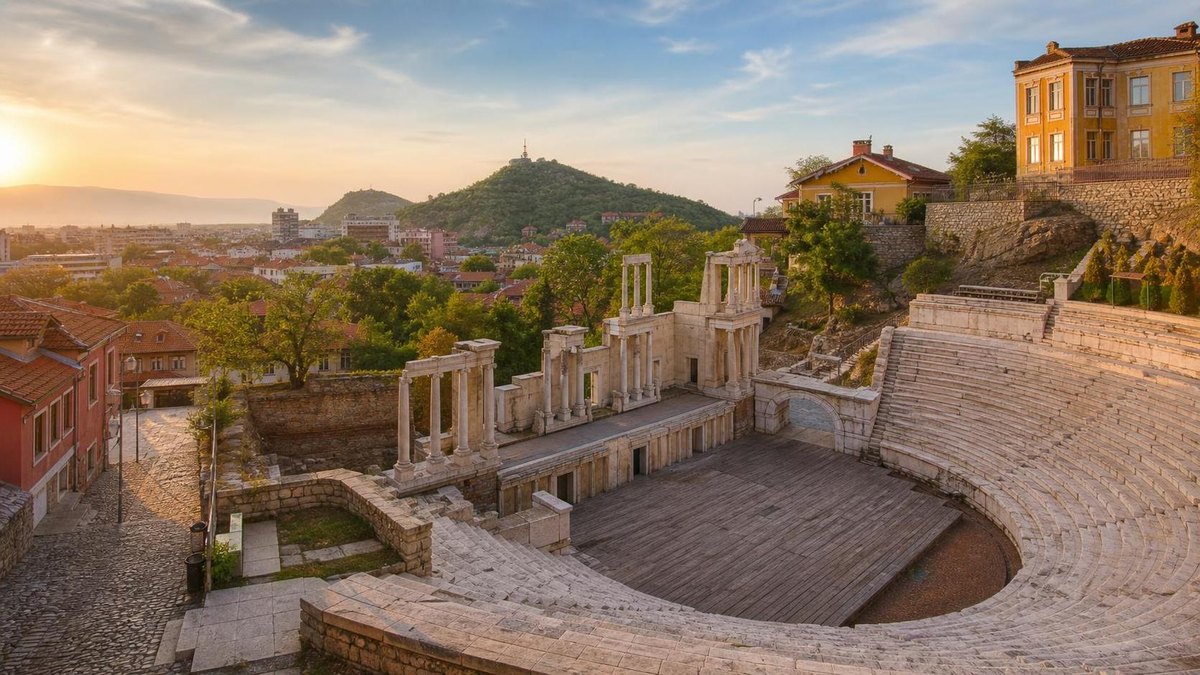 Symbolisches KI-Bild eines römischen Theaters mit Altstadthäusern und Hügeln in Plovdiv.
Photo: KI-generiert für Max-TD
Symbolisches KI-Bild eines römischen Theaters mit Altstadthäusern und Hügeln in Plovdiv.
Photo: KI-generiert für Max-TD
Quick facts: Culture in Bulgaria
- Sofia, Plovdiv and the Black Sea coast offer distinct historical and cultural experiences.
- Monasteries are religious places; visitors should pay particular attention to clothing, quiet and house rules.
- The Roman Theatre of Plovdiv and the historic city of Nessebar are among the country’s most notable cultural destinations.
- An itinerary covering two or three regions is usually more relaxing than a tour with a different overnight stop every day.
- Coastal towns are especially well suited to combining a city visit, time at the beach and an evening stroll.
- For museums, monasteries and events, check the conditions directly with the relevant operator.
Combining Sofia and Plovdiv thoughtfully
Different eras lie close together in Sofia. Alexander Nevsky Cathedral, the city centre and collections on the country’s history can be combined with a leisurely exploration on foot. If you are planning to spend more time in the capital, consider visiting Alexander Nevsky Cathedral and the National Museum of History separately rather than squeezing both into a packed day. Plovdiv has a different feel: the Roman Theatre, its hillside setting and its older houses give the city a more intimate rhythm. Taking breaks in the old town or the Kapana district is often more appealing than following a tightly packed sightseeing schedule.
For a first trip, a good order is Sofia – Plovdiv – the coast. The tour of Bulgaria offers further ideas. Those with a stronger interest in religious architecture and scenery can combine the capital with the Boyana Church and then plan more time outside the big cities. The number of places matters less than whether city visits, longer journeys and quiet evenings suit your own pace of travel.
Monasteries, history and respectful visits
Bulgarian monasteries are often visited for their architecture, murals and mountain settings. However, they remain places of faith and everyday life. Shoulders and knees should be covered during a visit; conversations and photography should be handled discreetly, and restricted areas respected. If combining monastery visits with hikes or drives, allow enough time for the journey, parking and a leisurely walk around the site. A general cultural itinerary does not need to stop at every attraction: one well-chosen monastery or historic town can leave a stronger impression than several rushed stops.
For places with internationally recognised cultural heritage, the UNESCO information on Nessebar provides a reliable overview of their historical significance. It does not replace on-site information about access or events, but explains why the peninsula—with its church ruins and dense townscape—deserves a stop of its own. Sozopol offers a different emphasis: there, the old town, harbour and coast come together more closely than in the country’s larger cities.
Coast, small towns and regional cuisine
The Black Sea coast is not just for beach holidays. In Varna, a port city, museums and urban life come together. Balchik is better suited to a quieter day on the coast, with its garden and palace complex. Those rounding off a trip in the southwest will find wine, sandstone scenery and narrow streets in Melnik. Regional cuisine is best discovered where a market visit or a simple restaurant fits naturally into the day; there is no need for a long, dedicated detour.
Planning the route and overnight stays
For a week, two bases plus one overnight stop along the way are usually enough. With more time, Sofia, Plovdiv and a coastal region can be combined at a relaxed pace. A rental car offers flexibility for smaller towns, but for a city break, trains, buses and walking may be more convenient. Before booking, consider the accommodation’s location, arrival time and distances to planned visits together. For events, public holidays or religious services in particular, check the official information from the relevant institution so that a cultural outing does not turn into an unnecessary detour.
Frequently asked questions about culture in Bulgaria
Which cities are suitable for a first cultural trip to Bulgaria?
Sofia and Plovdiv complement each other well: the capital offers churches, museums and city life, while Plovdiv has Roman remains and a compact historic atmosphere. Add Nessebar or Varna for a coastal stop.
How many places can you fit into a week?
Two or three regions are usually enough. That leaves time for sightseeing, breaks and unexpected delays instead of spending long hours on the road every day.
What should you wear when visiting a monastery?
Modest clothing that covers the shoulders and knees is a safe choice. Visitors should also follow the guidance of the religious community at the site.
Can you combine culture in Bulgaria with a stay by the sea?
Yes. Nessebar, Sozopol, Varna and Balchik combine historic sites or museums with the coast, harbours and walking routes along the Black Sea.
