
Experience history and memorial sites thoughtfully
Memorial sites and historical places call for a different kind of attention than an ordinary viewpoint. They recall political upheaval, war, persecution, displacement, resistance, cultural achievements, or people whose lives are still judged in different ways today. A visit can help you understand history when sources, local perspectives, and conduct on site are taken seriously. No single place can offer a complete account of history.
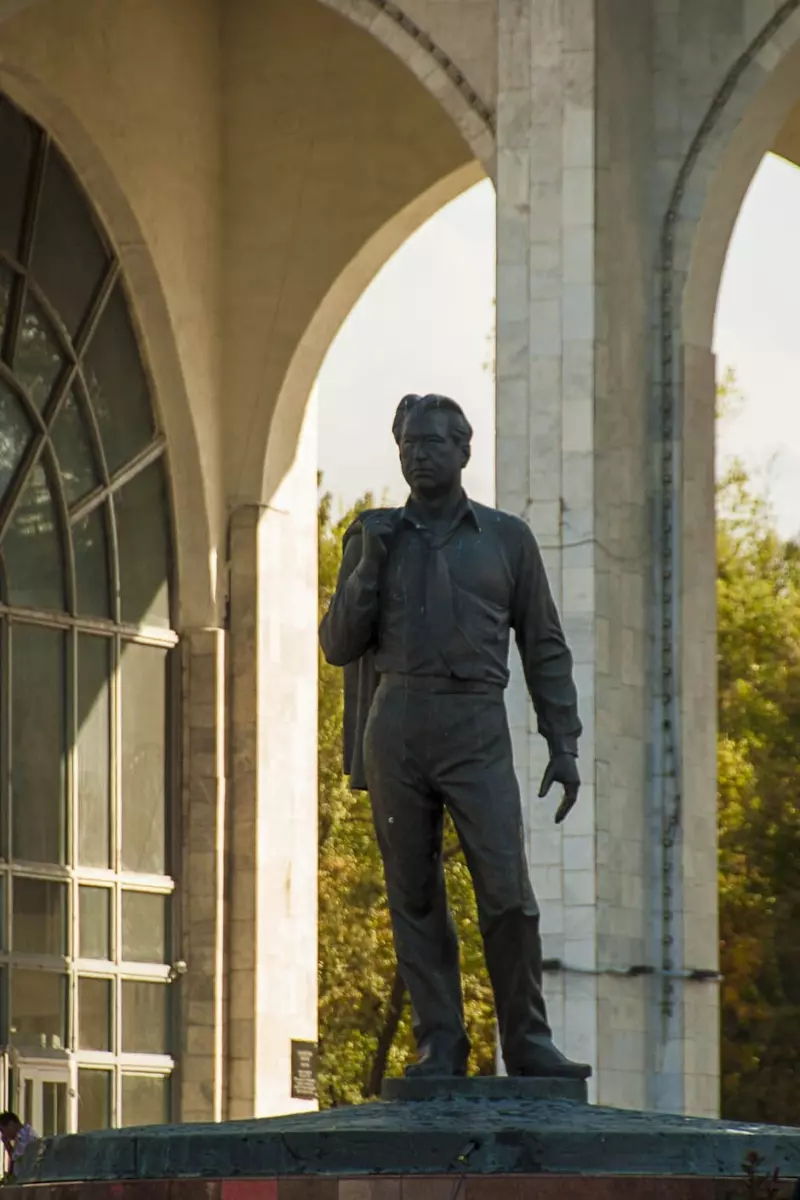 Denkmal für Tschingis Aitmatow unter einem Torbogen in Bischkek.
Photo: Alesia Belaya
Denkmal für Tschingis Aitmatow unter einem Torbogen in Bischkek.
Photo: Alesia Belaya
Key facts: History and memorial sites
- Memorial sites can include monuments, museums, cemeteries, former crime scenes, or public squares.
- A monument does not always explain its full historical context; additional sources are important.
- Photography, music, loud behavior, and visible commentary may be inappropriate at certain sites.
- Different groups in society may remember and interpret the same event in different ways.
- Opening hours, guided tours, and access rules also apply at historically significant places.
- After a difficult visit, taking a break and keeping the rest of the day calm can help you process the experience.
Build context before your visit
Before your trip, find out what the site commemorates, when it was established, and who looks after it. Official museum or memorial-site websites are a better starting point than brief photo captions. For controversial subjects, it is worth comparing different reputable accounts. Avoid filling in names, dates, and political terms from memory if they are essential to understanding the site.
Across Eastern Europe and Central Asia, many cities connect monuments with literature, independence, war, or state history. Kyrgyzstan offers examples in Bishkek and other places of a memorial culture expressed in public spaces. The Baltic states and Poland show how occupation, shifting borders, and national narratives have left different traces. Information about culture and history helps put these visits in the context of your trip.
Behave appropriately at memorial sites
On site, follow signs, house rules, and guidance from staff. Silence and discretion are essential at cemeteries, former crime scenes, and places with religious significance. Do not photograph people who are mourning or praying. A monument in a public space is not automatically an appropriate backdrop for every photo, either. If photography is allowed, keep your distance and choose a respectful frame.
A guided tour can explain the context, but should not be treated as the only truth. Good interpretation identifies its sources, uncertainties, and different perspectives. For children and teenagers, clear, age-appropriate explanations are helpful; there is no need to add disturbing details unless they ask. A nearby museum or archive can provide additional documents and biographies.
Memorial sites do not fit well into a packed sightseeing itinerary. Allow time for a cemetery or museum; a brief, thoughtful visit may be enough for a central square. Afterwards, a walk through the city or a quiet place can offer a chance to pause. Rest and a realistic daily schedule are not minor considerations, especially when the subject is emotionally difficult.
When visiting several historical sites on one trip, it helps to plan a clear sequence. An introductory museum can provide orientation before a visit to a former crime scene; a later walk can bring the day to a close. Not every site needs to be discussed publicly or judged straight away. Notes, a catalogue, or a reliable source can help you follow up on questions later, at your own pace. Taking time to reflect also helps prevent you from oversimplifying conflicting impressions too quickly.
Especially at monuments in public spaces, take in the present-day surroundings as well. How is the square used? What texts are displayed, and whose voices may be missing? These questions do not need to be answered out loud on site. They can, however, help you understand the experience beyond the individual monument. A quiet walk back and a suitable place to take a break are therefore part of responsible planning.
Don’t turn history into a sightseeing checklist
A memorial site is not merely a backdrop for holiday memories. That does not mean visitors cannot take personal photos there; it means choosing subjects, settings, and how to share them with care. Names and stories of victims should be represented accurately. With monuments to living or deceased figures, it is also important to distinguish between artistic representation, official commemoration, and personal judgment.
If you would like to explore further, you can consider palaces and castles, historic cities, and religious buildings in the context of their creation and use. Nature and landscapes or regional cuisine can also be part of the same trip, but should not overshadow remembrance. You can choose other holiday ideas later, once you have had some time to reflect.
FAQ
How should I prepare for a visit to a memorial site?
Check official information about its purpose, history, access, and rules. For complex subjects, consult several reputable accounts.
Can I take photos at memorial sites?
It depends on the site. Always respect house rules, privacy, religious use, and the dignity of those affected.
How much time should I allow?
Allow enough time for reading, a guided tour, breaks, and a quiet walk back. One brief, thoughtful visit may be more worthwhile than visiting several sites in a day.
