
National Museum of History in Sofia: Collections and Visiting
The National Museum of History in Sofia is one of Bulgaria’s most important museums. It is located outside the city’s innermost center and offers a broad overview of the country’s history. It is especially worthwhile for visitors who want to see Sofia not only as the capital, but also as a starting point for exploring Bulgaria. The exhibits help put archaeological finds, medieval history, religious art and more recent developments into context.
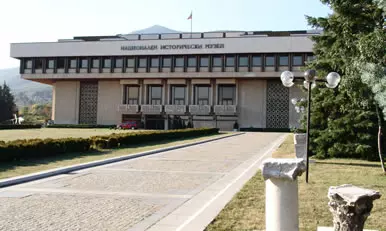 Gebäude des Nationalen Historischen Museums in Sofia mit breitem Vorplatz.
Quick facts: National Museum of History
- The National Museum of History is located outside Sofia’s innermost center.
- Archaeology, medieval history, religious art and more recent periods are among the museum’s distinct collection themes.
- Given the breadth of the exhibits, it makes more sense to choose areas of interest than to rush through everything.
- Boyana Church is nearby, but has its own admission rules and time slots.
- Sofia, Plovdiv and other Bulgarian cultural destinations should be planned as separate stops.
- Check opening hours, admission, special exhibitions, transport, weather and the latest visitor information.
Collections and historical overview
The museum’s appeal lies in its breadth. Anyone preparing for a tour of the country will encounter many names, periods and visual traditions here that they will come across again in cities, monasteries and archaeological sites. Depending on your interests, don’t try to see everything in equal detail. It is better to choose a focus and keep your visit manageable.
For German-speaking travelers, context is especially important. Many places in Bulgaria are easier to understand when you are familiar with recurring themes: the Thracians, Romans, Byzantines, Bulgarian empires, Ottoman period, National Revival and modern state history. The museum cannot replace a trip around the country, but it can provide a framework.
Combining Boyana and Sofia
The National Museum is conveniently located for a visit combined with Boyana Church. Neither attraction is in the central pedestrian area, so plan your transport and the order of your visits. In the center, Alexander Nevsky Cathedral offers a different focus: religious architecture, the surrounding square and the city’s capital character. Together, these stops provide a good cultural overview.
For travelers short on time, the museum is most suitable if they have a genuine interest in history. If you are planning only a brief city tour, you might want to prioritize the center and the cathedral. Visitors staying in Sofia for several days, or traveling onward to Plovdiv, the Black Sea coast or the mountain regions, will benefit more from the broader perspective. Other relevant destinations include Sofia, Boyana Church, Alexander Nevsky Cathedral and Plovdiv.
The National Museum as an introduction to Bulgarian history
The National Museum of History near Sofia is especially useful for putting a trip around Bulgaria into context. Its collections on the Thracians, the Middle Ages, icons, statehood and everyday culture provide a broad framework for places such as Plovdiv, Nessebar and the Black Sea cities. If you have limited time, decide on a focus in advance, as the exhibits are extensive. Combined with Boyana Church and the foothills of Vitosha, it makes for a worthwhile half-day or full-day outing beyond Sofia’s innermost center.
Choosing to visit Sofia’s National Museum of History
The National Museum of History is a good choice for travelers who want to explore Bulgaria’s past through a wide range of periods and collections. Given its size, decide in advance whether you want a general overview or to focus on specific subjects. A route through the city center can begin at Alexander Nevsky Cathedral; Boyana Church is a separate destination some distance away.
The museum’s location, transport, the scope of the exhibits, opening hours and the time available for your visit are all important for planning your day. If you have only a few hours, choose two or three areas of interest in advance rather than trying to see every collection in equal detail. Check current admission and access information with the museum. Allow extra travel time for Boyana or the Vitosha area.
Choosing collections and planning a realistic visit to Boyana
The National Museum of History is especially suitable for exploring several periods of Bulgarian history in one visit. The National Museum and Sofia should be planned as separate cultural destinations. The official museum information provides current details about exhibitions and visitor conditions.
Boyana Church is a good addition in the area, but it is a small, protected place of worship with its own admission rules. Alexander Nevsky Cathedral, Bulgaria, Culture in Bulgaria and Tours of Bulgaria offer other points of interest, but require additional travel.
Before your museum visit, check the latest information on transport and getting around, travel preparation, money and payments, staying safe, culture and history and language and communication. Confirm admission, opening hours, special exhibitions, weather and your return journey for the date of your visit.
FAQ about the National Museum of History
What does the National Museum display?
The collections range from archaeological finds to medieval and religious art, as well as later periods of Bulgarian history.
How much time should I allow?
For a focused visit, choose two or three areas of interest in advance. Seeing the entire collection can take considerably longer.
Can I combine the museum with a visit to Boyana?
Yes, provided the admission arrangements, transport and time slots work together. Allow time for each visit separately.
What should I check before visiting?
Confirm the latest opening hours, admission, special exhibitions, transport, access arrangements, photography rules and return journey.
