
Plovdiv: Old Town, Roman Theatre and Kapana
Plovdiv is one of Bulgaria’s most important city destinations and more than just a stop between Sofia and the Black Sea coast. Situated on the Maritsa River, the city is known for its hills and brings together Roman remains, old-town lanes, museums, cafés and a vibrant cultural scene. Anyone looking to understand Bulgaria as a travel destination should plan a stay in Plovdiv in its own right.
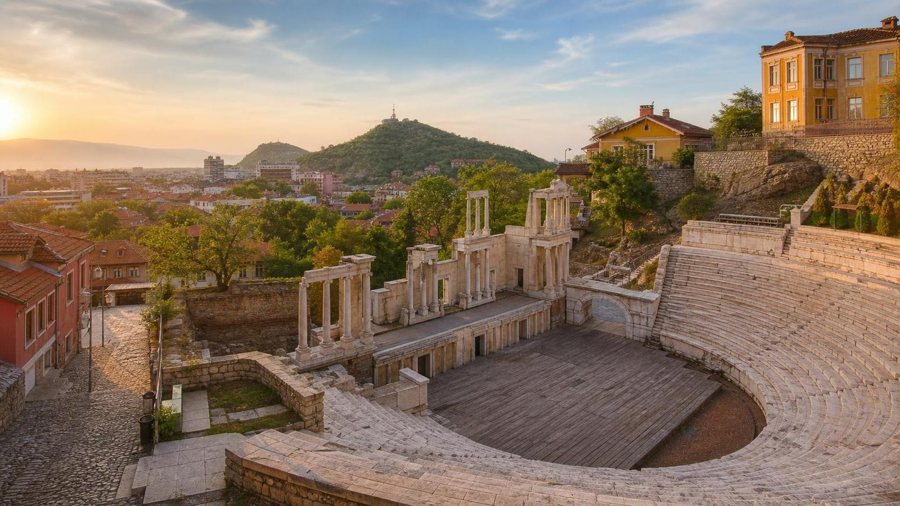 AI-generated illustration of Plovdiv’s ancient theatre among hills and Old Town buildings in the evening light.
Quick facts: Plovdiv
- Plovdiv lies on the Maritsa River and is one of Bulgaria’s most important historic cities.
- The Old Town, Roman theatre, ancient stadium, Kapana and the city’s hills each offer something different.
- Cobblestones, slopes and longer distances affect how quickly you can get around on foot.
- Museums, archaeological sites, cafés and cultural events have their own opening hours and schedules.
- Sofia, Nessebar, Sozopol and the Bulgarian coast are separate legs of a trip and require additional travel time.
- Check admission, opening hours, events, weather, parking and current traffic information in advance.
Old Town and Roman theatre
Plovdiv’s Old Town sits on rising ground. Cobblestone streets, colourful National Revival-era houses, small museums, churches and viewpoints shape the walk. The ancient theatre is particularly well known and is one of the city’s most striking Roman landmarks. Remains of the ancient stadium are another reminder that Plovdiv has many layers of history.
Wear comfortable shoes and allow plenty of time for your visit. The distances are not great, but the slopes and cobblestones make walking more demanding than in a flat city centre. If you are short on time, focus on the Old Town, the theatre and the central squares. With more time, you can add museums, galleries and quieter viewpoints.
Kapana, everyday life and itineraries
The Kapana district brings a younger, more creative side to a visit to the city. Cafés, small shops, restaurants and events make Plovdiv an appealing place to spend the evening, too. That makes the city a good choice for at least one overnight stay. If you visit only during the day, you will see the main sights but miss some of its atmosphere.
Plovdiv combines easily with Sofia and complements destinations on the Black Sea coast. For a trip around Bulgaria, it offers a useful contrast to the capital: more compact, steeped in history and best explored on foot. Check the current opening hours of museums and event venues locally. Good connections include Sofia, Varna, Nessebar and Sozopol.
How to make the most of Plovdiv
Plovdiv is an especially good fit for travellers who want to discover Bulgaria beyond the Black Sea coast or Sofia. The city brings together Roman remains, old-town lanes shaped by Ottoman influences, restored merchant houses and a lively cultural district, all within a manageable area. If you plan to spend several days, you can visit the ancient theatre, Nebet Tepe, Kapana and the museums without rushing. Plovdiv also makes a practical stop between Sofia, the Rhodope region and other places in southern Bulgaria.
Experience Plovdiv as a cultural city, with time to spare
Plovdiv suits travellers who want to combine ancient history, the Old Town, hills, museums and a lively district. Not all the sights lie along a short, flat route, so comfortable shoes and breaks will make getting around easier. If you are putting together an itinerary in Bulgaria, you can combine Plovdiv with Nessebar or cultural attractions in Sofia, but plan separate legs for each destination.
A full day is a good amount of time for a first visit, while several museums or excursions will require longer. Check current opening hours, admission, events, parking and routes between the Old Town and other districts. In summer, take the heat and availability of shade into account. A packed schedule spanning several cities in one day leaves little room to explore the city itself.
Take time to discover the Roman heritage, Old Town and Kapana
Plovdiv is easier to explore if you plan the Roman theatre, Old Town, Kapana and one chosen hill as separate sections of your walk. Plovdiv deserves a day of its own in the city, rather than being just a stop between Sofia and the coast. Plovdiv’s official tourism information offers up-to-date information on culture and events.
To explore Bulgaria’s history in greater depth, compare Alexander Nevsky Cathedral, Boyana Church and the National Museum with Plovdiv’s Roman remains. Bulgaria, culture in Bulgaria and round trips can help you choose your itinerary.
Before setting out to explore the city, check the latest information on getting there and transport, travel preparations, money and payments, staying safe while travelling, culture and history and nature and landscapes. Check opening hours, tickets, events, weather, shade, surfaces and the return journey for your visit date.
Plovdiv FAQ
What is Plovdiv known for?
Plovdiv is known for its Roman heritage, Old Town, Kapana, hills and the Maritsa River.
How much time should you plan for?
A full day is enough for the Old Town, theatre, Kapana and one other main attraction. Museums or events may require more time.
Is Plovdiv easy to explore on foot?
Many central sights are close together, but take the cobblestones, slopes, heat and length of your walking route into account.
Can you combine Plovdiv with Sofia?
Yes, as part of a cultural itinerary through Bulgaria. Plan travel time, accommodation and sightseeing time in each city separately.
