
The Hermitage: Winter Palace, architecture and collections
The Hermitage is part of the historic centre of Saint Petersburg and is closely associated with the Winter Palace. Visitors planning a visit can choose to focus on the architecture of the former residence or its extensive art collections.
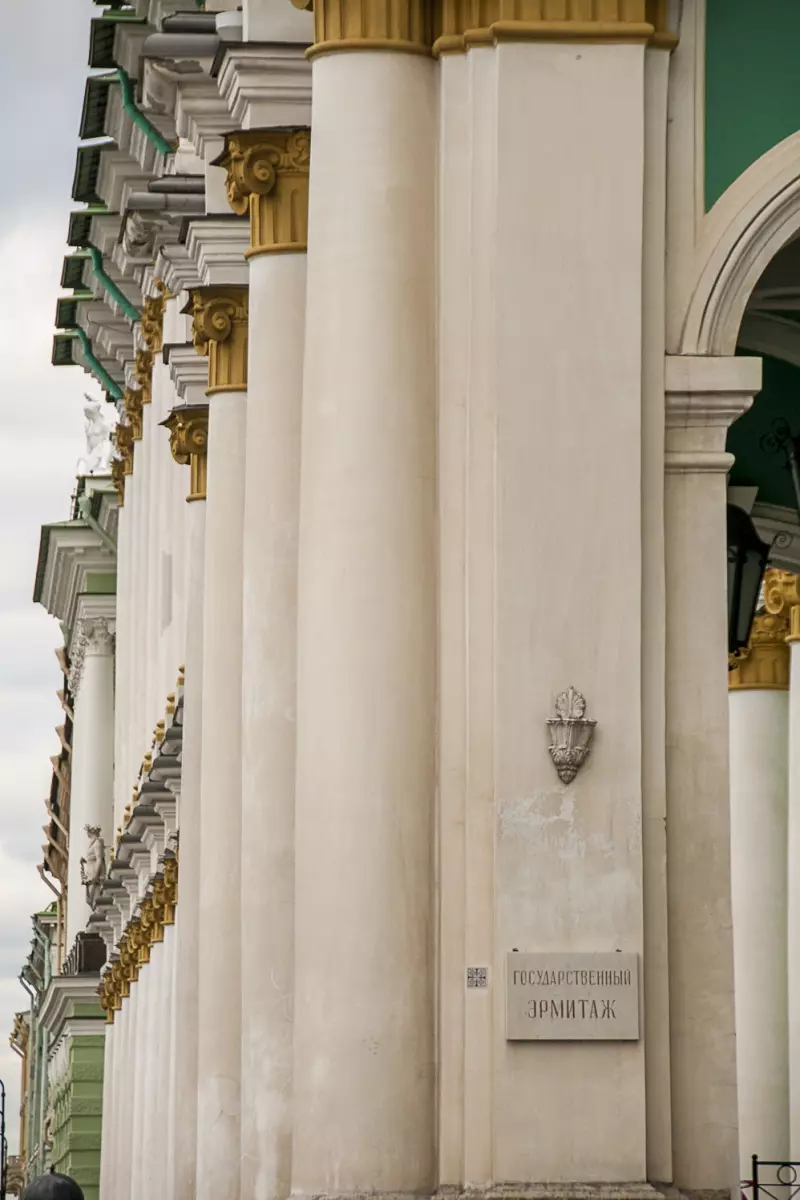 Säulen und vergoldete Kapitelle an der Fassade des Winterpalasts in Sankt Petersburg.
Photo: Alesia Belaya
Hermitage facts at a glance
- The Winter Palace is part of the Hermitage’s main complex.
- Francesco Bartolomeo Rastrelli designed the palace for Empress Elizabeth; construction is dated from 1754 to 1762.
- The four façades are individually designed and relate to different parts of the historic city centre.
- The Winter Palace was declared a museum in November 1917.
- The collections include European and Eastern art, antiquities and decorative arts, among other things.
The Winter Palace and its architecture
The Winter Palace was an imperial residence and is now a central part of the Hermitage complex. Rastrelli designed the building for Empress Elizabeth. The Baroque complex was built between 1754 and 1762. The palace was declared a museum in November 1917.
The south side, facing Palace Square, has three arches and a passageway into the courtyard. A colonnade defines the side facing the Neva, while the west side faces the forecourt near the Admiralty and the east side looks onto Millionnaya Street. Two-storey columns, roof sculptures and vases, along with richly decorated cornices, window surrounds and cartouches, give the building its distinctive rhythm. A walk around the building reveals these different connections to the surrounding urban landscape.
The Winter Palace stands on Palace Square, near the Neva and the Admiralty, in the centre of Saint Petersburg.
Collections and visitor highlights
The collections range from European and Eastern antiquities to painting, sculpture and decorative arts from Europe and the East. Ceremonial halls also contribute to the historic character of the building. This brings two visitor experiences close together: the palace’s interiors and history on the one hand, and artworks and objects from different regions and periods on the other.
Location and planning your day
For a stay in the city centre, you can choose accommodation based on its location and your plans for the day.
Frequently asked questions about the Hermitage
How long did the Winter Palace serve as an imperial residence?
The palace served as the ceremonial residence of Russia’s rulers for around 150 years.
