
Enjoy wildlife watching with distance and patience
Wildlife watching rarely follows a fixed script. Weather, season, time of day and patience all shape what you may see. A good nature trip therefore does not promise a particular encounter, but creates the right conditions: quiet trails, plenty of time, suitable equipment and respect for habitats. In trying to get as close as possible to wildlife, it is easy to get too close.
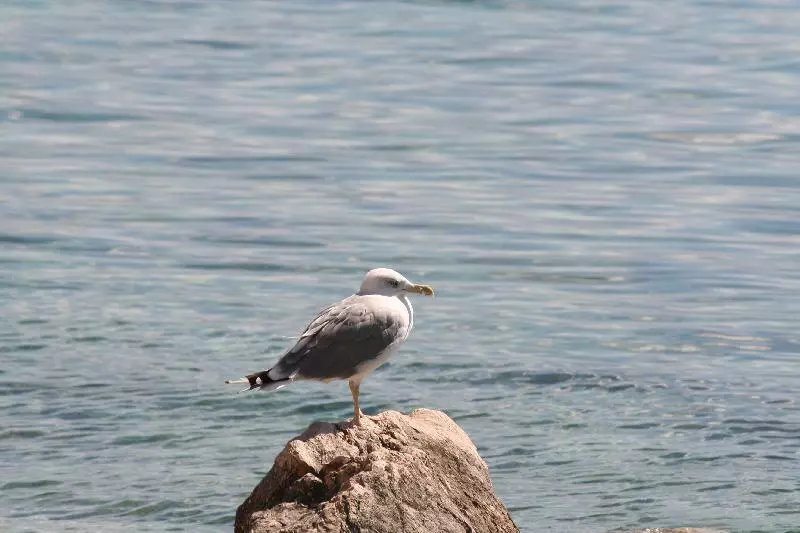 Möwe auf einem Felsen am Wasser als Bild für Tierbeobachtung und Naturreisen.
Photo: Dago
Möwe auf einem Felsen am Wasser als Bild für Tierbeobachtung und Naturreisen.
Photo: Dago
Quick facts: wildlife watching and nature trips
- Early morning and late afternoon can be better times for many wildlife sightings, but access is not always permitted.
- Binoculars and quiet clothing are usually more useful than trying to get closer.
- Nesting and roosting sites, as well as young animals, need extra space and quiet.
- Feeding wildlife, using calls to attract animals, flash photography and drones can disturb animals or break local rules.
- Marked trails and observation hides help protect both visitors and sensitive habitats.
- A sighting is never guaranteed; landscapes, tracks and sounds are part of the experience too.
Choose the right habitat
Lakes and wetlands are often good places to watch waterbirds, while forests, riverbanks, coasts and mountain regions offer the chance to see different species. Before setting out, choose a landscape suited to the wildlife you hope to observe. For beginners, an area with good visitor information and marked trails is usually a better choice than a remote spot that is difficult to navigate. In protected areas, management guidance always takes priority.
The Danube Delta combines waterways, reed beds and vast habitats. The Baltic states offer coasts, forests and wetlands with a range of wildlife-watching opportunities. For a trip amid mountain scenery, consider Durmitor and the Apuseni Mountains. Information on nature and landscapes can help you combine your trip with other landscape-focused experiences.
Season, time of day and equipment
In spring, migratory birds and fresh growth can shape the landscape, while trails are often soft after rain. In summer, early hours are more comfortable and shade is more important. In autumn, migration, changing colors and shorter days affect your plans. In winter, some animals are easier to spot, but cold, ice and limited trail access call for extra preparation. These general patterns are no substitute for local guidance.
Binoculars, weatherproof clothing, water, a notebook and a quiet seat pad are often enough. For longer walks, navigation aids and a charged means of communication are useful. Photographers should be mindful of distance, light and their impact on wildlife. A powerful telephoto lens is often better than taking one step closer. If you are traveling in a group, agree in advance that no one will chase animals or leave the trail for a photo.
Watch without disturbing wildlife
Local rules matter more than the desire to see a particular animal. Trails, closures, leash requirements, seasonal quiet zones and access restrictions may vary. Do not seek out nests, dens or young animals, or share their precise locations publicly. Litter, food scraps and loud music do not belong in wildlife habitats. Protected areas can balance conservation and visitation only when guests respect the boundaries of the area.
A nature trip does not have to consist entirely of wildlife watching. A day of quiet relaxation, a taste of regional cuisine or a stay in a town gives the landscape room to breathe and reduces the pressure to justify every outing with a sighting. For additional activities, check trail conditions and conservation rules as well.
For accommodation, choose a place within reach of several habitats, so you do not have to drive long distances every day. A relaxed schedule with one planned wildlife-watching window and room to be flexible is usually better than trying to visit several far-flung spots. Before booking a guided outing, ask about group size, trail length, how the group behaves when wildlife is spotted and consideration for other visitors. Good guides do not promise sightings; they explain the conditions and limitations.
You can record your observations without specialist knowledge. The date, location, weather, habitat and distinctive features can help you identify what you saw later. If you encounter an unfamiliar species, a cautious description is enough; there is no need to follow or capture animals to identify them with certainty. When introducing children to nature, include tracks, calls and plants as well as animals they can see.
When choosing a wildlife-watching spot, also consider how to get there and how long to stay. An easily reached lake with an observation tower may be a better first outing than a remote area without marked trails. If you have several days, it is worth visiting different habitats and planning breaks in between. That way, the trip can still be fulfilling even if the animals stay hidden for a day.
FAQ
Which animals am I sure to see?
No wildlife sighting can be guaranteed. Good habitats, the right time of day and patience improve your chances without forcing an encounter.
Do I need a guide?
For beginners or in hard-to-reach areas, a local guide can help with navigation and responsible wildlife watching. A guide does not replace the rules and guidance of the protected area itself.
May I photograph wildlife?
Generally, yes, provided you respect distance requirements, stay on trails, use light considerately and follow local rules. Do not lure or chase animals, or disturb them with flash photography.
