
Gračanica: Culture, Nature and Hotels in Bosnia and Herzegovina
Accommodation in Gračanica
Culture and History
Gračanica lies in the valley of the Spreča River. The city is home to the Sahat kula, which is 27 metres high and an official symbol of the city. The clock tower, around 300 years old, is considered both a cultural and historical building and a national monument of Bosnia and Herzegovina. Another notable place is the Osman-Kapetanova medresa: it was founded in 1800, while the present-day building was constructed in 1889 in the pseudo-Moorish style. Its courtyard is the main venue for the traditional cultural and entertainment event “Ljetnje večeri pod lipama Gračanice”.
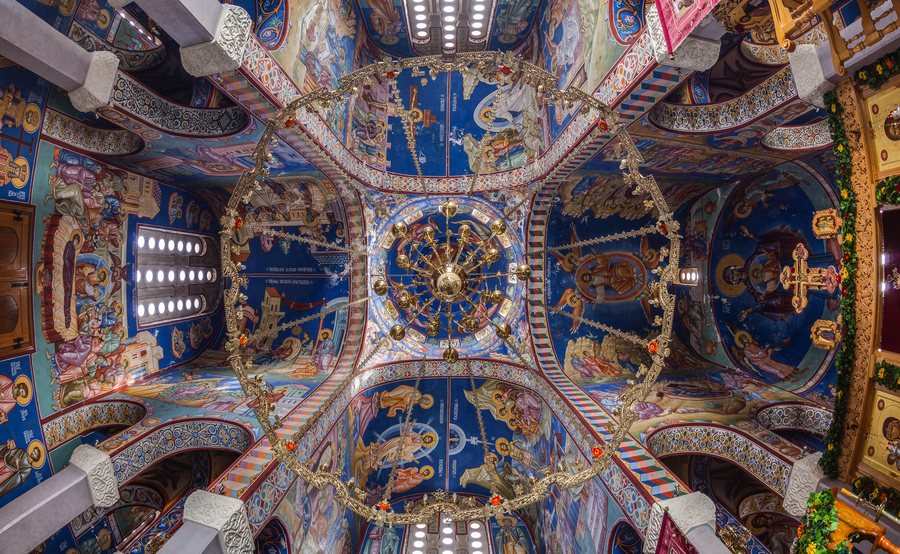 File:Monasterio Hercegovacka Gracanica, Trebinje, Bosnia y Herzegovina, 2014-04-14, DD 14-16 HDR.jpg
Photo: Diego Delso via Source, CC BY-SA 3.0
File:Monasterio Hercegovacka Gracanica, Trebinje, Bosnia y Herzegovina, 2014-04-14, DD 14-16 HDR.jpg
Photo: Diego Delso via Source, CC BY-SA 3.0
Around six kilometres north of Gračanica are the ruins of the medieval fortified town of Soko. They are described as the historical origin of the city. The Kuća Mare Popović is also part of the historical heritage. It is the only surviving old Čardaklija in Gračanica, was built in the second half of the 19th century, and has the status of a national monument.
The Gračanički Ćiro also recalls the town’s past. It represents the Gračanica–Karanovac narrow-gauge railway, which began operating in 1898 and carried passengers, mail and goods. The Ahmed-pašina džamija acquired its present stone, domed form between 1914 and 1916. A permanent exhibition is on display in the local history museum collection and gallery Zavičajno-muzejska zbirka i galerija in Gračanica.
Landscape and Excursion Areas
About six kilometres north of Gračanica, immediately above the village of Babići, lies Vis. At 692 metres, this summit is the highest point of the Trebava mountains. Vis near Gračanica is a well-equipped excursion area where various cultural, sporting and other occasional events take place during a large part of the year.
The Bijele vode Soko excursion area lies two kilometres northeast of the medieval town of Soko near Gračanica at an altitude of 600 metres. It is named after a drinking-water spring that is considered never to run dry. Its exact location thus connects the landscape name Bijele vode Soko with the medieval town of Soko near Gračanica and its elevation.
Faith, Handicrafts and Collection
The Izletište Ratiš excursion area is home to a Dovište. Every Monday, believers gather there for prayer and a religious address. An information board mentions a 700-year tradition of prayer. Gračanica’s cultural heritage also includes Gračaničko keranje. This term covers numerous handmade textile and decorative items, including tablecloths, handkerchiefs, earrings, rings, brooches, dress ornaments, doilies and headscarves. Gračaničko keranje is considered part of the cultural heritage and a cultural, tourist and ethnographic brand of Gračanica.
The Terme Gračanica offer various facilities for children and adults. These include a children’s playground, volleyball courts, a restaurant and a massage room. Alongside the historical and natural attractions, Gračanica therefore also offers an area with various facilities for both age groups.
Further local pages for regional travel planning: Srebrenik, Gradačac, Hrasno Donje, Dubrave Gornje, Tuzla, Živinice Grad, Lukavac.
For the higher-level travel overview: Tuzla Canton.

