
Burgas
Accommodation in Burgas
Burgas combines its location on the bay with an important bird migration area, a beach, museums and bus connections along the Black Sea coast. This lets you weigh nature, swimming and urban history as different focuses for your stay.
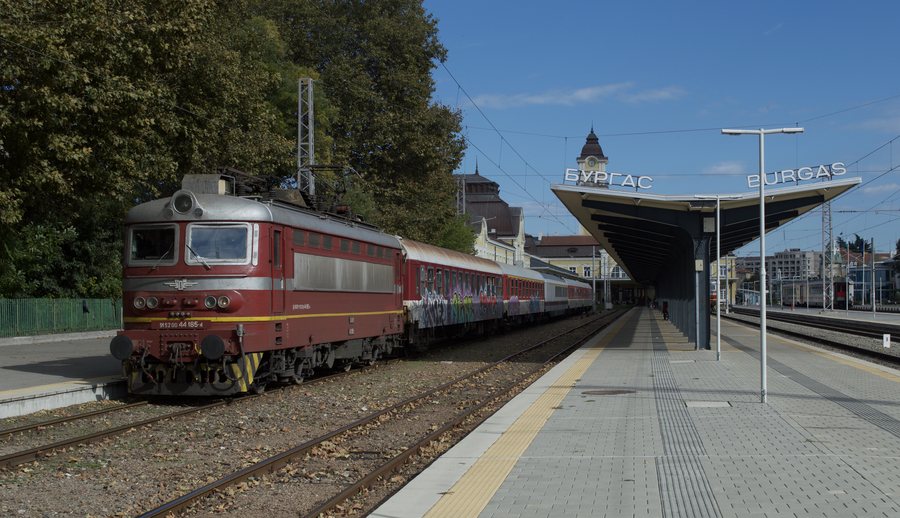 File:26.10.18 Burgas 44185 (45652825421).jpg
Photo: Phil Richards from London, UK via Wikimedia Commons, CC BY-SA 2.0
File:26.10.18 Burgas 44185 (45652825421).jpg
Photo: Phil Richards from London, UK via Wikimedia Commons, CC BY-SA 2.0
Burgas at a glance
Burgas lies at the westernmost point of Burgas Bay and is surrounded by the three lakes Atanasovsko, Lake Burgas (Vaya) and Mandrensko. The Via Pontica, one of Europe’s largest bird migration routes, passes over the Poda Protected Area. Every year, tens of thousands of white storks, Dalmatian pelicans, birds of prey and songbirds pass through. The city’s character is also shaped by the nearly two-kilometre-long Central Beach, the Ethnographic Museum and the railway station, which was declared an architectural monument in the 1970s.
What does the Poda Protected Area offer nature enthusiasts?
The Via Pontica makes Poda a place where bird migration can be explored at first hand: species that pass through each year include white storks, Dalmatian pelicans, birds of prey and songbirds.
The Poda Nature Conservation Centre is open year-round. Its permanent exhibition is devoted to the biodiversity of the area and region. Binoculars and spotting scopes, themed talks led by ornithologists, and observation terraces on two levels round out the offerings. Outdoors, there are interactive modules. This makes a visit different from a gallery-only tour: nature is explored both through the permanent exhibition and through opportunities for observation and interactive activities.
What beach and cultural experiences define Burgas?
Central Beach offers a nearly two-kilometre stretch of golden sand for swimming and sunbathing. Visitors who want to add some activity to their beach visit can also find courts for volleyball, football and beach tennis. The beach offers a different focus from birdwatching and urban history.
The Ethnographic Museum of Burgas is housed in the Brakalov House, built in 1873. The house is described as the only surviving Bulgarian urban house in the Balkan House style from the 19th century in Burgas. The museum focuses on the traditional culture and everyday life of old Burgas. For your choice, this means a combination of a specific historic building and insights into urban life in the past.
The Burgas Aviation Museum offers another kind of visit: with virtual reality headsets, you can take on the role of a pilot and fly an aircraft of your choice. This experience has a different focus from exploring traditional culture at the Ethnographic Museum or nature and bird migration at Poda.
What bus connections are available from Burgas?
Burgas railway station is next to the South Bus Station. Buses run from there to all destinations on Bulgaria’s southern Black Sea coast, as well as to Varna and Burgas Airport. For travellers planning to continue by bus, this transport hub is a useful landmark. The railway station is also an architectural monument: it was declared one in the 1970s.
For comparison with other local profiles, you can also visit Rudnik, Sarafovo, Bryastovets, Burgas and Kraymorie; other comparison pages include Sozopol and Primorsko.
FAQ
What can you experience at the Poda Nature Conservation Centre?
The centre is open year-round and offers a permanent exhibition on biodiversity, binoculars and spotting scopes, themed talks with ornithologists, observation terraces on two levels, and interactive modules outdoors.
What activities are available at Central Beach?
The nearly two-kilometre stretch of golden sand is suitable for swimming and sunbathing. There are also courts for volleyball, football and beach tennis.
Where do buses from the South Bus Station go?
Buses run from there to all destinations on Bulgaria’s southern Black Sea coast, as well as to Varna and Burgas Airport.
For the broader travel overview: Burgas Province.
More about the destination
Useful information for planning your trip:

.jpg)