
Lom: Roman Traces and Architectural Heritage
Accommodation in Lom
Archaeological remains, churches, and museums give Lom a distinct cultural and historical character. If you are looking for a hotel for a cultural trip, the city’s historic highlights can help you choose your destination; road and rail information also helps you plan your journey.
Key facts about Lom
- The ancient city of Almus lies north of Lom, on the banks of the Danube.
- The Historical Museum in Lom was founded in 1925 as the local archaeological society “Almus.”
- Lom is home to churches and a watchtower, each with its own historical significance.
- Two named road routes and 12 kilometers of electrified railway line pass through the municipality of Lom.
What is the archaeological history of Almus?
Almus lies in the north of Lom, on the banks of the Danube. The archaeological site is designated an immovable cultural monument of national importance. It comprises an early and late Roman fort, an early Byzantine fortified settlement, and an associated necropolis. Almus is therefore more than a single fortification: its named components point to military, settlement, and funerary contexts. Anyone interested in the area’s history will find a subject here that brings together Roman and early Byzantine remains.
The Historical Museum carries this archaeological heritage forward in the name of the society from which it originated: it was established on September 20, 1925, as the local archaeological society “Almus.” The permanent exhibition is arranged by theme across two floors of the museum building. Check the museum’s current information before visiting, as the exhibition layout may change over time.
Which museums and churches define Lom?
The Historical Museum has departments devoted to archaeology, Bulgaria from the 15th to the 19th century, modern history, ethnography, and art. Its topics range from early archaeological finds to later periods of Bulgarian history, as well as art and everyday culture. When planning your visit, you can match this breadth to the subjects that interest you most.
The watchtower offers another museum experience. Built in 1879, it is considered the first tower of its kind in Bulgaria and houses a museum on the history of firefighting. The Church of St. Nicholas the Old, also known as Borunskata Tsarkva, was restored in 1885 and has been designated a cultural monument since 1975.
The Cathedral Church of the Assumption is the largest church in Lom. Construction began in 1863; it was completed between 1894 and 1897, and its solemn consecration followed in the summer of 1906. It has been designated an architectural cultural monument since 1974. Its building history can thus be understood through several distinct dates: the start of construction, completion, consecration, and monument designation.
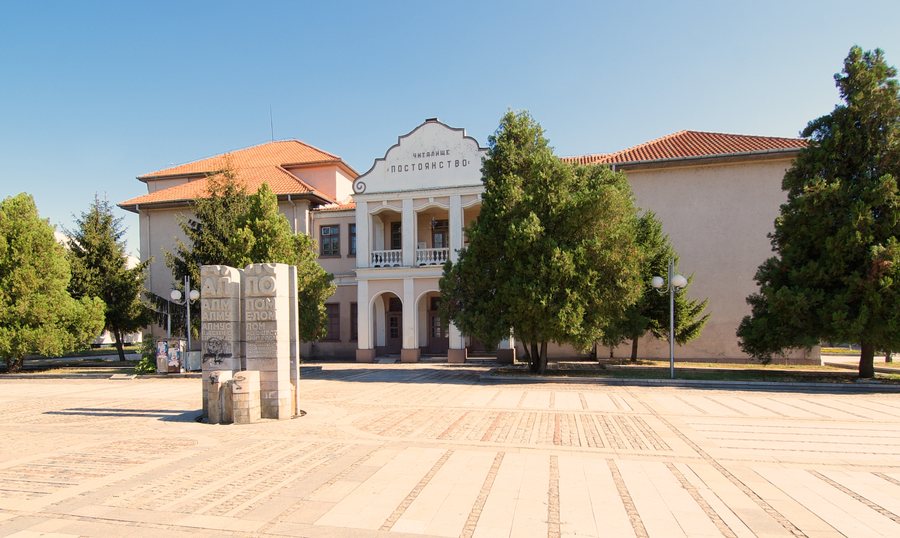
Beyond individual buildings, 57 buildings in the municipality of Lom are designated architectural cultural monuments. They were built between 1880 and 1940. Their designs are by architects from Austria, Belgium, Germany, and Hungary, and display late Art Nouveau and Neo-Baroque styles. These details offer another way to explore the municipality’s architectural heritage without reducing its varied buildings to a single period or style.
What transport information can help with planning?
The II-11 road between Vidin, Lom, and Kozloduy, and the E-79 between Lom, Montana, and Sofia, pass through the municipality of Lom. When planning your trip, it is helpful to distinguish between these two named routes and check the current route based on your own starting point and destination. This information describes roads in the municipality, not a specific location within the town.
The railway information also refers to two different figures: 12 kilometers of electrified line run through the municipality, while Lom station has 17 tracks. The number of tracks refers to the station, while the length of the line refers to the municipal area. Check current timetables and road conditions before you travel.
Discover more destinations: Dobri dol, Valchedram, Montana, Georgi Damyanovo, Chiprovtzi, Berkovitza and Varshetz.
FAQ
What does the Almus archaeological site include?
Almus comprises an early and late Roman fort, an early Byzantine fortified settlement, and an associated necropolis. The ancient city lies north of Lom, on the banks of the Danube.
What topics does the Historical Museum in Lom cover?
Its departments cover archaeology, Bulgaria from the 15th to the 19th century, modern history, ethnography, and art. The permanent exhibition is arranged by theme across two floors; this layout may change over time.
What transport information is available for the municipality of Lom?
The routes listed are the II-11 between Vidin, Lom, and Kozloduy, and the E-79 between Lom, Montana, and Sofia. In addition, 12 kilometers of electrified railway line run through the municipality, and Lom station has 17 tracks.
For the broader travel overview: Montana Province.

