
Discover Asenovgrad
Accommodation in Asenovgrad
Asenovgrad combines a location on both banks of the Asenitsa River with several distinct ways to explore regional history. When planning your trip, it is therefore worth first considering whether you are particularly interested in the history of the fortress, the region’s development, everyday urban life or paleontological finds.
Asenovgrad at a glance
- The Municipality of Asenovgrad extends along both banks of the Asenitsa River, also known as the Chepelarska and Chaya.
- The municipal themed route “Rodopska Sveta Gora” consists of four interconnected tourist routes.
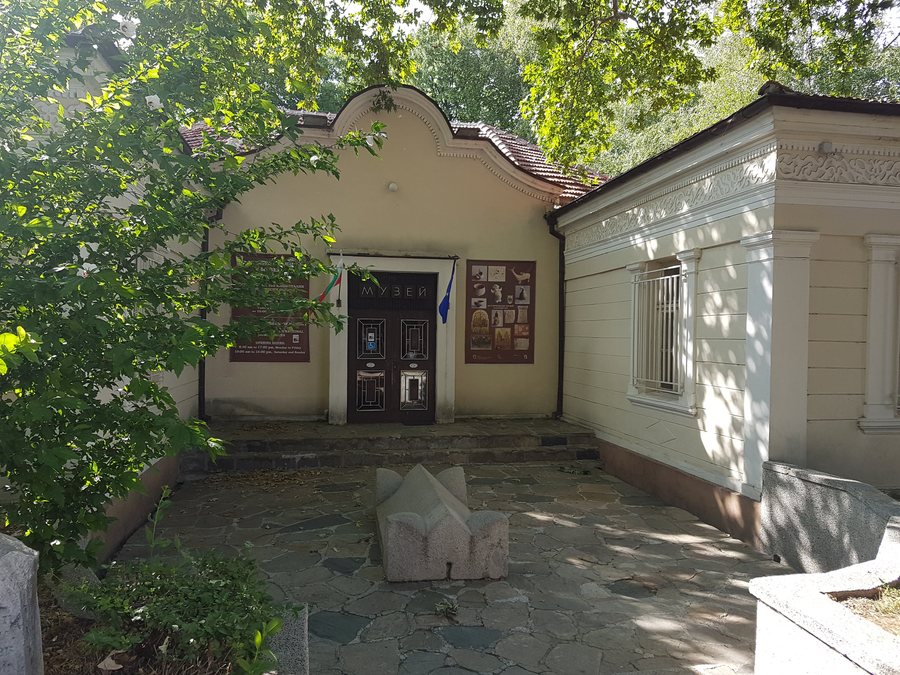
- The Asenovgrad History Museum covers the history of the region from the Paleolithic to the present day.
- The “Dimitar Kovachev” Paleontological Museum displays the almost 45-metre-long skeleton of an ancient deinotherium.
How do the river and the route help you get your bearings?
The Asenitsa is a defining geographical feature of the municipality: Asenovgrad extends along both its banks. When finding your way around, you may also encounter the names Chepelarska and Chaya for the same river. These name variations do not refer to three different rivers, but are alternative names for the Asenitsa.
The municipal route “Rodopska Sveta Gora” offers another thematic point of reference. If you take this route into account when planning your trip, you can note the number of sections as a feature; no specific route lengths or walking times are associated with it.
What do the fortress and church tell you about cultural history?
Asenova Krepost is a cultural monument of national importance. Within the fortress is the “Sveta Bogoroditsa Petrichka” church, the first Eastern Orthodox church building to have a tower.
Which museums suit your interests?
The Asenovgrad History Museum spans the period from the Paleolithic to the present day. Its exhibition, renovated in 2005, focuses on archaeology, Bulgarian history from the 15th to the 19th century, as well as modern and recent history. In this way, the exhibition brings together several eras and topics rather than focusing on just one period of regional history.
The Ethnographic House offers a narrower chronological focus on everyday life: it presents urban life from the late 19th to the early 20th century. The “Dimitar Kovachev” Paleontological Museum has a very different focus. It displays the almost 45-metre-long skeleton of an ancient deinotherium, found near the village of Ezerovo, close to Pervomay. The discovery is thus tied to a specific location, while the skeleton on display offers a distinct paleontological point of interest.
This range of subjects means you can approach Asenovgrad from different angles: the region’s long development, a particular period of urban life or natural history. If you are looking for a hotel in Asenovgrad, you can use these interests to guide your travel plans without trying to combine the different topics into a single museum visit.
Where can you get tourist information?
The Asenovgrad Tourist Information Centre provides information about tourist attractions in the municipality and tourism-related events. It is a point of contact for questions about the sights mentioned above and events related to tourism. If you are weighing up several themes for your trip, you can treat information about tourist attractions and events as separate areas of guidance.
For independent research about places, you can also visit the pages for Cherven, Bachkovo, Novakovo, Kosovo, Narechen, Asenovgrad, Karlovo and Kuklen.
FAQ
What are the names of the river near Asenovgrad?
The river is called the Asenitsa and is also known as the Chepelarska or Chaya.
How is the “Rodopska Sveta Gora” route laid out?
The municipal themed route consists of four interconnected tourist routes.
What does the Asenovgrad History Museum show?
It presents the history of the region chronologically, from the Paleolithic to the present day. The exhibition, renovated in 2005, focuses on archaeology, Bulgarian history from the 15th to the 19th century, and modern and recent history.
For the broader travel overview: Plovdiv Province.

