
Cres
Accommodation in Cres
Cres combines expansive natural landscapes with island history and regional culture. Around 300 kilometres of marked hiking trails, museums in historic buildings and two ferry connections give you practical starting points for planning your trip and finding suitable accommodation.
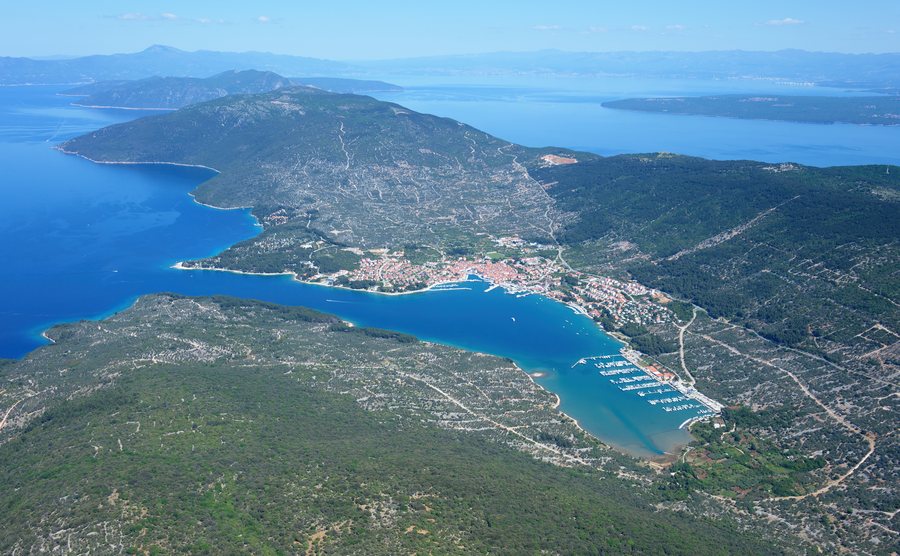 Aerial image of the northern part of Cres (view from the south)
Photo: Carsten Steger via Wikimedia Commons, CC BY-SA 4.0
Aerial image of the northern part of Cres (view from the south)
Photo: Carsten Steger via Wikimedia Commons, CC BY-SA 4.0
Cres at a glance
Cres is one of the few remaining habitats of the rare and endangered griffon vulture. The population on Cres is the only one in the world that nests directly on cliffs above the sea. The plant life is also diverse: more than 1,400 plant species grow on the island, including wild and medicinal herbs. The large freshwater lake, Lake Vrana, lies in the centre.
Cres has around 300 kilometres of marked trails for hiking, connecting the island’s rugged interior with the coast. A 75-kilometre network of historic educational trails branches off from the Via Apsyrtides. The route itself runs from Cape Jablanac, the northernmost point of Cres, to Cape Radovan at the southernmost point of the island of Ilovik.
What hiking and nature experiences does Cres offer?
The trails differ in their surroundings and designations. The Tramuntana forests have seven mountain trails, seven hiking trails and three cycling trails. If you want to include hiking and cycling in your trip, you’ll find a variety of designated routes; the approximately 300 kilometres of marked hiking trails refer to the island as a whole.
There are also specific routes for cycling: an approximately 15-kilometre gravel route leads from Cres Marina to Valun and on towards Pernat, Podol, Zbičina and Lubenice. A cycling trail also runs from Podol parallel to Lake Vrana, offering views of the lake and surrounding nature. Cres therefore offers both a longer route option and a lakeside trail to help you plan your rides.
The griffon vulture is also a focus of the Visitor and Rescue Centre in Beli. A multimedia exhibition there showcases griffon vultures and the lives of the people who inhabit Tramuntana in the northern part of the island. The centre also shares information about the vultures and Cres’s natural and cultural heritage.
What culture and history can you discover?
In Cres, the Arsan Palace houses the town museum. The palace is considered the oldest patrician palace in the town. The museum comprises eight distinct collections. The archaeological collection traces island life from prehistory to the late Middle Ages through its remains. The ethnographic collection displays everyday objects, agricultural and fishing equipment, and regional clothing from the 18th to the 20th century.
Another museum is located in Lubenice: the Sheep Farming Museum tells the story of wool from the indigenous Cres sheep. The Church of St Anthony the Hermit, dating from the 15th century and known for its exceptional acoustics, is also located there. In Martinšćica, the Muzej Andrija Linardić is housed in a country estate belonging to the Italian Sforza family, dating back three and a half centuries to the mid-17th century. Its exhibitions cover the life and work of Andrija Linardić, the region’s ethnography and traditional fishing equipment.
In Cres, the Forteca Tower is the only surviving tower of a former fortification system comprising five towers. If you’re interested in maritime history, Creski kaić – Days of Cres Maritime Heritage and Tradition – focuses on the intangible cultural heritage surrounding seafaring and fishing. The seven-day cultural, sporting and entertainment event includes an educational maritime history trail along the harbour promenade, with exhibitions and workshops about the traditional Cres barque. The programme’s main events include a regatta and a showcase of traditional wooden sailing boats in Cres Bay.
How do you get to Cres, and what activities are available on the water?
Two ferry connections link the island to the mainland: Brestova–Porozina connects Cres with Istria, while Valbiska–Merag connects it with the eastern Kvarner coast. The crossing takes approximately 25 minutes on both routes. The right connection for your journey depends on which coast you’re travelling from.
SUP boards and kayaks are available to rent on Cres for recreational activities on the open sea. In regional cuisine, brudet, a fish stew, is the focus of Brudetijada: teams prepare the dish in a competition, and after a jury has judged it, visitors can taste the dishes and choose the best brudet. During the Days of Cres Lamb and Olive Oil, held in spring, restaurants across the island serve lamb dishes for a week.
FAQ
How long are the marked hiking trails on Cres?
Cres has around 300 kilometres of marked hiking trails. In addition, a 75-kilometre network of historic educational trails branches off from the Via Apsyrtides.
How long does the ferry crossing to Cres take?
The Brestova–Porozina and Valbiska–Merag crossings each take approximately 25 minutes.
What does the Cres Town Museum display?
The town museum in the Arsan Palace comprises eight collections, including archaeological remains of island life from prehistory to the late Middle Ages, as well as ethnographic objects and clothing from the 18th to the 20th century.
For the broader travel overview: Croatia.

.jpg)