
Municipality of Starigrad – Paklenica, trails and culture
Accommodation in Municipality of Starigrad
In the Municipality of Starigrad, Paklenica National Park, climbing routes and evidence of regional history come together.
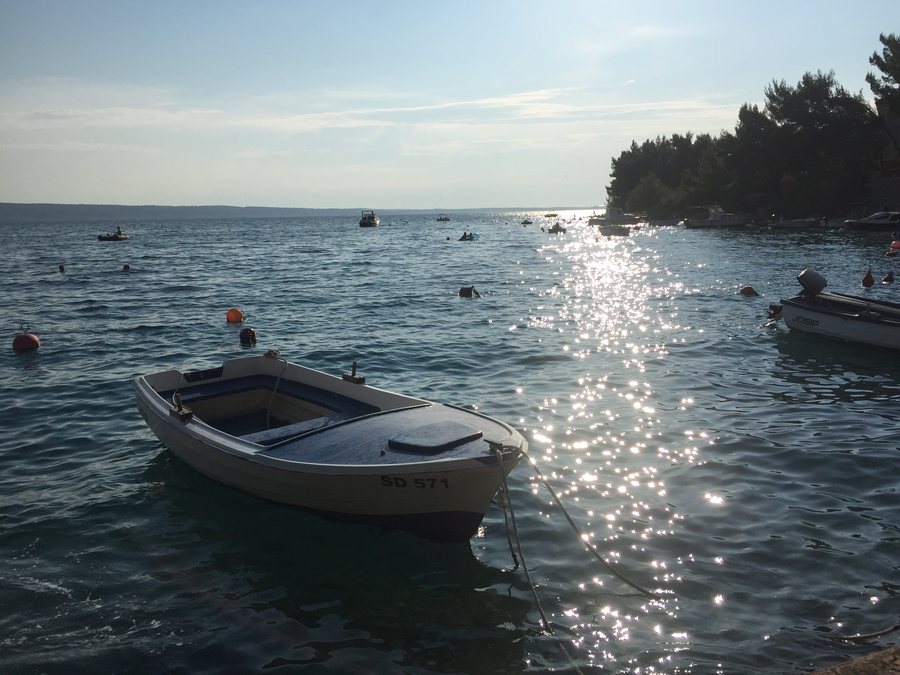 File:Općina Starigrad, Croatia - panoramio (1).jpg
Photo: Luboš Holič via Wikimedia Commons, CC BY-SA 3.0
File:Općina Starigrad, Croatia - panoramio (1).jpg
Photo: Luboš Holič via Wikimedia Commons, CC BY-SA 3.0
Key facts about the Municipality of Starigrad
Paklenica National Park covers 95 km² on the southern slopes of Velebit and includes the Velika Paklenica and Mala Paklenica gorges. Its highest peaks include Vaganski vrh at 1,757 m and Sveto brdo at 1,753 m. The Paklenica climbing area has around 600 established and equipped routes, graded from 3 to 8b+.
What does Paklenica offer for nature and climbing trips?
The two gorges and the peaks of Velebit give the national park a distinct mountain character. The approximately 600 climbing routes offer a wide range of difficulty grades, from 3 to 8b+. If you include climbing in your travel plans, you can use the stated grades to guide your choice of routes, without assuming that one route or a particular difficulty level is suitable for all visitors.
There are also various points of interest for visits beyond climbing. The “Pjeskarica” educational trail runs for 1.5 km along the east bank of the Velika Paklenica stream and has information panels and rest areas. Another educational trail, “A Short Journey through History,” is part of a cycling and walking route and uses five panels to trace the area's history, from prehistory to the present day.
An eight-kilometre cycling and walking route leads from the centre of Starigrad-Paklenica through old villages to Seline. This lets you include a longer route in your day's plans; the distance alone does not indicate how long it takes to walk or cycle. The entrance to Manita peć is at an elevation of 570 m. The ascent from the car park in Velika Paklenica takes about an hour and a half. Manita peć is the only cave in the park that is open to visitors.
Which historic sites and cultural attractions are there?
Today's Starigrad-Paklenica was built on the site of the ancient city of Argyruntum. Under Emperor Tiberius, Argyruntum was granted the status of a municipium between 31 and 35 AD. Another trace of history is Večka kula, on the edge of the so-called Večko field in Starigrad-Paklenica. It is one of a series of Venetian fortifications built in the Velebit Channel in the 16th century to defend against the Turks.
Mirila are another feature to discover at various locations in the municipality: they are protected cultural heritage of the Republic of Croatia. Within the national park, preserved mirila can be found near Grabova dolina, where they are connected to nearby hamlets. An educational trail from Ljubotić leads to Bristovačka mirila, the largest preserved site, with more than 300 mirila. The Ethno House Marasović in Starigrad-Paklenica also has a permanent exhibition about the tradition of building mirila.
The Church of St Peter, between Starigrad and Seline, offers a different historical perspective. This medieval, pre-Romanesque church was probably built at the turn of the 9th and 10th centuries. Fifteen watermills were built along the Velika Paklenica stream in the first half of the 19th century; the park administration restored the Srednji Marasovića mill in 2000.
Which places can serve as reference points for planning your trip?
The main reception for Paklenica National Park is at Paklenička ulica bb in Starigrad-Paklenica. Reception Mala Paklenica, Entrance 2, is at Put Jukića bb in Seline.
The municipality includes the settlements of Seline, Tribanj, Vinjerac, Tribanj Šibuljina and Starigrad-Paklenica. If you compare accommodation, you can use these place names as a starting point for further searches. To compare other municipalities, you can also find the Municipality of Lišane Ostrovičke, the Municipality of Obrovac and the Municipality of Stankovci here.
Which regional experiences complement a visit?
In the hamlet of Ljubotić, you can visit the Ethno House on the Vrata Velebita estate by prior arrangement. It has a permanent exhibition about beekeeping; Velebit honey and other local specialities are also available to taste. The Ethno House Marasović in Starigrad-Paklenica houses a traditional konoba. As well as trails and cultural sites, local food culture and the history of building mirila are among the themes you can explore on your trip.
The International Climbing Meeting traditionally takes place in Paklenica around 1 May, with accompanying events and competitions. If this meeting is important to your travel plans, note the stated period; it does not specify the programme for any particular year.
FAQ
How large is Paklenica National Park?
The national park covers 95 km² on the southern slopes of Velebit and includes the Velika Paklenica and Mala Paklenica gorges.
How long does the ascent to Manita peć take?
The ascent from the car park in Velika Paklenica to the entrance at an elevation of 570 m takes about an hour and a half.
How long is the cycling and walking route to Seline?
The route from the centre of Starigrad-Paklenica through old villages to Seline is eight kilometres long.
Can you visit the Ethno House in Ljubotić?
Yes. The Ethno House on the Vrata Velebita estate can be visited by prior arrangement; it has a permanent exhibition about beekeeping, and tastings of local specialities are available.
For the broader travel overview: Zadar County.

.jpg)