
Bory: Hotels and Accommodation
Accommodation in Bory
The approximately six-kilometre-long “Poznáváme Bory” educational trail leads through Dolní and Horní Bory. It runs from the vicinity of Dolní Bory via the flood retention area to Horní Bory and is accessible for the most part with a pushchair. The section between stations 16 and 17 is more demanding; a baby carrier is therefore recommended for small children.
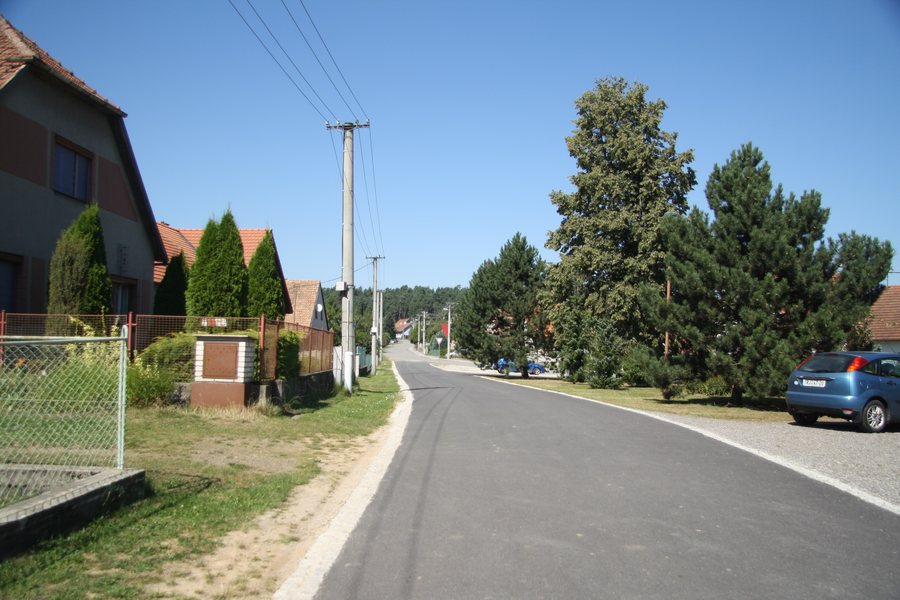 File:Center of Dolní Bory, Bory, Žďár nad Sázavou District.jpg
Photo: Jiří Sedláček via Wikimedia Commons, CC BY-SA 4.0
File:Center of Dolní Bory, Bory, Žďár nad Sázavou District.jpg
Photo: Jiří Sedláček via Wikimedia Commons, CC BY-SA 4.0
Along the Way
The “Poznáváme Bory” educational trail has a total of 36 stations with information panels and three interactive elements. At the Kamenolom Horní Bory station, panels provide information about the history of the quarry and the extraction of the deposit.
The educational trail also includes an analemmatic sundial. Visitors can learn how it works, sit down and enjoy the view across the landscape. The “Ucho lesa” sound installation consists of a large wooden megaphone-shaped horn into which forest sounds can be transmitted and listened to. The educational trail leading through Horní Bory also includes a geopark with wooden sculptures of native animals, providing information about nature and geology.
Red- and yellow-marked hiking trails, as well as the “Mlynářská stezka” cycling route, run through the municipality of Bory.
Nature
Gneiss is quarried at the Horní Bory quarry, where large blocks of serpentinised peridotite have been exposed. The quarry is a geotourism attraction, a geotope and an excursion site. In addition, 55 mineral species have been found there.
The Mrázkova louka natural monument in Horní Bory protects a mosaic of wet melancholy thistle meadows, moss-covered lime-free peat depressions and submontane mat-grass grasslands. Protected plants such as round-leaved sundew, narrow-leaved cottongrass, marsh cinquefoil and alpine clubmoss grow there.
Culture
The Church of St Martin is a distinctive landmark of the municipality of Bory. It is a Late Romanesque single-nave church and has been protected as a heritage monument since 1958. Its oldest surviving part dates from 1250 to 1280. During the summer season, the church is open for quiet contemplation and meditation.
Other places: Kotlasy, Obyčtov, Jimramov, Tasov, Daňkovice, Kuklik, Sklené Nad Oslavou, Dvořiště
For the higher-level travel overview: Žďár nad Sázavou District.

