
Discover Máza
Accommodation in Máza
Máza brings together recurring community activities, a local collection, and a remarkable church history. Exploring the wider region also reveals additional cultural, nature, and family attractions across the broader Branau travel region, each with its own focus.
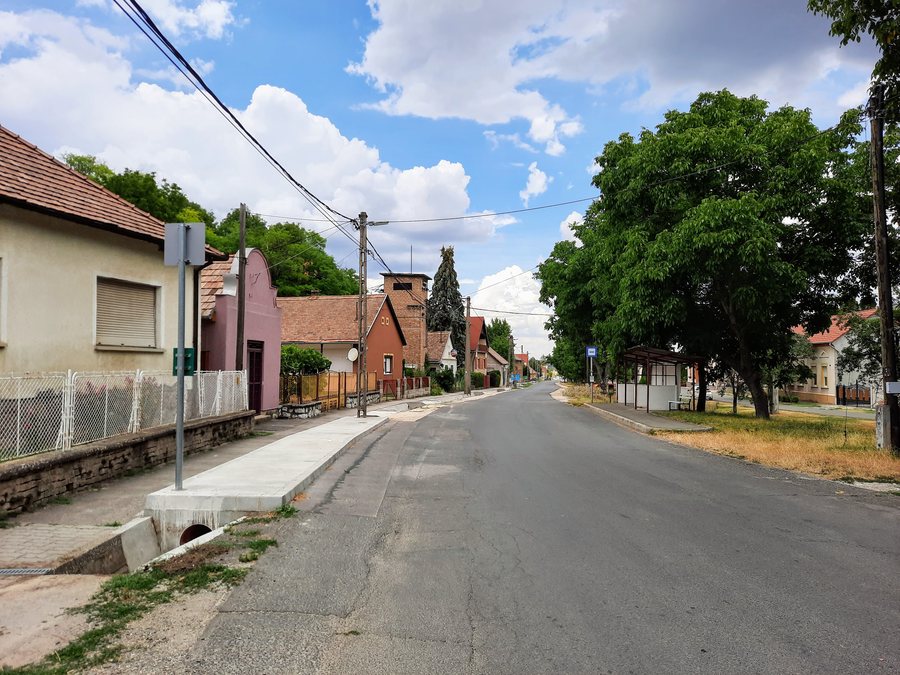 File:Máza, buszmegálló Kossuth utcában.jpg
Photo: Györkő Zsombor via Wikimedia Commons, CC BY-SA 4.0
File:Máza, buszmegálló Kossuth utcában.jpg
Photo: Györkő Zsombor via Wikimedia Commons, CC BY-SA 4.0
Quick facts about Máza
- The Mázai Német Nemzetiségi Egyesület holds an annual Easter egg-painting event for children and parents, as well as craft afternoons for St. Martin’s Day and Advent.
- The association holds monthly club meetings, usually complemented by events for special occasions.
- The local collection includes a Swabian kitchen and a traditional room; visits can be arranged in advance.
- According to current understanding, a church in Máza is attributed to a very large noble family from the Csák lineage.
What can you discover about local community and cultural life?
The Mázai Német Nemzetiségi Egyesület’s activities take place throughout the year: egg-painting is planned for Easter, and craft afternoons for St. Martin’s Day and Advent. Members also meet monthly at the club; events for special occasions usually complement these meetings. For families, this gives an idea of the cultural occasions that recur in local community life. No specific dates are set out here.
The local collection offers another insight. It includes a Swabian kitchen and a traditional room. If you would like to see these rooms, arrange your visit in advance. The “Diófesztivál” is also part of the town’s cultural history: it was held for the fourth time in Máza in September 2010. This specific event provides a historical point of reference alongside the association’s annual activities.
What is known about the church in Máza?
According to current understanding, a very large noble family from the Csák lineage built a church in Máza with a three-aisled basilica-style floor plan. The family was later called “Koromszói” after its local estates. This cautious attribution forms part of the building’s traditional account; the description also highlights its unusual size and architectural design. Alongside the lively community events, it offers a glimpse of the town’s earlier history.
What other cultural destinations are in the wider Branau travel region?
In the wider Branau travel region, Pécs offers a focus on archaeology as well as art and industrial history. The Early Christian Necropolis of Sopianae includes decorated tombs from the 4th century: underground burial chambers with above-ground memorial chapels and Christian wall paintings. The Zsolnay Cultural Quarter features the “Golden Age of Zsolnay” and “Pink Exhibition,” as well as an exhibition on the history of the family and factory.
Siklós Castle and the Nagyharsány Sculpture Park also offer distinct attractions. The castle is one of Hungary’s best-preserved military complexes and among the country’s most important Renaissance buildings. Modernization of the museum wing opened its previously inaccessible Gothic section to visitors. At the sculpture park, the “Art in Nature” program includes a guided tour. Together, these attractions cater to different cultural interests: medieval and Renaissance architecture, exhibitions, and outdoor art.
What nature and family attractions are there in Branau?
The Ős-Dráva Visitor Center near Szaporca combines an interactive exhibition with a demonstration farming area where practical land management is showcased. Three themed trails cover traditional agriculture, the Ős-Dráva Program, and wildlife along the Drava. The farming area is home to native Hungarian livestock: Hungarian Grey cattle, Mangalica pigs, Hucul horses, and heritage sheep and poultry breeds.
The wilderness trail along the Old Drava features a birdwatching and bird-ringing station, a lookout point, a photography shelter, a covered activity area, and several rest stops. The Kikerics Panorama Trail serves a different purpose: it allows safe passage along the cliff edge and protects the park’s plant life from trampling.
The Zsolnay Cultural Quarter offers children outdoor playgrounds, an interactive lab, a planetarium, the Bóbita Puppet Theater, a ceramics-painting workshop, and classes at the Hercules Workshop. The freely accessible outdoor area can be entered and used free of charge during opening hours. Check the opening hours when planning your visit.
What culinary experiences does Branau offer?
In Villány’s cellar row, you can go from cellar to cellar all year round to sample wines and food. This focus differs from the cultural and nature attractions: it combines a visit with regional wine and cuisine. Together with the exhibitions, historic buildings, and trails, it illustrates the variety of themes to explore across the wider Branau travel region.
Discover more destinations: Mánfa, Magyarhertelend, Egyházaskozár, Hosszúhetény, Vékény, Magyaregregy, Komló, Liget.
FAQ
What recurring activities are there in Máza?
The Mázai Német Nemzetiségi Egyesület holds an annual Easter egg-painting event for children and parents, as well as craft afternoons for St. Martin’s Day and Advent. There are also monthly club meetings, usually complemented by events for special occasions.
What does the local collection include?
The collection includes a Swabian kitchen and a traditional room. Visits can be arranged in advance.
How is the church in Máza described?
According to current understanding, a very large noble family from the Csák lineage, later called “Koromszói” after its local estates, built a church with a three-aisled basilica-style floor plan.
For the wider travel overview: Komlói.

