
Discover Golop
Accommodation in Golop
In Golop, two Vay castles stand alongside churches with different architectural histories, a protected castle park, and a wine tradition. These details help you get a sense of the town’s cultural and scenic character for your trip.
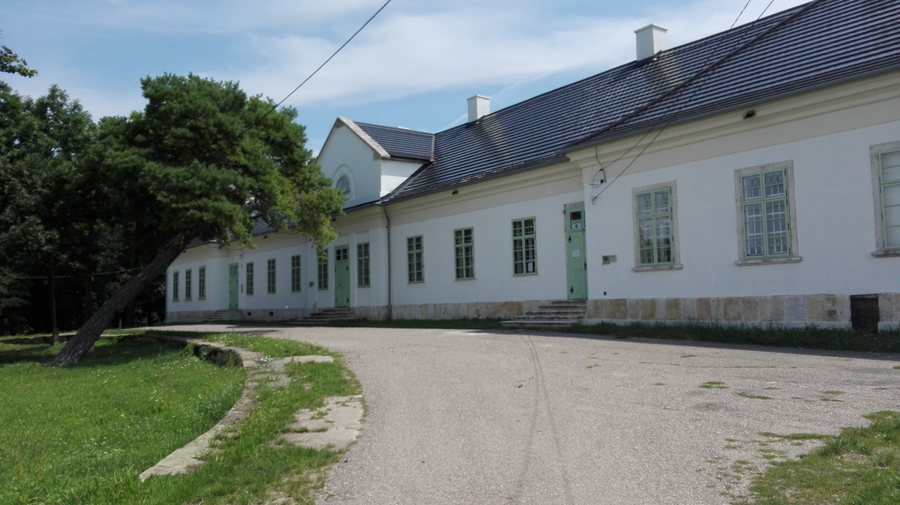
Quick facts about Golop
Golop lies at the mouth of the Szerencs stream valley, at the foot of Somos-hegy. Notable buildings include the Renaissance Vay Castle and the Neoclassical Vay Castle opposite it. The Ősi Magyar Címertár is housed in the Neoclassical castle. The Roman Catholic church was built in 1886; the Reformed church stands in the castle garden. Wine is also part of the town’s history: as early as the 18th century, wine fermented and clarified in a cellar on the slopes of Somos-hegy.
What do the Vay castles tell us about Golop’s history?
The two Vay castles were built in different centuries. The old Vay Castle was commissioned by Vice-Ispán Golopy Gáspár around 1592 in the Renaissance style. The new Vay Castle was built around 1825 for Baron Vay Miklós and designed in the Neoclassical style. In Golop, a recently renovated Renaissance Vay Castle and a Neoclassical Vay Castle also face each other. The Neoclassical building houses the Ősi Magyar Címertár.
The exhibition is also known as the Ősi Magyar Címer- és Zászlókiállítás. It displays more than 500 coats of arms and 16 historical flags. Golop thus brings architectural history together with an extensive collection of coats of arms and flags, focusing on distinct but related subjects. If you are interested in architecture, you can distinguish Renaissance and Neoclassical forms by comparing the castles; the dates provide a historical context.
What churches and architectural details can you see?
Golop’s Roman Catholic church was built in 1886. Its façade and roof have been renovated. The Reformed church stands in the castle garden and is Gothic. Its 24-meter-high tower has Baroque stylistic features. Thus, the churches, like the castles, reflect different architectural periods in Golop.
These buildings offer different points of interest for a culture-focused stay: the Catholic church’s history includes its year of construction and the parts of the building that have been renovated; the Reformed church combines a Gothic style with a tower influenced by Baroque forms. These details distinguish the two churches without requiring you to treat them as a single architectural ensemble.
How does Golop bring together its wine tradition and landscape?
The town’s wine history dates back at least to the 18th century: wine fermented and clarified in barrels in a cellar on the slopes of Somos-hegy, on the edge of Golop. This is distinct from the tastings held in local wine cellars, where you can try wines made from traditional Hegyalja grape varieties using artisanal methods. If a tasting is important to your plans, check in advance whether one is currently available.
The view from Nagykő on Somos-hegy also connects the landscape with winegrowing: from there, you can enjoy a panorama of Golop and the Mád–Tállya wine region. The preserved part of the castle park is designated a nature reserve to protect its old yew trees, oaks, and plane trees. The historic cellar, current tasting opportunities, views, and protected trees are distinct aspects of the town; the view adds a landscape perspective to the cultural experience.
Which other destinations can you compare?
Discover other destinations: Rátka, Legyesbénye, Mád, Bekecs, Tállya, Szerencs and Mezőzombor.
FAQ
Which Vay castles are there in Golop?
The old Vay Castle was built around 1592 in the Renaissance style, and the new one around 1825 in the Neoclassical style. The Neoclassical Vay Castle houses the Ősi Magyar Címertár.
What does the Ősi Magyar Címer- és Zászlókiállítás display?
The exhibition displays more than 500 coats of arms and 16 historical flags.
What is known about Golop’s churches?
The Roman Catholic church dates from 1886; its façade and roof have been renovated. The Reformed church stands in the castle garden, is Gothic, and has a 24-meter-high tower with Baroque stylistic features.
What wine and landscape experiences does Golop offer?
Wines made from traditional Hegyalja grape varieties can be tasted in local wine cellars. From Nagykő on Somos-hegy, the panoramic view extends over Golop to the Mád–Tállya wine region.
For the wider travel overview: Szerencsi.

_of_Golop,_Hungary_1.jpg)