
Feketeerdő: Alluvial Forest, Oaks and a Protected Church
Accommodation in Feketeerdő
Feketeerdő brings together protected landscape areas, old oak trees and a locally protected church building.
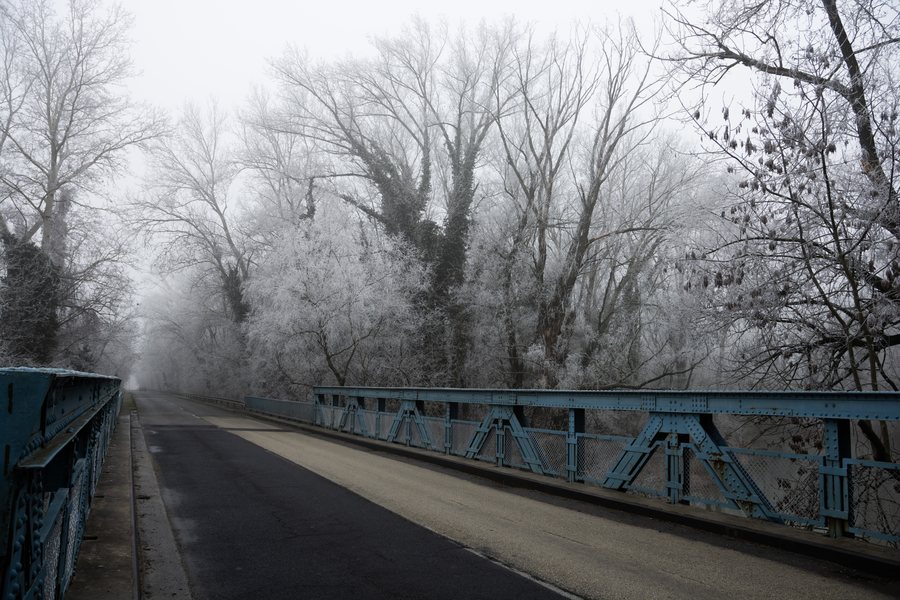 File:Kossuth híd Feketeerdő és Mosonmagyaróvár között.jpg
Photo: Trajcinema via Wikimedia Commons, CC BY 4.0
File:Kossuth híd Feketeerdő és Mosonmagyaróvár között.jpg
Photo: Trajcinema via Wikimedia Commons, CC BY 4.0
Feketeerdő at a glance
The Szigetközi Tájvédelmi Körzet has areas scattered in a mosaic pattern across the municipality of Feketeerdő. In the area around the village, in a bend of the Mosoni-Duna in northern Szigetköz, there are extensive hardwood alluvial forests. During hunting seasons, warning notices apply at the forest edge. Seven Millennium Oaks stand on the outskirts of the village, and their age is given as approximately 100 years. The Kisboldogasszony Church on Hétvezér utca is under local protection.
What shapes the landscape in Feketeerdő?
Two distinct landscape features help put the area in context: the areas of the Szigetközi Tájvédelmi Körzet are scattered in a mosaic pattern across the municipality, while the hardwood alluvial forests in the Feketeerdő area are described as extensive. This means the protected area and the character of the forest are complementary features, not the same one.
The location of the seven Millennium Oaks on the outskirts of the village adds a clearly identifiable point of interest to this natural setting. Their approximate age of 100 years is an estimate. If you are choosing where to stay based mainly on landscape and local features, you can use this information as a guide to Feketeerdő. Observe the warning notices at the forest edge during hunting seasons.
What landscapes does the wider travel destination offer?
The wider travel destination of Győr-Moson-Sopron County offers other, distinct landscapes. The Fertő/Neusiedler See cultural landscape includes Eurasia’s westernmost steppe lake, as well as wetlands, saline soils, reed beds and shoreline areas. Lake Neusiedl forms the core of Fertő-Hanság National Park; the Hungarian part of the lake has been protected since 1977.
Another natural area is the Pannonhalmi Tájvédelmi Körzet Landscape Protection Area. It covers 8,272 hectares and has two focal areas: the Pannonhalmi Hills and the calcareous sandy steppes of Kisalföld. The hills, in turn, consist of three approximately parallel ranges: Szemere, Csanak and Pannonhalma. For your travel planning, this comparison highlights different features: wetlands, reeds and shoreline areas on the one hand, and hill ranges and sandy steppes on the other. These landscapes are part of the wider travel destination of Győr-Moson-Sopron County, not local features of Feketeerdő.
Which cultural attractions can you compare?
The cultural attractions in the wider travel destination of Győr-Moson-Sopron County also offer different highlights. Pannonhalma Archabbey was founded in 996. The World Heritage property of the Archabbey and its natural surroundings includes the monastery complex, the basilica, educational buildings, the Chapel of Our Lady, the Millennium Chapel, and botanical and herb gardens. Esterházy Palace in Fertőd is an outstanding work of Hungarian Baroque-Rococo palace architecture.
The cultural options in the wider travel destination therefore range from monastic history and its associated buildings to a significant palace complex. Scheduled buses run daily from the bus station in Győr to the main entrance of the Archabbey. Check the current timetable before travelling. This information relates to the Archabbey and bus services there.
How do you choose the right place to search for a hotel?
If you are specifically looking for Feketeerdő, focus on its local features: the alluvial forests, the oak trees on the outskirts of the village and the locally protected Kisboldogasszony Church. If you would rather compare landscapes or cultural attractions across the wider travel destination, the examples mentioned from Győr-Moson-Sopron County can help broaden your search. When choosing, consider which specific place you want to make the focus of your trip.
Discover more destinations: Ásványráró, Várbalog, Lébény, Dunakiliti-Tejfalusziget, Hegyeshalom, Jánossomorja, Kimle and Dunasziget.
FAQ
Where are the Millennium Oaks?
Seven Millennium Oaks stand on the outskirts of Feketeerdő. Their age is given as approximately 100 years.
What natural features are mentioned for Feketeerdő?
The municipality includes areas of the Szigetközi Tájvédelmi Körzet scattered in a mosaic pattern. The Feketeerdő area also has extensive hardwood alluvial forests; warning notices apply at the forest edge during hunting seasons.
How do the landscapes in the wider travel destination of Győr-Moson-Sopron County differ?
The Fertő/Neusiedler See cultural landscape is shaped by the lake, wetlands, saline soils, reeds and shoreline areas. By contrast, the Pannonhalmi Hills comprise three approximately parallel ranges and belong to a landscape protection area whose other focal area is the calcareous sandy steppes of Kisalföld.
See the wider travel overview: Mosonmagyaróvári.

