
Discover Jánossomorja: Culture and Festivals
Accommodation in Jánossomorja
Jánossomorja combines church and memorial history with local festival traditions and an annually selected range of city wines.
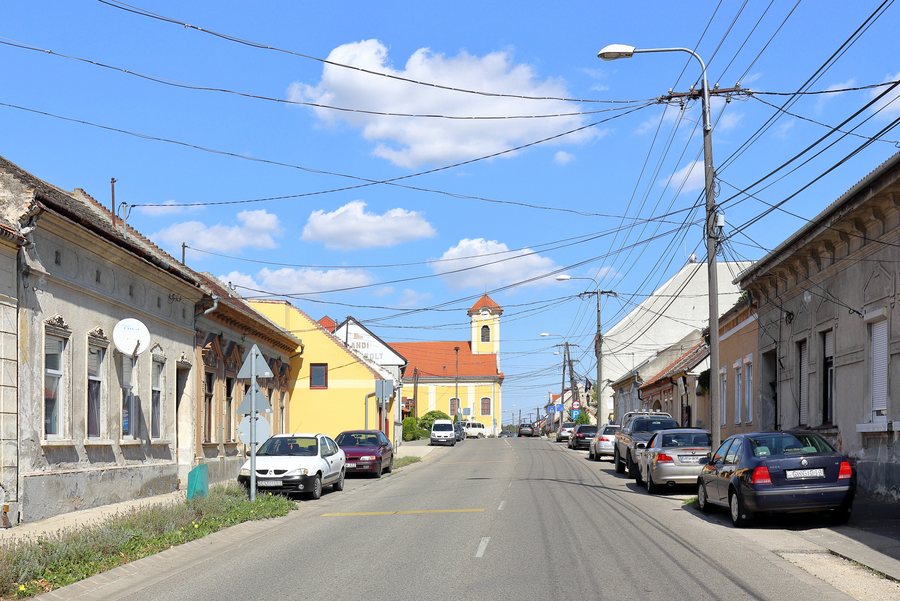
Jánossomorja at a glance
- The Roman Catholic church in Pusztasomorja is named after Saint Stephen, King of Hungary.
- The Hármashalom Memorial was inaugurated on 30 May 1937.
- Old local customs include the St Stephen's Day festival and the Péter-Pál-napi búcsú.
- The Szombathely–Hegyeshalom main railway line provides connections from Jánossomorja in several directions.
What traces of history can you discover?
In Pusztasomorja, a former settlement of Jánossomorja, the Roman Catholic church was rebuilt in the Baroque style between 1713 and 1735. It was built on the site of an earlier medieval church and is dedicated to Saint Stephen, King of Hungary. Its history therefore brings together an older church site and a later Baroque transformation.
Another historical landmark is the Hármashalom Memorial. It was inaugurated on 30 May 1937 and was originally intended to commemorate local residents who died in the First World War. The church and the memorial offer different ways to explore local history: one reflects the long development of a sacred site, while the other marks a specific 20th-century occasion for remembrance.
Which festival traditions shape local life?
The St Stephen's Day festival in Somorja is one of Jánossomorja's old customs. The Péter-Pál-napi búcsú is also part of these traditions: it is the joint feast day of the town's two larger districts. Both occasions offer insight into local festival culture, but they should not be conflated into a single festival.
The May Festival has been held on 1 May for several years, with strong participation from local residents. Another event is the Nagyerdei Ifjúsági Találkozó, an annual three-day gathering of regional youth associations and clubs. Young people travel to it from across the county. The events therefore differ considerably: the May Festival is tied to a fixed date on the calendar and draws strong participation from local residents, while the gathering in Nagyerdő brings together youth associations and clubs and lasts three days. If you want to plan your trip around an event, check the current dates in advance.
What can you learn about the city wines?
Since 2022, the city administration has selected Jánossomorja's city wines annually. The wines chosen for each year can be sampled at several shops and some restaurants in the city. The selection changes from year to year.
This feature is especially relevant to your trip planning if you would like to include local wines in your stay. Check the selection for the year in question and note that tastings are available at several shops and some restaurants.
What should you plan for your journey?
The Szombathely–Hegyeshalom main railway line provides connections from Jánossomorja in several directions. Check the current timetable when planning your specific journey.
If you are visiting around a festival, checking the current dates is an important part of your planning.
What other themes does the wider destination offer?
The wider Raab-Wieselburg-Ödenburg destination offers other, distinct themes. These include Pannonhalma Archabbey, founded in 996, and Esterházy Palace in Fertőd, an outstanding work of Hungarian Baroque-Rococo palace architecture. These places provide regional context and are not features of Jánossomorja.
The Fertő/Neusiedler See cultural landscape is also part of this wider area. It includes Eurasia's westernmost steppe lake, as well as wetlands, saline soils, reed beds, and shoreline areas. The Hungarian part of Lake Neusiedl has been protected since 1977; the Fertő-táj cultural landscape was granted UNESCO World Heritage status on 13 December 2001. The themes are therefore distinct: Jánossomorja focuses on local history, customs, and city wines, while the wider travel region also encompasses monastic and landscape heritage.
Discover more destinations: Lébény, Hegyeshalom, Feketeerdő, Levél, Dunasziget, Halászi, Várbalog and Kimle.
FAQ
When is the May Festival in Jánossomorja?
The May Festival takes place on 1 May. It has been held for several years with strong participation from local residents. Check the current dates before your trip.
What is the history of the church in Pusztasomorja?
The Roman Catholic church is named after Saint Stephen, King of Hungary. Between 1713 and 1735, it was rebuilt in the Baroque style on the site of an earlier medieval church.
Where can you sample the city wines?
The city wines selected for each year can be sampled at several shops and some restaurants in Jánossomorja. The city administration has selected them annually since 2022.
For the wider travel overview: Mosonmagyaróvár.

