
Hédervár: Castle Park, Chapels and Ancient Trees
Accommodation in Hédervár
Hédervár brings together a historic castle, an expansive park, chapels and distinctive landscape remnants. Its various sights help you identify what interests you about the destination before looking for a hotel.
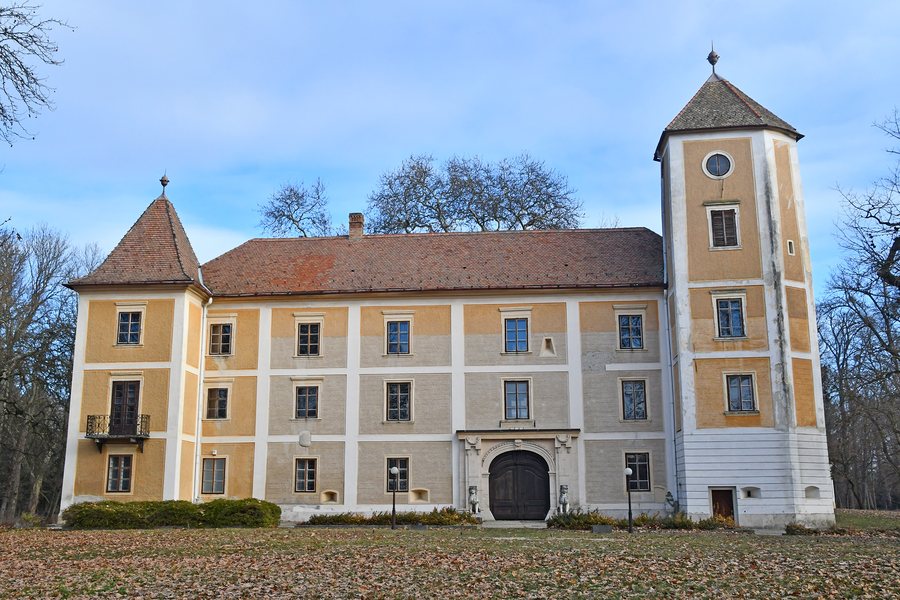 File:Hédervár, Khuen–Héderváry-kastély 2024 02.jpg
Photo: Pasztilla aka Attila Terbócs via Source, CC BY-SA 4.0
Hédervár at a glance
Key features of the town include Héderváry Castle and its English landscape park, the Boldogasszony Chapel and the Szent-Peregrinus Chapel. An ancient oak, rare plants and remnants of formerly extensive pastureland also shape the landscape. You can also explore the sights on a virtual tour.
What makes the castle park special?
Héderváry Castle is a three-storey building with three corner towers. It stands in a park with centuries-old trees. The English landscape park around the castle was created under the personal direction of Englishman Petri Bernard. The ensemble brings together the building's architecture and a historically designed parkland.
The park features several distinctive details: a centaur sculpture stands on a small island, and there are also stone garden urns and a Neo-Gothic garden house. Alongside its ancient trees, these features give the park its own character. Those interested in architectural styles can appreciate the three-storey castle, its corner towers and the garden house as distinct architectural motifs.
What do the chapels tell us about Hédervár's history?
The Boldogasszony Chapel is a medieval pilgrimage site and a Marian shrine. It was expanded in the 17th century with a Loreto Chapel. The chapel opened to visitors in 1989. Every year on the Feast of the Assumption of Mary, the parish and the foundation hold an open-air Mass there. The site is therefore connected both with a long religious history and with an annual event.
The octagonal Szent-Peregrinus Chapel, located on the road to Darnózseli, has a different form. The history of today's Szent-Mihály parish church also reaches back to an earlier place of worship: a chapel stood on its site as early as the first half of the 13th century and remained until the Tatar invasion. These details make the history of the churches and chapels a distinct way to explore the town, alongside the castle and its park.
Which landscapes and ancient trees stand out?
The pasture beside Vadaskert is one of the last remaining areas of the once extensive pastures along the Mosoni-Duna. It is a dry grassland and a woodland-steppe meadow. The Vadaskerti-erdő in Hédervár, in turn, is a remnant of a formerly dominant woodland community. Both descriptions refer to preserved areas with different characteristics: the pasture on one hand and a surviving part of the woodland community that once defined the landscape on the other.
Rozália Park is at the intersection of the road to Lipót and Fő út and is known for its rare plants. Another notable natural attraction is the Árpád-fa oak beside the Boldogasszony Chapel. It is estimated to be around 700 to 800 years old. The grey poplar, which commemorates Héderváry Kont István, stands about 300 metres from the castle. These three places offer different points of interest for visitors drawn to plants, landscapes and sites of remembrance.
How does the virtual tour help you get your bearings?
You can explore Hédervár's sights on a virtual tour. It offers a way to get acquainted in advance with the town's different attractions: the castle and park, the chapels, and its natural and landscape features. If you want to consider your interests when choosing a hotel, you can first think about which of these themes matters most for your trip. The tour helps you take in the local sights without reducing them to a single theme.
Which cultural sites add to the wider destination?
The wider destination of Győr-Moson-Sopron offers other cultural sites as possible points of interest. The Benedictine Abbey of Pannonhalma was founded in 996. The World Heritage property includes the monastic complex, the basilica, educational buildings, the Chapel of Our Lady, the Millennium Chapel, and botanical and herb gardens. Esterházy Palace in Fertőd is considered an outstanding work of Hungarian Baroque-Rococo palace architecture. These examples offer different cultural highlights from the castle and chapels in Hédervár.
Discover more destinations: Jánossomorja, Levél, Lébény, Dunakiliti-Tejfalusziget, Halászi, Feketeerdő, Hegyeshalom, Dunasziget.
FAQ
What are the features of Héderváry Castle?
The castle is three storeys high, has three corner towers and stands in a park with centuries-old trees. The English landscape park was created under Petri Bernard.
What is the Boldogasszony Chapel associated with?
It is a medieval pilgrimage site and Marian shrine, was expanded with a Loreto Chapel in the 17th century, and hosts an open-air Mass every year on the Feast of the Assumption of Mary.
How old is the Árpád-fa oak?
It is estimated to be around 700 to 800 years old. It stands beside the Boldogasszony Chapel.
For the wider travel overview: Mosonmagyaróvár.

