
Agyagosszergény: Church Art and Dance Tradition
Accommodation in Agyagosszergény
Agyagosszergény brings together a specific detail of sacred art with a lively dance tradition and customs kept alive locally. For planning your trip, this combination helps you understand the town’s cultural character; the streams that form its boundaries add a sense of its landscape.
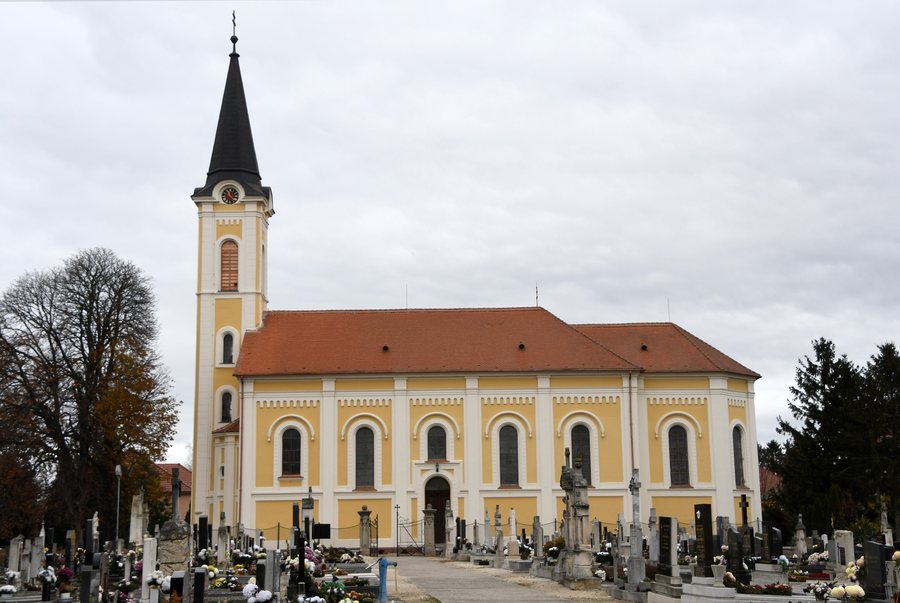 File:Agyagosszergény, római katolikus templom 2021 02.jpg
Photo: Pasztilla aka Attila Terbócs via Wikimedia Commons, CC BY-SA 4.0
File:Agyagosszergény, római katolikus templom 2021 02.jpg
Photo: Pasztilla aka Attila Terbócs via Wikimedia Commons, CC BY-SA 4.0
Agyagosszergény at a glance
The main altar of Szent László Plébániatemplom features an oil painting of Saint Ladislaus. The Agyagosszergényi verbunk is a circle dance in which girls also take part. The local ensemble Kiss István Néptáncegyüttes was founded in 2017 to preserve, practise and pass on dance traditions. To the north, west and east, the Ikva and Répce streams together form Agyagosszergény’s boundary.
What do church art and dance tell us about the town?
The painting on the main altar offers a specific point of interest if you are interested in religious art: it depicts Saint Ladislaus and is located in Szent László Plébániatemplom.
The verbunk reveals another side of local culture. As a circle dance in which girls also take part, it is a tradition with a clearly defined dance form. Founded in 2017, the Agyagosszergényi Kiss István Néptáncegyüttes is dedicated to preserving, practising and passing on local dance traditions, as well as those of the Rábaköz region and the peoples of the Carpathian Basin. This brings a particular dance together with the broader task of passing on traditions—useful if you would like to understand the town through more than just a building, and consider its cultural practices too.
Which local customs are part of the town’s cultural character?
The ensemble and its associated legénycéh help keep several local customs alive and in practice. These include Balázs-járás and locsolás, the raising of the maypole and Pentecost customs, as well as the admission of young men, church-fair traditions and dancing the verbunk. The legénycéh is a separate organisation associated with the ensemble.
These customs make the cultural picture broader than a single dance form: it encompasses different traditions and occasions kept alive by local organisations. This helps distinguish between the specific work of art on the altar, the verbunk as a dance, and the wider context of local customs.
How can the landscape be understood?
The Ikva and Répce streams together form Agyagosszergény’s boundary to the north, west and east. If you are comparing culture and landscape, the named traditions here meet a concise, clear description of the setting provided by the streams.
Further natural and cultural landscape themes belong to the wider Raab-Wieselburg-Ödenburg travel destination. The Fertő/Neusiedler See cultural landscape includes wetlands, saline soils, reed beds and shoreline areas; its lake is the westernmost steppe lake in Eurasia. The Hungarian part of Lake Neusiedl has been protected since 1977 and forms the core of Fertő-Hanság National Park.
What cultural themes does the wider travel destination offer?
Raab-Wieselburg-Ödenburg is also worth exploring separately for its cultural heritage. The Benedictine Abbey of Pannonhalma was founded in 996. The World Heritage property of the Archabbey and its natural surroundings includes, among other features, the monastic complex, basilica, educational buildings, a Chapel of Our Lady, the Millennium Chapel, and botanical and herb gardens. In Fertőd, Esterházy Palace is an outstanding example of Hungarian Baroque-Rococo palace architecture.
This makes it possible to distinguish between different cultural interests: in Agyagosszergény, the focus is on the painting on the main altar, the verbunk and local customs; the regional examples include monastic heritage and palace architecture.
Discover more destinations: Hegykő, Fertöd, Röjtökmuzsaj, Nagycenk, Petőháza, Hidegség, Pereszteg, Kópháza.
FAQ
What does the painting on the main altar depict?
The oil painting in Szent László Plébániatemplom depicts Saint Ladislaus.
What is the Agyagosszergényi verbunk?
It is a circle dance in which girls also take part.
Which streams form Agyagosszergény’s boundaries?
The Ikva and Répce streams together form the town’s boundary to the north, west and east.
What other cultural themes are there in the wider Raab-Wieselburg-Ödenburg travel destination?
These include the Benedictine Abbey of Pannonhalma, founded in 996, and Esterházy Palace in Fertőd, an outstanding example of Hungarian Baroque-Rococo palace architecture.
To the wider travel overview: Sopron–fertődi.

