
Bajna: Discover history and strudel traditions
Accommodation in Bajna
Bajna combines distinctive historic landmarks with a well-known strudel tradition. The cross on Őr-hegy, the Csimai Calvary and Bajnai rétes give you concrete points of reference as you explore the character of the town and plan your trip.
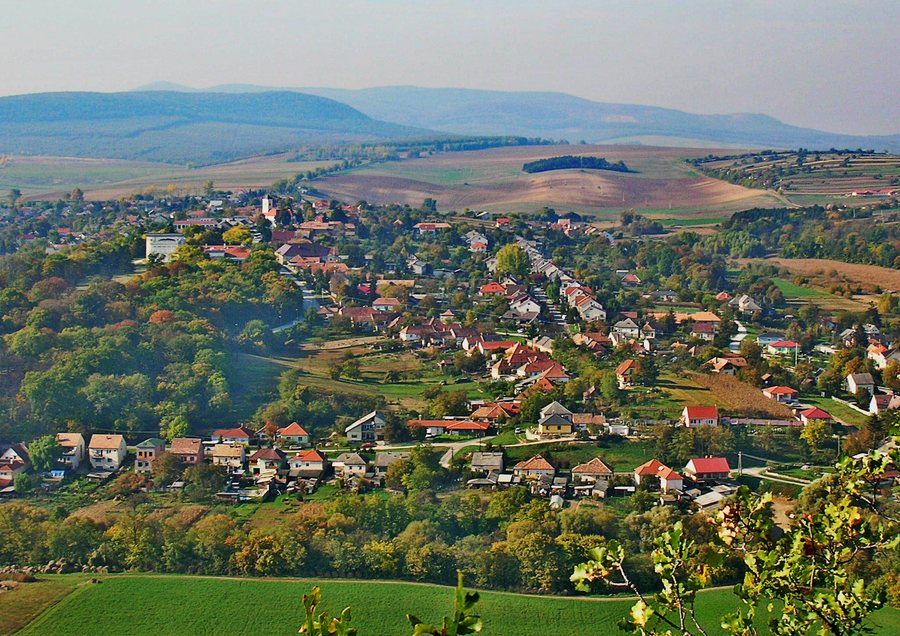
Bajna at a glance
- The large cross on Őr-hegy was erected in 1856.
- The Csimai Calvary dates back to 1732 and has been renovated several times.
- Bajnai rétes, also known as Etus néni rétese, is a strudel recipe well known in Bajna.
Which historical traces shape Bajna?
On Őr-hegy, Sándor Paulina had the large cross erected in 1856 to mark her marriage to Metternich Richárd. The date and occasion give this place a specific historical connection: the cross commemorates an event in the life of the woman who commissioned it and is also a distinctive part of Bajna’s recorded history.
Another place with its own history is the Csimai Calvary. The Sándor family had it built in 1732; renovations followed in 1872, 1897 and 1928. The complex stands on the site of a village church that was destroyed during the Ottoman period. Its construction, later renovations and predecessor building therefore belong to different chapters of the town’s history. Anyone wishing to get to know Bajna through its historic sites will find more here than a single construction date: the history of the site reaches back to an earlier church.
What does Bajnai rétes tell us about the town?
Bajnai rétes, also known as Etus néni rétese, is a strudel recipe well known in Bajna. Locals and visitors alike enjoy eating it. As a regional specialty, it adds a culinary dimension to the destination alongside its historic sites.
What tradition is associated with 30 April?
Every year on 30 April, young people light a campfire on Őr-hegy as part of a small celebration. Its fixed date makes the tradition a special point in Bajna’s annual calendar. You can take 30 April into account as a cultural reference point when planning your trip.
What else does the wider Komárom-Esztergom destination offer?
Beyond Bajna, the wider Komárom-Esztergom destination offers other distinct points of interest. The Gerecsei Tájvédelmi Körzet is a nationally significant, individually designated landscape protection area in Komárom-Esztergom, covering 8,676 hectares. Triassic limestone predominates in the Gerecse; Jurassic limestone is also found here and is particularly rich in fossils. Komárom-Esztergom therefore also offers a geological and landscape setting for travelers interested in rocks and nature reserves as well as local history.
The cultural history on offer ranges from archaeological finds to major architectural monuments. The Brigetio Öröksége Látogatóközpont has an interactive permanent exhibition featuring finds from excavations at Brigetio. The Majki Kamalduli Remeteség is a Baroque monument complex with seventeen cell houses, a church tower and a monastery; an exhibition there covers the general and Hungarian history of the Camaldolese order. The Monostori Erőd is a military monument within the Komárom fortification system. Exhibitions and staged scenes illustrate the Monarchy, the world wars and the Soviet occupation. The Komárom fortification system, located within the territories of the two Komároms, is on the UNESCO World Heritage Tentative List.
The Majki Kamalduli Remeteség has seasonal opening hours Tuesday to Sunday: from 1 April to 31 October, it is open from 10:00 to 18:00; from 1 November to 31 March, from 09:00 to 17:00. Check the hours again before visiting, as they may change. At the Bábolna Nemzeti Ménesbirtok, a guided tour begins with an exhibition on the history of the stud farm and continues in the Ménesudvar. Carriage rides to the nearby arboretum are also offered there: two carriages drawn by Shagya Arabian mares are used, and advance booking is required. The “Fogat bemutató, ménfelvezetés” program presents four-, five- and two-horse teams, and visitors can try historic means of transport for themselves. Advance booking is also required for this program.
Discover more destinations: Nagysáp, Epöl, Csolnok, Kesztölc, Dorog, Dág, Leányvár, Tokodaltáró.
FAQ
When is the campfire lit on Őr-hegy?
The campfire takes place every year on 30 April as part of a small celebration, when young people light the fire.
When was the Csimai Calvary built?
The Sándor family had the complex built in 1732. It was renovated in 1872, 1897 and 1928, and stands on the site of a village church destroyed during the Ottoman period.
What are the opening hours of the Majki Kamalduli Remeteség?
It is open Tuesday to Sunday: from 1 April to 31 October, from 10:00 to 18:00, and from 1 November to 31 March, from 09:00 to 17:00. As opening hours may change, check them before your visit.
Go to the wider travel overview: Dorogi.

