
Nagybörzsöny: Watermill, Churches and Tájház
Accommodation in Nagybörzsöny
Nagybörzsöny’s history comes to life through a variety of landmarks: a protected watermill with a documented construction history, a Tájház featuring topics ranging from mining to everyday domestic life, and churches with their own architectural features and traditions. If you’re looking for hotels for your trip, this cultural variety offers a practical way to decide whether the town matches your interests.
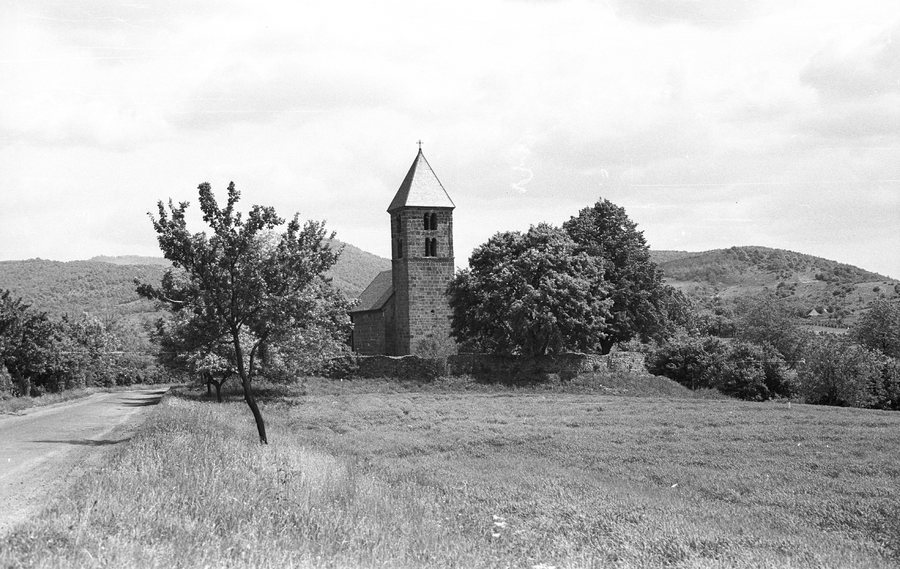 File:Nagybörzsöny, Szent István király templom. Fortepan 59784.jpg
Photo: FOTO:Fortepan — ID 59784 : Adományozó/Donor: Tóth Lajos. via Source, CC BY-SA 3.0
Nagybörzsöny at a glance
- The Antal-féle vízimalom is a protected monument. It was built after the great fire of 1847 and completed in 1851.
- The Tájház is housed in a 17th-century building and features several small exhibitions on the town’s more recent history.
- The Szent Miklós-templom dates from the late 18th century; Saint Nicholas has been venerated in the town for a long time.
- The name Bányásztemplom (Miners’ Church) comes from a miner’s emblem above the Gothic west portal.
What does the watermill tell us about Nagybörzsöny?
The Antal-féle vízimalom provides a clear date in the town’s construction history. It was built along with its millraces after the great fire of 1847 and completed in 1851. The sequence is clear: construction followed the fire, the millraces were part of the same building phase, and 1851 marks the year of completion.
What history does the Tájház showcase?
The Tájház brings together several topics and periods. The building dates from the 17th century, and several small exhibitions are devoted to the town’s more recent history. They include local mining history and showcase a significant portion of the ores and minerals found in the mountains.
Another focus is the everyday life of German housewives from Nagybörzsöny in the early 20th century. In a preserved kitchen with an open smoke hood, visitors can see kitchen equipment and food preparation methods from that period. Household objects and tasks, along with items from various crafts, round out the exhibitions. The dates refer to different things: the building dates from the 17th century, while the kitchen equipment relates to the early 20th century.
What sets the churches apart?
The Bányásztemplom’s present-day name is linked to a miner’s emblem: a wedge and hammer are crossed above the Gothic west portal. The church’s name derives from this emblem. On the north side of the chancel is also a Gothic sacrament house, an architecturally designed place for keeping the sacrament.
The Szent Miklós-templom is defined by its late-18th-century construction date and the long-standing local veneration of Saint Nicholas. The two churches therefore have different distinguishing features: a miner’s emblem and Gothic details at the Bányásztemplom, and its construction date and religious tradition at the Szent Miklós-templom.
Discover more destinations: Vámosmikola, Bernecebaráti, Ipolytölgyes, Zebegény, Kemence, Kóspallag.
FAQ
When was the Antal-féle vízimalom built?
It was built along with its millraces after the great fire of 1847 and completed in 1851.
Which historical periods are represented at the Tájház?
The building dates from the 17th century. The exhibits also include kitchen equipment used by German housewives from Nagybörzsöny in the early 20th century.
How do the two churches differ?
The Bányásztemplom is distinguished by the miner’s emblem above the Gothic west portal and its Gothic sacrament house. At the Szent Miklós-templom, the focus is on its late-18th-century construction date and the long-standing local veneration of Saint Nicholas.
For the broader travel overview: Szobi.

