
Aszófő
Accommodation in Aszófő
Aszófő brings together neoclassical church architecture, a protected row of wine cellars, and distinctive natural features.
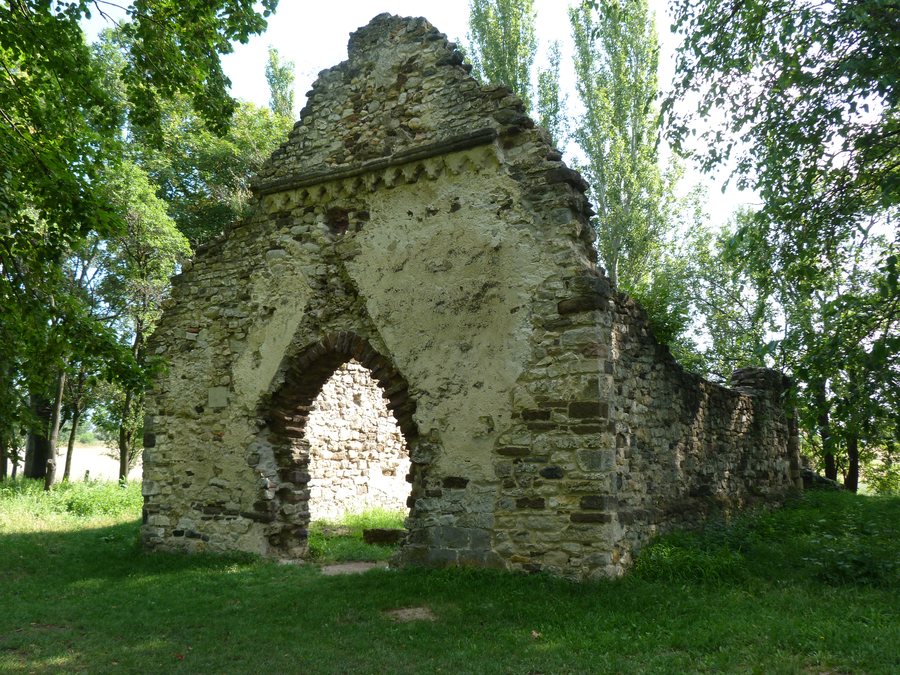 File:Kövesdi templom - Aszófő, 2014.07.24 (1).JPG
Photo: Derzsi Elekes Andor via Wikimedia Commons, CC BY-SA 4.0
File:Kövesdi templom - Aszófő, 2014.07.24 (1).JPG
Photo: Derzsi Elekes Andor via Wikimedia Commons, CC BY-SA 4.0
Key facts about Aszófő
The Roman Catholic Church of Szent László was built in the neoclassical style from 1832 to 1834. The Vörösmáli cellar row was built mostly in the mid-19th century and is a protected monument. On Öreg-hegy, dolomite bedrock supports slope steppe and karst scrub woodland. A viewpoint is located on a ridge along the road towards Pécsely.
What cultural sites and special features are there?
The Church of Szent László provides a clear chronological and stylistic reference point for the architectural history of Aszófő: it was built in the neoclassical style between 1832 and 1834. The Vörösmáli cellar row offers a different point of interest. Its cellars were built mostly in the mid-19th century, and the row is now a protected monument. It is located in Vörösmáli-dűlő, between the railway and the upper road connecting Aszófő with Balatonfüred.
A special light phenomenon is associated with the Kövesdi templomrom, the Kövesd church ruin. At the spring and autumn equinoxes, in the late afternoon, sunlight passes through the round window in the main façade and reaches the main altar. Visitors interested in historic religious buildings can therefore find not only the architectural history of the Church of Szent László, but also an unusual optical feature at the ruin.
What makes nature on Öreg-hegy distinctive?
On the southern and northeastern slopes of Öreg-hegy, vegetation on dolomite bedrock is characterised by a mosaic of slope steppe and karst scrub woodland. These terms describe different elements of the landscape: open, steppe-like slopes sit alongside scrubby karst areas. The mountain is therefore a suitable focus for travellers interested in plant life and the variety of dry hillside landscapes.
Winter aconite is another distinctive natural feature of the area. In Aszófő, one of Hungary’s largest winter aconite populations grows in a degraded hornbeam-oak woodland. The plant’s scientific name is Eranthis hyemalis. Public information boards in Aszófő point to the winter aconite trail. This makes it possible to understand the natural feature in terms of a specific plant population and a signposted destination, without conflating it with the vegetation on Öreg-hegy.
Which trails and viewpoints should you distinguish between?
Yellow trail markers lead up Öreg-hegy. Separate from these is the viewpoint on a ridge in front of the forest, along the road from Aszófő towards Pécsely. This distinction is useful when planning if you want to explore a trail on Öreg-hegy or specifically visit a viewpoint.
The sites appeal to different interests: architecture and monument protection, a light phenomenon at a church ruin, and plants and landscapes. You can therefore assess Aszófő according to which of these themes matters most for your trip. To compare it with other destinations, you can also visit Csopak, Balatoncsicsó, Balatonfüred, Balatonszepezd, Szentantalfa, Zánka, Tihany and Lovas.
FAQ
When was the Church of Szent László built?
The Roman Catholic church was built in the neoclassical style between 1832 and 1834.
Where is the Vörösmáli cellar row located?
It is located in Vörösmáli-dűlő, between the railway and the upper road connecting Aszófő with Balatonfüred.
When does sunlight reach the main altar of the Kövesdi templomrom?
At the spring and autumn equinoxes, in the late afternoon, sunlight passes through the round window in the main façade and reaches the main altar.
What is described for nature enthusiasts on Öreg-hegy?
Mosaics of slope steppe and karst scrub woodland occur on dolomite bedrock along the southern and northeastern slopes. Yellow trail markers lead up the mountain.
For the broader travel overview: Balatonfüredi.

.JPG)