
East Kazakhstan: Nature and Culture
Accommodation in East Kazakhstan
East Kazakhstan offers a range of options for a trip: Altai landscapes, mountain destinations and lakes sit alongside archaeological sites and literary memorials.
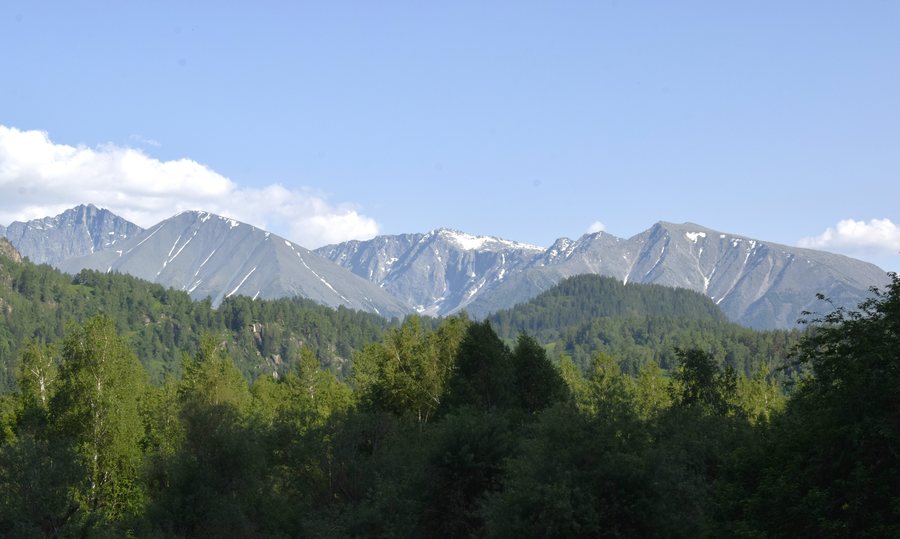 Katon Ridge, Altai mountains. Katon-Karagay, East Kazakhstan region. June 2025
Photo: Rayrayokocha via Wikimedia Commons, CC BY 4.0
Katon Ridge, Altai mountains. Katon-Karagay, East Kazakhstan region. June 2025
Photo: Rayrayokocha via Wikimedia Commons, CC BY 4.0
East Kazakhstan at a glance
Natural attractions include Mount Belukha, the high-altitude freshwater lake Yazevoye and the approximately 80-meter-high Kokkol Waterfall. The region’s cultural history spans the Berel burial site, with more than 100 burials, and petroglyphs and megaliths from the Bronze and Saka periods. The “Literary East” tourist route passes through sacred sites in East Kazakhstan.
The Old Austrian Road is also relevant for getting your bearings in the region: it is about 60 kilometers long and reaches Lake Markakol from Katon-Karagay or Kurchum. Details about its length and starting points help distinguish this route from the region’s natural and cultural attractions.
Which natural attractions can you include in your trip plans?
Mount Belukha attracts mountaineers, tourists and mountain trekking enthusiasts. Lake Yazevoye is also popular with tourists, mountaineers and trekking enthusiasts. It is a high-altitude freshwater lake of glacial origin. If you are interested in mountain landscapes and trekking, these two destinations offer different natural highlights: a striking mountain and a lake formed by glaciers.
Kokkol Waterfall is about 80 meters high and lies near tourist routes to Mount Belukha. This geographical connection makes it another natural attraction to consider when exploring routes toward Belukha; by itself, it tells you nothing about trail conditions or walking times.
The West Altai Nature Reserve focuses on protecting the Altai’s mountain taiga ecosystems. Cedar, fir and spruce forests grow there. The reserve is also home to rare plant and animal species listed in the Red Book. More than 1,000 species of higher vascular plants grow in Katon-Karagay National Park, including 30 species listed in Kazakhstan’s Red Book.
Which cultural sites and historical themes define the region?
The Berel burial site comprises more than 100 burials, as well as burial and memorial structures. An open-air museum has been established at the Berel kurgans. The Berel State Historical and Cultural Museum-Reserve is a cultural and educational, scientific and tourist center. Taken together, these details show that Berel is associated both with archaeology and with sharing historical and cultural knowledge.
The Ak-Baur archaeological complex includes numerous petroglyphs, megaliths and burial mounds from the Bronze and Saka periods. This makes it particularly suited to travelers interested in rock art and archaeological sites. The periods mentioned provide a timeframe for the finds without implying that the complex’s different features are all the same.
Another way to explore the region’s cultural history is through the Oralkhan Bokei House Museum. It is located in Chingistai, the writer’s home village, where he was born and spent his childhood. The exhibits include personal belongings, manuscripts, photographs and books. This makes the museum interesting for travelers who want to learn not only about archaeological sites, but also about a writer’s life and work.
How do the routes and other travel interests differ?
The “Literary East” route passes through sacred sites in East Kazakhstan. The Old Austrian Road, in turn, reaches Lake Markakol from Katon-Karagay or Kurchum. The routes differ in their stated focus: one connects trip planning with sacred sites, while the other provides access to Lake Markakol. The Old Austrian Road is about 60 kilometers long; keep this approximate distance in mind when exploring the route.
Another travel interest is the mountain resort of Rakhmanovskie Klyuchi, known for its healing thermal springs. Thus, in addition to mountain trekking, lakes and cultural sites, thermal springs offer another distinct point of interest. These different themes can help you narrow down the places relevant to your trip and then find suitable accommodation in East Kazakhstan.
Which areas of East Kazakhstan can you compare?
For an overview of the region, here are the areas of Vasil'yevskiy, Kabanbay, Aqsu, Öskemen, Petrova, Ridder, Akzhar, Kokkol', Semei, Pervomayskiy and Borodulikha District. Check the individual area pages if you want to focus on a particular part of East Kazakhstan.
FAQ
How high is Kokkol Waterfall?
Kokkol Waterfall is about 80 meters high.
What does the Berel burial site include?
It includes more than 100 burials, as well as burial and memorial structures.
How does the Old Austrian Road reach Lake Markakol?
The approximately 60-kilometer-long road reaches the lake from Katon-Karagay or Kurchum.
What does the Oralkhan Bokei House Museum display?
It displays the writer’s personal belongings, manuscripts, photographs and books.
For the broader travel overview: Kazakhstan.

