
Discover Făleşti: Culture, Nature and Routes along the Prut
Accommodation in Făleşti
Fălești combines historic sites, traditional festival culture and landscapes along the middle Prut.
The city of Fălești has two ponds with a total area of 48 hectares. A prominent historical feature is the access road “Ștefan cel Mare”, which is paved with granite cobblestones. The city is also home to a red-brick building constructed in 1890.
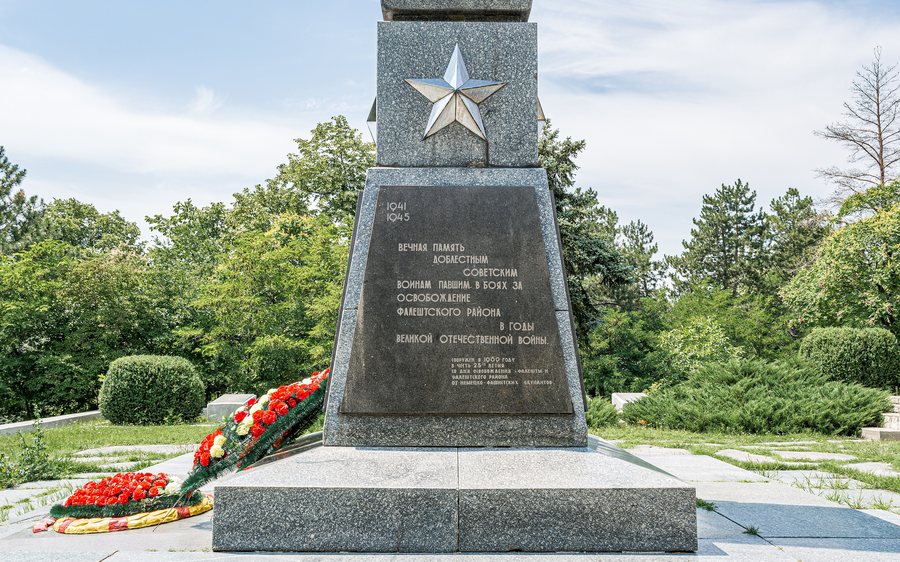 File:Мемориал Воинской Славы, Фалешты, Молдова Complexul Memorial Sovietic, Falesti, Moldova Soviet Soldiers Memorial Complex, Falesti, Moldova (49795371911).jpg
Photo: Photo: Photobank MD from Chisinau, Moldova
File:Мемориал Воинской Славы, Фалешты, Молдова Complexul Memorial Sovietic, Falesti, Moldova Soviet Soldiers Memorial Complex, Falesti, Moldova (49795371911).jpg
Photo: Photo: Photobank MD from Chisinau, Moldova
The Fălești District also includes several places with cultural and landscape connections. In Glinjeni stand two independent architectural monuments: the “Adormirea Maicii Domnului” Church, of national importance, and the “Sfânta Treime” convent. In Călinești is the “Fîntîna Doamnei” spring, whose design consists of multicolored stone in the national style.
Which cultural sites shape Făleşti’s profile?
Glinjeni is home to the “Adormirea Maicii Domnului” Church, an architectural monument of national importance, and the “Sfânta Treime” convent, which is also an architectural monument. There is also a bust of Ștefan cel Mare.
Another focal point is the “Lazăr Dubinovschi” Museum of History and Ethnography. The building is an architectural monument of national importance in the Republic of Moldova and was built in the 1930s. Inside are old church books in the Slavic language. The museum underwent major renovations in 2022–2023.
In the Fălești District, a chronicle of the churches and monasteries covers 57 churches and monasteries and includes detailed information and images.
Which festivals and traditions are part of the regional character?
Two cultural events take place in Fălești in September: the folk dance competition “La vatra horelor” and the Festival of Ethnicities.
In Fălești, the mask-play tradition includes the figures “Ursul”, “Capra” and “Căluțul”. Traditional games with zoomorphic masks have been passed down in the region. At the festival of winter traditions and customs “Să trăiți, să-nfloriți!”, traditional Christmas carols were performed; 14 artistic groups from throughout the Fălești District also performed there.
The seventh edition of the National Festival of Family Dynasties “La Izvorul Osoiencelor” took place on June 15, 2025, in the village of Horești in Fălești District, at the “Surorile Osoianu” house museum.
Where can nature, water and longer routes be found?
Izvoare-Risipeni is designated as a landscape reserve. The “Arborele Secular” natural monument is located in the village of Rediul de Sus. The “Pădurea Domnească” Scientific Nature Reserve is also situated along the middle Prut. It was established on July 2, 1993, to protect a representative forest and wetland complex as well as rare plant and animal species.
“Pe un picior de plai pe-o gură de rai” is a tourist route initiated in 2008 by the “Pădurea Domnească” State Forestry Administration together with the Glodeni District Council. The route connects natural and cultural heritage and provides access to “Suta de Movile”, bison-watching areas and impressive landscapes along the middle Prut. It is visited by tourists from various countries.
Another regional perspective is offered by the cross-border rural tourism route “Prutul de Sus”. It was launched as an initiative to develop tourism.
Further regional points of reference include Popovca, Falesti and Albinețul Vechi. Other destinations in Moldova include Dubasari, Balti, Raionul Ștefan Vodă, Ialoveni District and Sîngerei District.
FAQ
How many museums and museum branches are there in Fălești District?
There are three museums and three branches in Călugăr, Horești and Risipeni in Fălești District.
What does the chronicle of the churches and monasteries contain?
The chronicle covers 57 churches and monasteries in Fălești District and contains detailed information and images about them.
When did the “La Izvorul Osoiencelor” festival take place?
It took place in June 2025 at the “Surorile Osoianu” house museum in the village of Horești in Fălești District.
Which figures are part of the mask-play tradition?
The mask-play tradition in Fălești includes “Ursul”, “Capra” and “Căluțul”. Traditional games with zoomorphic masks have been passed down there.
To the overarching travel overview: Moldova.
