
Straseni between nature, culture and regional experiences
Accommodation in Straseni
Straseni combines protected natural areas with museums, monasteries, historical sites and regional workshops. This creates a diverse picture for planning your trip: you can explore landscapes, delve deeper into local history, and discover traditional crafts or regional specialities.
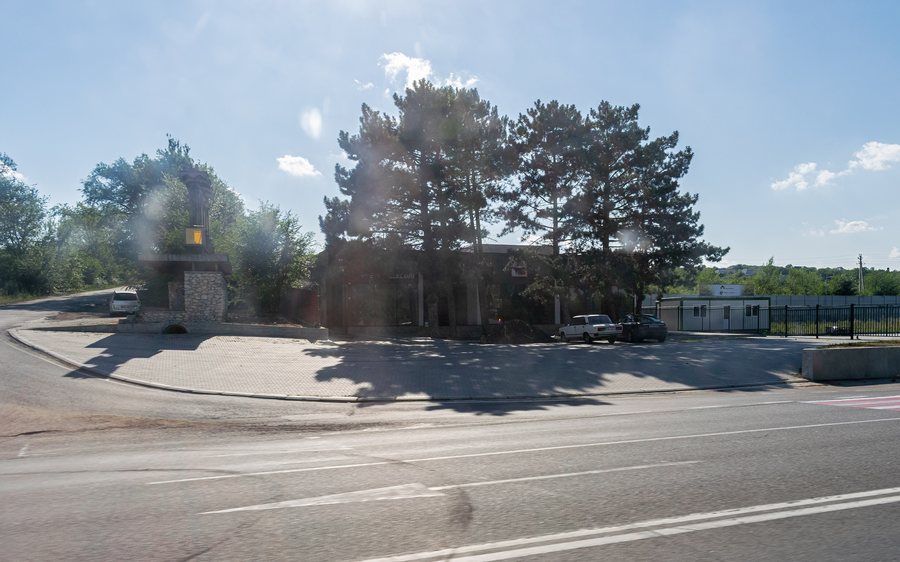 File:Bus Stop, Romanesti, Straseni Region, Republic of Moldova.jpg
Photo: Photobank MD via Wikimedia Commons, CC0
File:Bus Stop, Romanesti, Straseni Region, Republic of Moldova.jpg
Photo: Photobank MD via Wikimedia Commons, CC0
Protected natural areas cover more than 11% of the territory of Raionul Strășeni. Part of the territory of Raionul Strășeni extends into Orhei National Park through the three localities of Codreanca, Țigănești and Romănești.
The Dolna Landscape Reserve has been under state protection since 1975 and covers 389 hectares. The Bâc River flows through Bucovăț, Strășeni and Vatra. These two facts illustrate different aspects of the region: Dolna represents a clearly defined protected landscape, while the Bâc connects several localities.
What nature experiences define the region?
The Căpriana–Scoreni Landscape Reserve offers opportunities for hiking and ecotourism, as well as for observing the local flora and fauna. For regional orientation, a separate page also leads to Scoreni.
The Codrii Scientific Reserve in Lozova is home to old forests and numerous protected species. At the same time, it is one of the region’s most important tourist attractions.
The Țigănești Reserve also makes a distinctive contribution. Oaks grow there that are estimated to be 200–300 years old; the reserve covers 680 hectares. In Codreanca, the landscape is in turn characterised by two old forests that are suitable for hiking and observing the local flora and fauna.
Which paths and routes can be included in your plans?
The Strășeni–Pănășești–Căpriana thematic route combines regional history, spirituality and significant rural cultural heritage.
One specific option for active exploration is the old Hartonica road in Lozova. It can be explored on foot or by bicycle. For further regional destinations, see Orhei District, Causeni, Raionul Ștefan Vodă, Transnistria, Drochia District, Edineț District and Raionul Leova.
Which museums and historical sites are part of the trip?
At the “Vatra Dumeniului” Museum in Vorniceni, you can see a collection of traditional objects and evidence of everyday life in the old village centre. The “La Chetrărie” geo-palaeontological monument near Vorniceni is of scientific and landscape importance.
The manor house of the Ivanus family in Negrești was built in the mid-19th century. A local museum was founded in 2003 by history teacher Nicolae Olaru at the “Grigore Vieru” Liceum and holds a rare collection of schoolbooks.
The Țigănești Monastery was founded around 1725 by the boyar Lupu Dencu and a group of Răzeși from Codreanca. The monastery’s libraries preserve books that are more than a hundred years old. The “Sf. Iacob Persul” Monastery is known for its architectural beauty and idyllic setting.
Where can you experience crafts and regional specialities?
The Strășeni Tourist Information Centre introduces visitors to regional handicrafts and local culture. It also promotes local destinations and connects them to national and international tourist circuits.
At Plaiul Codrilor, workshops in crochet and weaving are offered to teach local traditional crafts. At Panificio Mia, visitors can learn under the guidance of Angela Rabacu how to prepare bread with wild yeast and taste the freshly baked bread. Conacul Mierii offers honey-tasting workshops where visitors can learn more about beekeeping and taste natural honey.
The museum complex includes an exhibition room and a wine-tasting room, offering tourists and guests of the locality a comprehensive experience.
FAQ
How many exhibition halls does the Strășeni History and Ethnography Museum have?
The Strășeni History and Ethnography Museum has 7 exhibition halls.
How extensive is the collection of the Strășeni History and Ethnography Museum?
The collection comprises more than 2,000 objects.
What can visitors experience at Panificio Mia?
At Panificio Mia, you can learn under the guidance of Angela Rabacu how to prepare bread with wild yeast and taste the freshly baked bread.
What can visitors learn at Conacul Mierii?
The honey-tasting workshops teach visitors more about beekeeping; you can also taste natural honey there.
For the higher-level travel overview: Moldova.

