
Kotor
Accommodation in Kotor
Kotor combines an Adriatic bay with a varied natural and cultural landscape. When deciding on your trip, you may be interested in the mountain trails, the historic town and the region’s cultural attractions.
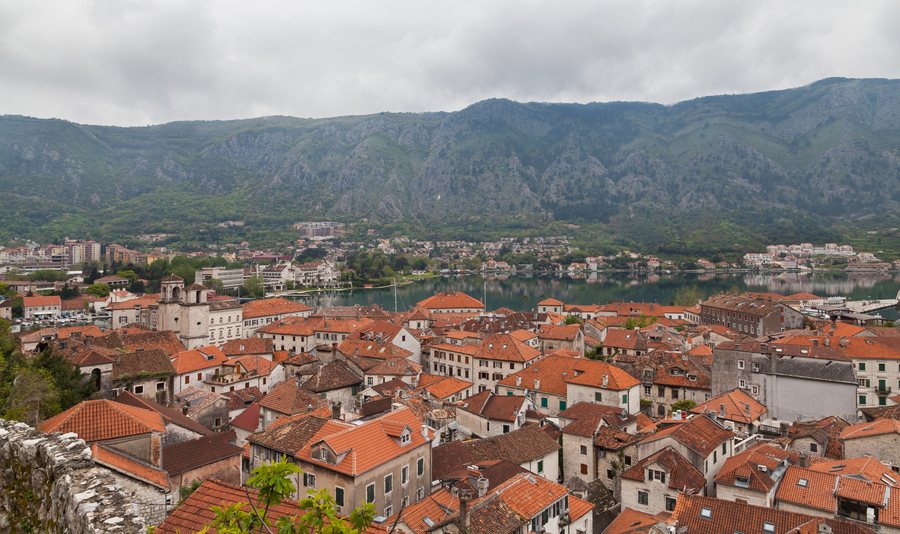
Kotor at a glance
- The natural and cultural landscape region lies in the Bay of Kotor on Montenegro’s Adriatic coast.
- It covers 14,600 hectares and includes two connected bays surrounded by mountains that rise rapidly to almost 1,500 metres.
- The local mountain trail network includes the 10-kilometre Kotor–Krstac–Njeguši trail.
- Kotor’s traditional winter carnival takes place every year in February.
What shapes the region’s landscape?
In the Kotor region, bays meet steep, rocky slopes. The mountains rise rapidly from the coastal landscape, reaching almost 1,500 metres. Cultivated terraces on the slopes are also part of this landscape. The natural and cultural landscape brings them together with fortified and open towns, settlements, palaces and monastic complexes. Nature and the built environment are therefore not merely side by side: Kotor’s urban planning is integrated into the landscape.
This combination is a useful starting point when deciding how to prioritise your interests during your stay. At 10 kilometres, the Kotor–Krstac–Njeguši trail gives you a concrete distance to consider when planning your walks. Kotor’s walls can be explored on a roughly one-hour walk involving 1,400 steps. The distance and step count describe different experiences; take both into account if you plan to include mountain trails or the walk in your trip.
What cultural experiences are there?
Kotor is an authentically preserved small town. The most important monuments and historic urban areas in the natural and cultural landscape region were carefully restored and reconstructed under UNESCO’s auspices after the 1979 earthquake. Those interested in history and urban culture will find a different way to experience the region than through its landscapes and mountain trails.
The events calendar also offers a range of highlights: the traditional winter carnival takes place every year in February. The main public celebration of Saint Tryphon, patron saint of Kotor and the Diocese of Kotor, is considered the only surviving medieval religious urban event in present-day Montenegro. Since 2002, KotorArt has been devoted to artistic music, and since 2009 it has also covered many other areas of the arts. Outside the summer festival, KotorArt runs projects, workshops and lectures, and publishes works.
Which places and museums can you include?
In Perast, the town museum holds extensive archival material on the town’s history dating from the mid-15th century onwards. The museum is housed in Captain Vicko Bujović’s palace, built in 1694. In Kotor, the original collection of the Maritime Museum of Montenegro was opened to the public in 1900. These examples offer different ways to explore the region’s cultural history.
For another perspective, the Kotor cable car departs near Kotor, in Dub. The ride takes 11 minutes and offers views of the Bay of Kotor. If you plan to take this trip or walk along the town walls, bear in mind the stated travel or walking times and, for the wall walk, the 1,400 steps.
To search for specific destinations, the Kotor overview also includes Škaljari, Dobrota, Donji Orahovac, Perast, Bigova, Kotor, Krimovica, Risan, Jaz, Radanovići, Muo, Donji Stoliv, Glavati, Ljesevici, Bratešići, Dražin Vrt, Trojica, Strp, Zagora, Kovaci and Tresnjica.
FAQ
How long is the Kotor–Krstac–Njeguši trail?
The trail is part of the local mountain trail network and is 10 kilometres long.
How long does the walk along Kotor’s walls take?
The walk takes about an hour and involves 1,400 steps.
When does Kotor’s winter carnival take place?
The traditional winter carnival takes place every year in February.
What does KotorArt offer outside the summer festival?
KotorArt runs projects, workshops and lectures, and publishes works during that time.
For the broader travel overview: Montenegro.

