
Montenegro
Accommodation in Montenegro
Montenegro combines striking mountain landscapes with nature and cultural experiences. Whether your trip is shaped more by hiking, historic landscapes, or regional cuisine, you can plan around specific destinations and features.
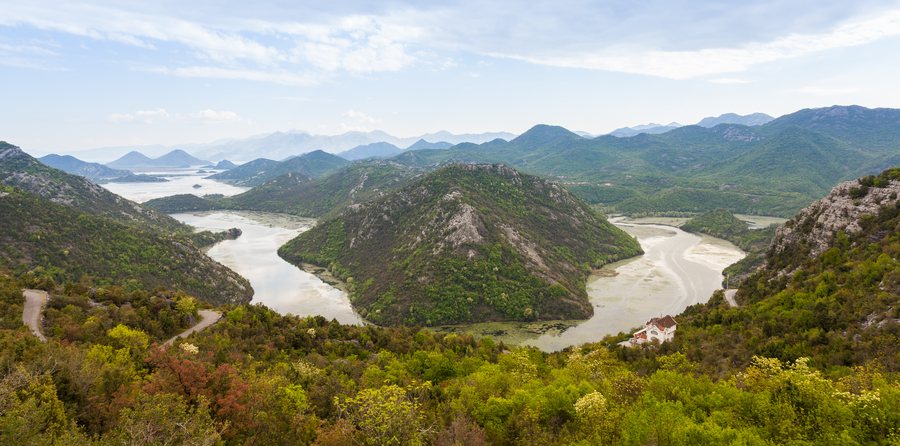 File:Lago Skadar, Montenegro, 2014-04-14, DD 02.JPG
Photo: Diego Delso via Wikimedia Commons, CC BY-SA 3.0
File:Lago Skadar, Montenegro, 2014-04-14, DD 02.JPG
Photo: Diego Delso via Wikimedia Commons, CC BY-SA 3.0
Montenegro at a glance
In the north lies the Durmitor massif, a limestone massif. Around fifty peaks in Durmitor National Park rise above 2,000 meters. Its glacial lakes are known locally as the “Eyes of the Mountains.” The Tara Canyon is another of the country’s striking landscapes: it is Europe’s deepest canyon.
Other natural areas have their own distinctive features. In Montenegro, Prokletije National Park extends across the municipalities of Plav and Gusinje. Zla Kolata, Montenegro’s highest peak, is located there; the park is home to numerous glacial lakes, including Hridsko Lake. Around 2,000 plant species and subspecies grow in Biogradska Gora National Park, including about 400 Balkan endemics.
Which mountain landscapes suit your travel interests?
If hiking is part of your plans, Durmitor offers opportunities to do so. The information about its peaks also gives an impression of the national park’s elevation, without pointing to any particular route. Brown bears, gray wolves, and European wildcats live in Durmitor. Those interested in wildlife will find another aspect of the landscape here, alongside its peaks and glacial lakes.
In Prokletije, Zla Kolata, the glacial lakes, and the municipalities of Plav and Gusinje are different features of the same national park. Biogradska Gora, in turn, is characterized by its plant diversity and the primeval forest on the shores of Lake Biogradsko and in the canyon of the Biogradska River. The trees there grow to be several hundred years old and over 40 meters tall. These differences can help you choose natural destinations according to your own interests, rather than treating all mountain regions as the same.
What nature experiences are there beyond the mountains?
Skadar Lake National Park offers the opportunity to explore hidden waterways by kayak. For a trip that includes waterways, this is a different option from hiking in Durmitor. Montenegro also has many cycling routes, including challenging sections. If you are planning to cycle, bear this distinction in mind and don’t base your itinerary solely on the overall number of routes.
The Tara River is also associated with a special experience: it is considered one of the three most attractive rafting rivers in the world. The Tara Canyon and the river thus offer two perspectives on the same name—a landform and a rafting destination.
What shapes the culture and history of the regions?
The natural and cultural landscape of the Kotor region lies in the Bay of Kotor on Montenegro’s Adriatic coast. Its characteristic landscape includes fortified and open cities, settlements, palaces, and monastic ensembles, as well as cultivated terraced landscapes. The region bears witness to the spread of Mediterranean cultures in the Balkans. If you want to explore culture and landscape together, you’ll find several distinct features here, each worth learning more about.
The mausoleum of Montenegrin ruler and poet Petar II Petrović Njegoš is located on Jezerski vrh in Lovćen. The Lovćen serpentine road is part of the old caravan route from Kotor to Njeguši. Lovćen is also home to the katuns: traditional, temporary livestock-raising settlements with huts, cisterns, barns, and pens. The katuns reveal another side of the cultural landscape. Visitors can take part in cheese-making there.
Which regional specialties can you discover?
Montenegro’s culinary routes include cheese trails for Lisnati sir in Kolašin, Trebaljevo, Gornji Pažanj, Blatina, Lipovo, Drijenak, Šljivovice, Štitarica, Podbišće, Tomaševo, and on the slopes of Sinjajevina. The many place names make clear that the route covers several locations as well as the slopes of Sinjajevina. The Šipčanik wine cellar, meanwhile, offers a distinctive setting: it lies more than 30 meters underground in a 356-meter-long tunnel. Cheese and wine thus provide two different starting points for a trip that includes regional cuisine.
Which regions would you like to explore in more detail?
To explore the regions in more detail, visit the pages for Bar, Kotor, Podgorica, Ulcinj, Tivat, Budva, Herceg-Novi, Nikšić, Bijelo Polje, Berane, Andrijevica, Cetinje, Danilovgrad, Kolašin, Mojkovac, Plav, Pljevlja, Plužine, Rožaje, Šavnik, and Žabljak.
FAQ
What is Montenegro’s highest peak?
Zla Kolata is Montenegro’s highest peak. It is located in Prokletije National Park.
What can you do in Skadar Lake National Park?
The national park offers the opportunity to explore hidden waterways by kayak.
Where is the mausoleum of Petar II Petrović Njegoš?
The mausoleum is located on Jezerski vrh in Lovćen.
Where can visitors take part in cheese-making?
Visitors can take part in cheese-making in the katuns of Lovćen.

