
Discover Pljevlja: Culture, Nature and Hiking
Accommodation in Pljevlja
Pljevlja brings together sacred architecture and archaeological history with marked hiking and cycling opportunities. This gives you a range of interests to choose from when planning your trip.
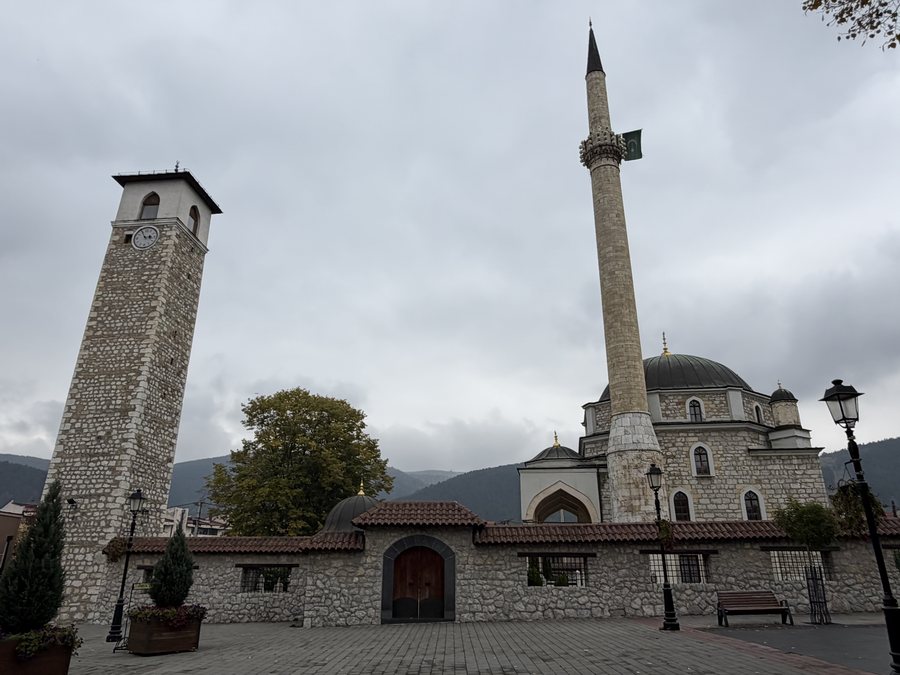
Pljevlja at a glance
- The Husein-Pašina Džamija was built in 1569 and houses a Quran from the 16th century.
- The earliest known written reference to the Sveta Trojica Monastery dates to 1537.
- The Pljevlja Local History Museum was founded in 1952 and has nearly 5,000 museum objects.
- Dernjačište, the highest peak of the Ljubišnja range, reaches 2,238 metres; the mountain range is marked for hiking and mountain biking.
- There are 11 marked cycling routes in the rural area of Pljevlja, with a total length of 270 kilometres.
What cultural history has shaped Pljevlja?
The Husein-Pašina Džamija was built in 1569 to plans by the master builder Hajrudin, who also built the famous bridge in Mostar. The mosque houses a Quran from the 16th century, written in Arabic script and decorated with gilded miniatures. The Church of St Nicholas at Dubočica Monastery is older; it was built and painted in 1565.
The Sveta Trojica Monastery is also an important point of reference for the region’s history. It was a religious, educational, cultural and national centre for the Orthodox population of Stara Raška, Polimlje and Potarje. Its treasury includes icons, liturgical objects, goldsmiths’ work, church embroidery, furnishings and documents. The timeline of the monastery’s history begins with the earliest known written reference, from 1537.
Founded in 1952, the Pljevlja Local History Museum has a collection of nearly 5,000 museum objects. Alongside the monasteries and mosque, its collections offer another way to explore the history of the area.
What other traces of history can you find?
The monument at Stražica was erected in 1961. It is dedicated to those who fell in the Battle of Pljevlja and to fallen fighters from the municipality of Pljevlja. It also commemorates unknown fighters from different parts of Yugoslavia who fell in the municipality during the National Liberation War.
In Komini, near Pljevlja, the archaeological site of Municipium S. includes the remains of an ancient city and two necropolises. The first mention of Dovolja Monastery dates to 1513; it is inferred from this information that the monastery was already built in the 15th century. The distinction between an early written reference and an inferred period of construction is important.
What do hiking, cycling and nature have to offer?
The Ljubišnja range combines a clear geographical destination with marked outdoor activities: its highest peak, Dernjačište, stands at 2,238 metres, and the entire range is marked for hiking and mountain biking. This is distinct from the 11 designated cycling routes in the rural area of Pljevlja, which have a total length of 270 kilometres. Hiking in Pljevlja also includes the Tara Canyon.
Around a hundred bird species live on the Ljubišnja range. These include the European honey buzzard, capercaillie, hazel grouse, common wood pigeon, great spotted woodpecker and golden eagle. Information about the birdlife adds to the picture of the Ljubišnja as a natural area, while the marked hiking and cycling routes offer concrete activity ideas for planning your trip.
Pljevlja’s Vodice City Park offers a different kind of visit. It has marked fitness, walking and cycling trails, two artificial lakes and a fishpond. This means visitors can choose between activities in the rural area and a well-equipped city park.
How do you choose a hotel to suit your trip?
Start by ranking your priorities according to the topics that interest you most: sacred and archaeological history, hiking and cycling, or nature and birdlife. This way, your search reflects your plans without requiring your accommodation to offer specific amenities.
For further guidance within the destination, you can also find overviews of the subregions Pljevlja and Šljuke here.
Discover more destinations: Mojkovac, Herceg-Novi, Andrijevica, Rožaje, Nikšić, Cetinje.
FAQ
How far back does the settlement history in the local history museum go?
The museum’s collections make it possible to trace human settlement in the Pljevlja area almost continuously back to more than 40,000 years ago.
Which bird species live on the Ljubišnja range?
Around a hundred bird species live there, including the European honey buzzard, capercaillie, hazel grouse, common wood pigeon, great spotted woodpecker and golden eagle.
What cuisine is served at Milet Bašta restaurant?
In 2025, Milet Bašta restaurant offered national cuisine and authentic specialities from the Pljevlja region. If you plan to visit the restaurant, check before your visit whether the offer is currently available.
For the wider travel overview: Montenegro.

