
Brzeszcze
Accommodation in Brzeszcze
Brzeszcze offers a variety of points of interest for a trip: memorial sites connected to the Jawischowitz subcamp, the pond and forest landscape of Nazieleńce, and St. Urban’s Church. Cycling routes are also described with specific local and landscape details. If you are looking for a hotel in Brzeszcze, these themes provide an objective guide to which aspects of the town may be of particular interest to you.
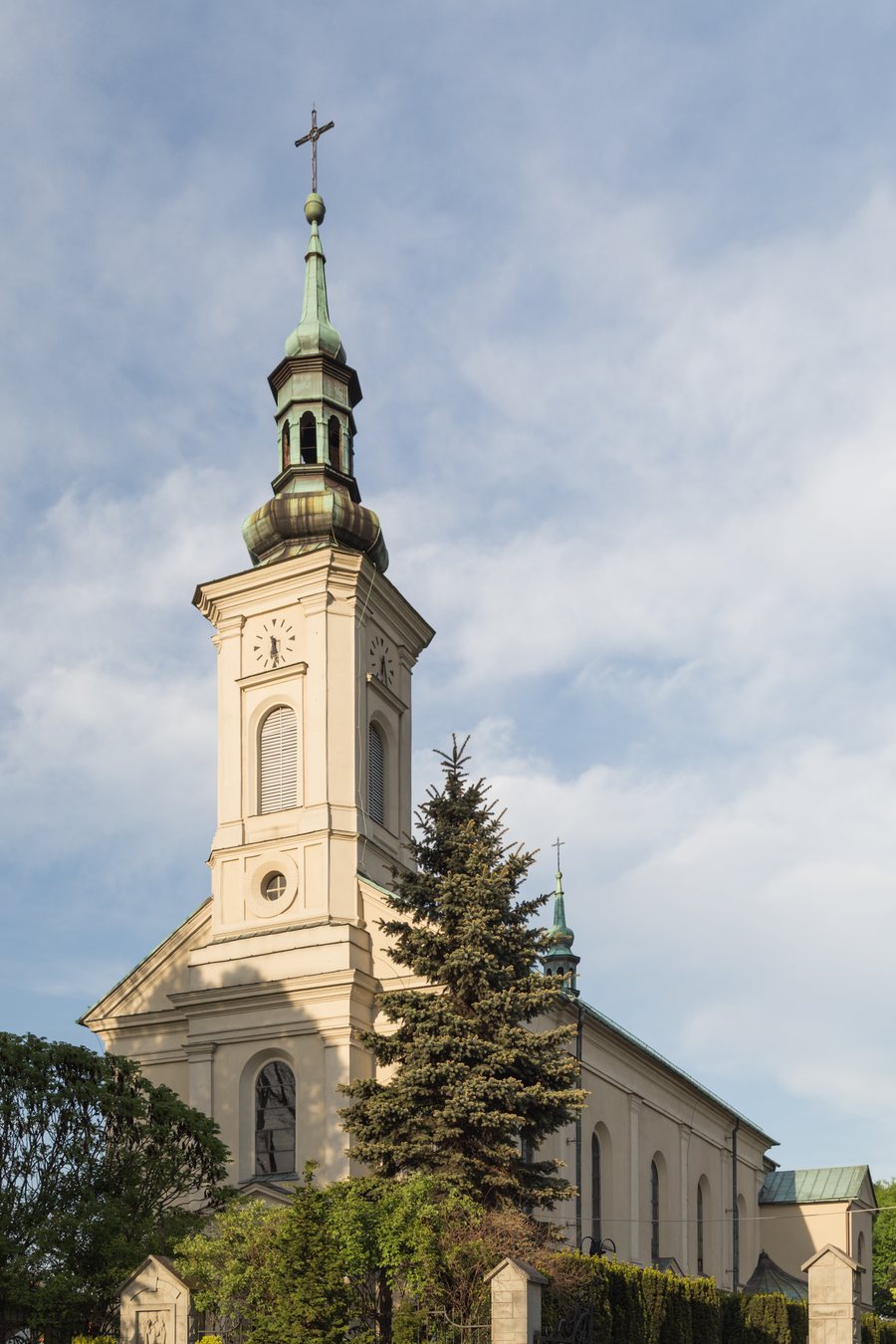 2018 Powiat oświęcimski, Brzeszcze, Kościół św. Urbana 02
Photo: Marcin Konsek via Source, CC BY-SA 4.0
2018 Powiat oświęcimski, Brzeszcze, Kościół św. Urbana 02
Photo: Marcin Konsek via Source, CC BY-SA 4.0
Key facts about Brzeszcze
- The site of the former Jawischowitz subcamp largely coincided with the area of today’s town park on Dworcowa Street.
- The camp bathhouse building and a lantern have been preserved in the park as remnants of the subcamp.
- Nazieleńce is a forest and pond complex in the upper Vistula Valley, with several dozen fish ponds.
- St. Urban’s Church is a 19th-century masonry church in the Neo-Baroque style; its construction began in 1874.
Which memorial sites shape Brzeszcze?
The history of the Jawischowitz subcamp is anchored in specific locations in today’s townscape. The site of the former subcamp largely coincided with the area of today’s town park on Dworcowa Street. The camp bathhouse building and a lantern have been preserved in the park as remnants. The subcamp was an outpost of KL Auschwitz-Birkenau.
Another memorial is a monument to the victims of the Jawischowitz subcamp. It was unveiled in Brzeszcze on 1 September 1983 and designed by Bogdan Rzenno. These details provide different ways to understand the history: the park area points to the former site and its preserved remnants, while the monument is dedicated specifically to the victims.
What characterizes the landscape of Nazieleńce?
Brzeszczańskie Nazieleńce is a forest and pond complex in the upper Vistula Valley. It comprises several dozen fish ponds, adjacent mixed forest areas, and Vistula meadows. The Nazieleńce fish pond complex covers more than 150 hectares in total. Thus, the landscape described includes water as well as forest and meadows; Nazieleńce is not characterized solely as a group of ponds.
The Młynówka, a meandering stream, feeds the ponds of Nazieleńce and connects the Soła and Vistula rivers. In Przebór Pond, floating plants cover a large area of the water’s surface. These include the protected yellow water-lily. The bittern and little bittern are also found in the Nazieleńce area. The municipality describes both species as very rare throughout Europe. Nature enthusiasts will therefore find several named features here: bodies of water and shoreline plants, the surrounding forest and meadows, and the bird species mentioned.
Which cycling routes are associated with Brzeszcze?
The nearly 14 km “Brzeszcze na rowerze” cycling route passes, among other places, through the ponds of Nazieleńce and Natura 2000 areas in the Vistula and Soła floodplains. Its length and the landscape sections described provide a specific point of reference for planning your own ride. Another cycling route listing mentions “Brzeszcze by bike,” which runs along secondary roads in the town of Brzeszcze.
The two listings highlight different features: “Brzeszcze na rowerze” focuses on its nearly 14 km length and the named pond and floodplain areas, while “Brzeszcze by bike” is described as running along secondary roads in town.
What cultural history adds to a stay?
St. Urban’s Church in Brzeszcze is a 19th-century masonry church in the Neo-Baroque style. Construction began in 1874. It therefore offers a different cultural focus from the memorial sites connected to the subcamp: here, the emphasis is on the period of construction and architectural style. This helps place the church as a subject in its own right alongside the history of the town and the landscape of Nazieleńce.
If you would like to compare other destinations, you can also find pages about Grojec, Łęki, Nowa Wieś, Bielany, Skidzin, Kęty, Jawiszowice, and Zator.
FAQ
Which remnants of the Jawischowitz subcamp have been preserved in the park?
The camp bathhouse building and a lantern have been preserved in the park as remnants of the former subcamp.
How large is the Nazieleńce fish pond complex?
The fish pond complex comprises several dozen ponds and covers more than 150 hectares in total.
How long is the “Brzeszcze na rowerze” cycling route?
The route is nearly 14 km long and passes, among other places, through the ponds of Nazieleńce and Natura 2000 areas in the Vistula and Soła floodplains.
For the broader travel overview: Auschwitz.

