
Jawiszowice: Church, Regional Room and Cycling Route
Accommodation in Jawiszowice
Jawiszowice brings together several different themes: the wooden Parish Church of St. Martin, the Piykno Izba regional room and a section of the Vistula Cycling Route. The history of the Jawischowitz subcamp is also part of the historical context of the village.
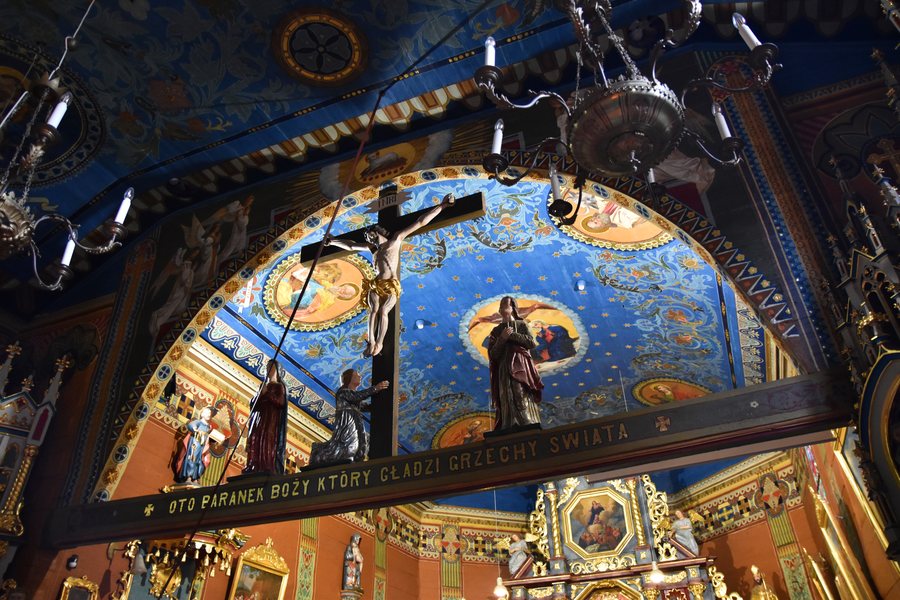 File:Jawiszowice .Kościół św. Marcina w Jawiszowicach 3.jpg
Photo: Jacek Daczyński via Wikimedia Commons, CC BY-SA 4.0
Jawiszowice at a glance
- The wooden Parish Church of St. Martin was built in 1692.
- The Jawischowitz subcamp was located in the village; in June 1944, it held 2,500 prisoners.
- The Piykno Izba collection includes objects used by local residents for at least three generations.
- The section of the Vistula Cycling Route in the Lesser Poland Voivodeship begins in Jawiszowice when travelling from the west.
Which cultural themes shape Jawiszowice?
The Parish Church of St. Martin and the Piykno Izba offer two different insights into the history of the village. The wooden church was built in 1692.
The regional room focuses on the everyday lives of local residents. Its collection ranges from household items and clothing to agricultural tools. Jawiszowice thus features both a historic church building and objects from homes that were used across generations.
What does the Piykno Izba collection include?
The collection includes crockery, household appliances, furniture and furnishings from homes, as well as agricultural tools. It also features jewellery, toys, and everyday and festive clothing worn by the residents of Jawiszowice. The objects were used for at least three generations. The collection therefore covers different aspects of life: home, work, personal belongings, and clothing for everyday wear and special occasions.
The Piykno Izba opened in September 2019, when its collections were made accessible to a wider audience. If you are planning a visit, check the current visiting arrangements in advance.
What is the historical significance of the Jawischowitz subcamp?
The Jawischowitz subcamp was located in the village of Jawiszowice. In June 1944, it held 2,500 prisoners, most of them Jewish people from Poland, France, Germany, the Netherlands, Italy and Hungary. The number and the countries of origin listed refer to this specific point in time. They describe the occupancy of the subcamp in June 1944.
This history sits alongside the themes of the church and everyday culture, but should be distinguished from them: it concerns the camp and the people imprisoned there, not the regional room’s collection. Exploring Jawiszowice, visitors can keep the village’s different historical reference points distinct rather than combining them into a single narrative.
Where does the Lesser Poland section of the Vistula Cycling Route begin?
The section of the Vistula Cycling Route in the Lesser Poland Voivodeship begins in Jawiszowice when travelling from the west. For planning purposes, the village can therefore be considered the starting point of this section from the western direction. Check the current route conditions separately.
Discover more destinations: Zator, Grojec, Nowa Wieś, Brzeszcze, Bielany, Kęty, Skidzin, Łęki.
FAQ
When was the Parish Church of St. Martin built?
The wooden Parish Church of St. Martin in Jawiszowice was built in 1692.
What is included in the Piykno Izba collection?
Items include crockery, furniture, agricultural tools, jewellery, toys, and everyday and festive clothing.
How many prisoners were held in the Jawischowitz subcamp in June 1944?
In June 1944, it held 2,500 prisoners, most of them Jewish people from the six European countries listed.
Where does the Lesser Poland section of the Vistula Cycling Route begin?
When travelling from the west, the section begins in Jawiszowice. Check the current route conditions separately.
Back to the main travel overview: Auschwitz.

