
Skidzin: Manor House, Wayside Chapel and Fishing Ponds
Accommodation in Skidzin
Skidzin can be viewed through several themes when planning a trip: the wayside chapel and manor house point to the village’s history, while fishing ponds and a regional cycling route add possible activities to the picture.
Skidzin at a glance
- A stone wayside chapel with a statue of Saint John of Nepomuk stands on ul. Wypoczynkowa.
- The chapel and wayside statue date from 1779; the statue is late Baroque. The chapel is listed in the heritage register under number B-1-3/M.
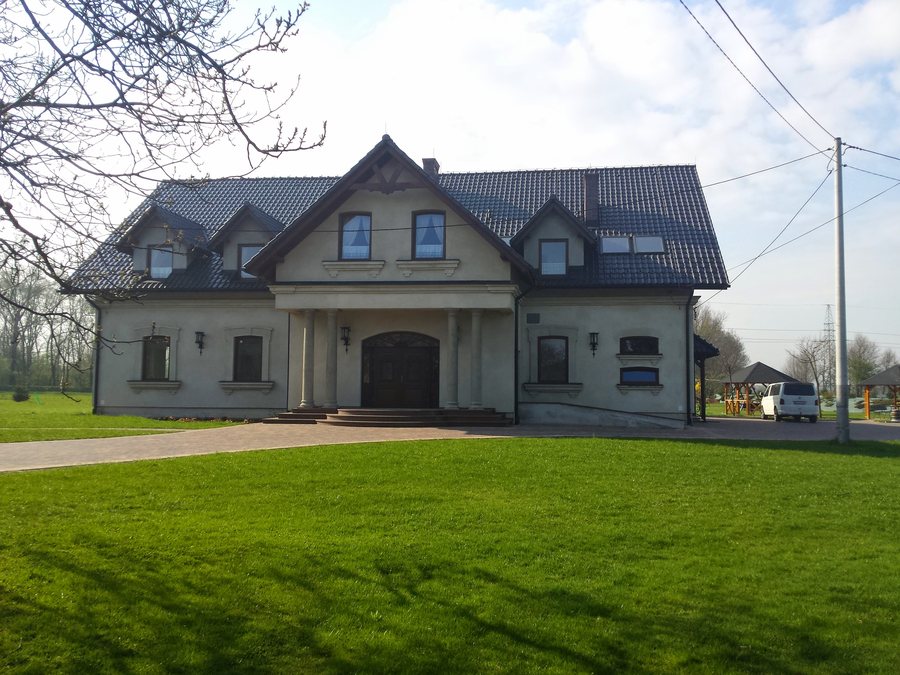
- The manor house is single-storey, approximately L-shaped and built of plastered brick; it probably dates from around the mid-18th century.
- The fishing ponds in Skidzin and Wilczkowice are managed by two named fishing organizations.
Which historical themes stand out in Skidzin?
The wayside chapel on ul. Wypoczynkowa offers a tangible starting point for exploring local history. Its stone construction, statue of Saint John of Nepomuk and date of 1779 identify a specific, clearly datable building. The wayside statue is described as late Baroque; the chapel is listed in the heritage register under number B-1-3/M. The building’s form, religious imagery and heritage status thus come together at this site.
Comparing it with the manor house shifts the focus from a single saint’s statue to architecture and the history of the estate. For the chapel, the statue, the date of 1779 and its late Baroque classification are the key points; for the manor house, you can consider its layout, building material and approximate date. These features offer two different ways of exploring Skidzin’s history, without conflating them into one building or a shared construction period.
What do the manor house and estate history tell us?
The single-storey manor house has an approximately L-shaped layout and is built of plastered brick. It was probably constructed around the mid-18th century. Traces of an earlier extension can be seen on the eastern gable; it probably served as an entrance porch. The traces are visible, but the former use as a porch remains a probable interpretation.
From the 17th century onward, Skidzin was the seat of the Skidzin estate complex. Since its owners did not live there, stewards or commissioners lived in the manor house. In the first half of the 18th century, it was called a “castle.” This name referred to the manor house and is part of its history. Together with the layout and traces on the eastern gable, this context helps place the building both architecturally and within the estate administration of the time.
How do the fishing ponds and cycling route fit into the picture?
The fishing ponds in Skidzin and Wilczkowice are managed by Towarzystwo Wędkarskie „Sazan” and Polski Związek Wędkarski, Koło Nr 121 in Brzeszcze. If you plan to fish there, check the current management arrangements beforehand. The information about the responsible organizations is a guide for planning, not a guarantee of the conditions for a particular fishing visit.
The “Brzeszcze by bike” cycling route provides a wider regional context. It passes through the Natura 2000 sites Dolna Soła Valley, Dolna Soła and Ponds in Brzeszcze, and ends in Skidzin. These named protected areas are stops mentioned in the route description; this does not mean that they are all located in Skidzin. Check the route before setting out so your plans reflect the current route.
If you are looking for accommodation, you can use these different interests to guide your own trip planning: the chapel and manor house relate to local history, while the fishing ponds and cycling route offer other possible focuses. Discover more destinations: Nowa Wieś, Kęty, Zator, Brzeszcze, Bielany, Jawiszowice, Łęki and Grojec.
FAQ
What is known about the wayside chapel?
A stone wayside chapel with a statue of Saint John of Nepomuk stands on ul. Wypoczynkowa. The chapel and late Baroque wayside statue date from 1779; the chapel is listed in the heritage register under number B-1-3/M.
What are the features of the manor house?
It is single-storey, has an approximately L-shaped layout and is built of plastered brick. It probably dates from around the mid-18th century. Traces of an earlier extension can be seen on the eastern gable; it probably served as an entrance porch.
Who manages the fishing ponds?
The organizations named are Towarzystwo Wędkarskie „Sazan” and Polski Związek Wędkarski, Koło Nr 121 in Brzeszcze. Check the current management arrangements before fishing.
Which Natura 2000 sites are along the “Brzeszcze by bike” cycling route?
The route passes through Dolna Soła Valley, Dolna Soła and Ponds in Brzeszcze, and ends in Skidzin. Check the route before setting out.
For the broader travel overview: Auschwitz.

