
Discover Zakliczyn
Accommodation in Zakliczyn
The log-built All Saints’ Church, the Neoclassical town hall and historic memorial sites give Zakliczyn a distinct cultural character. For planning, it is helpful to distinguish between the buildings’ history, a specific event date and the different route connections.
Zakliczyn at a glance
- All Saints’ Church is a log-built wooden structure made of larch and pine.
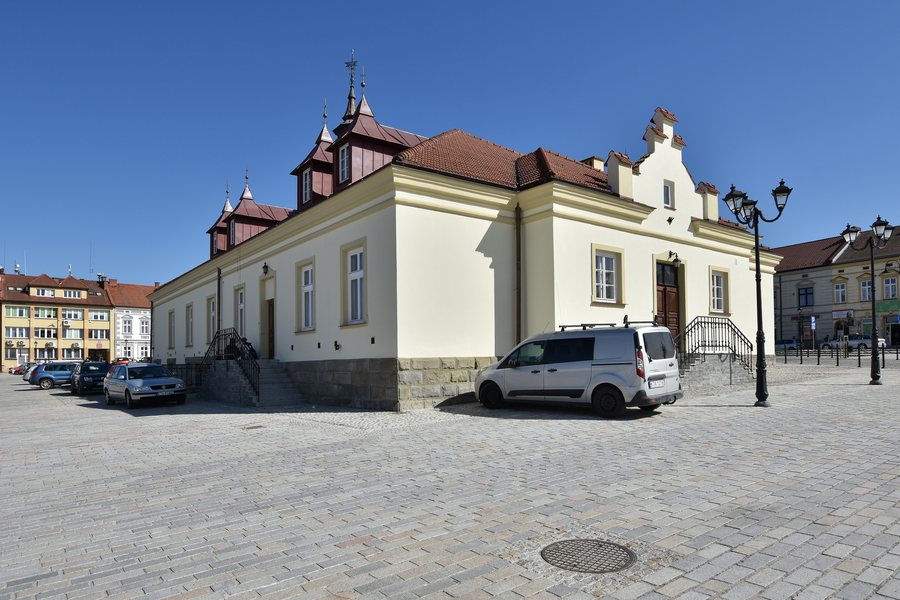
- The town hall dates from the 19th century and combines a Neoclassical design with a Neo-Gothic portico.
- The described 2025 festival edition included a fair for local products with 37 exhibitors.
- Zakliczyn is part of a driving route through twelve towns and localities; a historic Way of St. James also passed through the town.
What architectural history do the church and town hall reveal?
All Saints’ Church in Zakliczyn is built from larch and pine using log construction. A Gothic crucifix dating from 1430–1440 is located on its south wall. The Rococo high altar, by contrast, dates from the 18th century. The furnishings thus bring together features from different periods: the crucifix belongs to the first half of the 15th century, while the altar is from a much later period. If you would like to see the furnishings in person, check access in advance.
The town hall also tells a story of changing architectural styles. It dates from the 19th century and replaced an earlier wooden building. Its Neoclassical design is complemented by a Neo-Gothic portico. Looking at the town’s architectural history, you can compare two distinct examples: the church’s log-built wooden structure and the town hall, with its Neoclassical design and Neo-Gothic accent.
Which historic sites shape Zakliczyn?
The Franciscan Conventuals founded a monastery in Zakliczyn in 1622, and the order remains active there. The parish church of Matki Bożej Anielskiej, or Our Lady of the Angels, belongs to the monastery. The monastery’s history adds a religious dimension to Zakliczyn’s architectural history.
Zakliczyn is also associated with Faust Socyn: he died in Zakliczyn on 3 March 1604 and was buried there. Two First World War military cemeteries can be distinguished by their numbers and locations. No. 294 is in the parish cemetery; No. 293 is by the road to Kończyska and is a cemetery for soldiers of Jewish nationality. If you are exploring the memorial sites, take care not to confuse these two details.
What should you plan for the market and festival?
The fair for local products was a regular part of the described programme of the Małopolski (Zakliczyński) Bean Festival, Zakliczyn’s bean festival. At the described 2025 edition, it featured 37 exhibitors. That edition’s programme also included “Fasolka od Burmistrza,” prepared by KGW Wola Stróska. If you are travelling for a festival, check the dates and programme for your chosen year.
Wednesday is traditionally market day. If you want to include a market visit in your daily plans, check in advance whether a market will be held on your travel date. The two occasions therefore call for different planning: for the market, the specific day of the week matters; for a festival, it is the programme for the chosen year.
Which route connections matter when planning your trip?
Zakliczyn is part of the Szlak Średniowiecznych Miasteczek Małopolski, the Route of the Medieval Towns of Małopolska. This route, classified as a driving route, passes through twelve towns and localities. Distinct from this is the historic Way of St. James, which passed through Zakliczyn; according to the description, its history dates back to the 9th century. One connection places the town on a driving route; the other points to its historic link with a pilgrimage route.
How can you tailor your hotel search to your travel plans?
When searching for hotels in Zakliczyn, first decide what you are most interested in: architectural history, religious and historic sites, a specific market or festival date, or the town’s connection to the driving route. If you have a fixed event date, check the latest information for your chosen year.
Discover more destinations: Na Zamku, Pleśna, Paleśnica, Milówka, Zgłobice, Zabawa, Wola Radłowska, Skrzyszów.
FAQ
What makes All Saints’ Church special?
It is a log-built wooden structure made of larch and pine. A Gothic crucifix dating from 1430–1440 is located on the south wall, while the Rococo high altar dates from the 18th century. Check access if you would like to see the furnishings in person.
When is market day traditionally held in Zakliczyn?
Wednesday is traditionally market day. If you are planning a market visit, check in advance whether a market will be held on your travel date.
What was included in the programme of the described 2025 festival edition?
It included a fair for local products with 37 exhibitors and “Fasolka od Burmistrza,” prepared for this edition by KGW Wola Stróska. For other years, check the relevant dates and programme details.
Which routes are associated with Zakliczyn?
The town is part of a route classified as a driving route, passing through twelve towns and localities. The historic Way of St. James also passed through Zakliczyn; according to the description, its history dates back to the 9th century.
For the broader travel overview: Tarnów.

