
Zabawa
Accommodation in Zabawa
Zabawa brings together the Sanctuary of Blessed Karolina, World War I memorial sites, and activities that explore regional history and spiritual heritage.
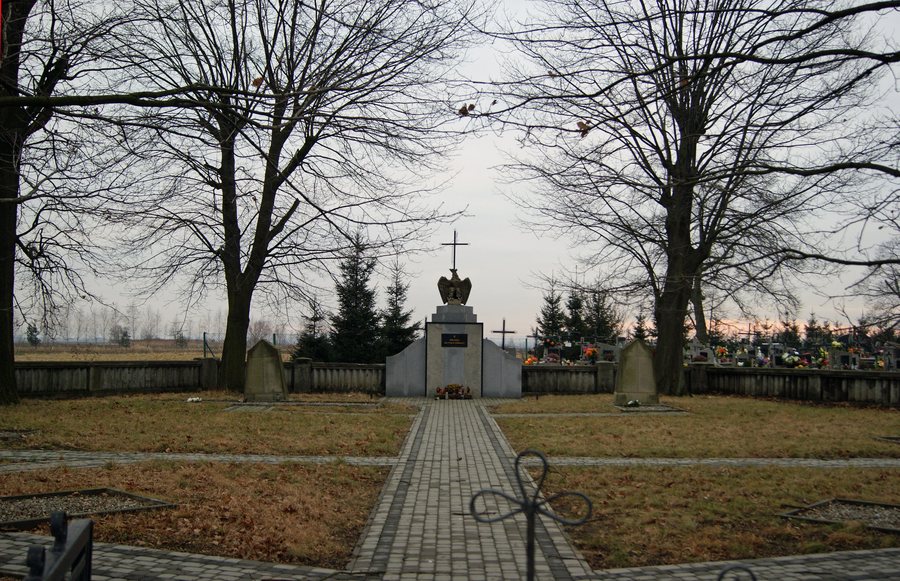 File:Cmentarz wojenny nr 260 Zabawa, Małopolska.JPG
Photo: Zygmunt Put Zetpe0202 via Wikimedia Commons, CC BY-SA 4.0
File:Cmentarz wojenny nr 260 Zabawa, Małopolska.JPG
Photo: Zygmunt Put Zetpe0202 via Wikimedia Commons, CC BY-SA 4.0
Quick facts about Zabawa
The parish church in Zabawa was elevated to the status of a sanctuary in 2002. An exhibition established there on November 10, 2002, presents the life, martyrdom, and veneration of Blessed Karolina. The sanctuary was officially included on the Way of St. James, which leads to Santiago de Compostela and is one of Europe’s best-known pilgrimage routes.
In the center of the village, Military Cemetery No. 260 from World War I lies beside the parish cemetery. The municipal audio guide for a cycling tour offers another perspective on Zabawa: it lists the Dakota aircraft wreck as a stop in Zabawa.
What defines the Sanctuary of Blessed Karolina?
The sanctuary is the central reference point for several activities in Zabawa. The exhibition in the sanctuary church focuses specifically on three topics: the life of Blessed Karolina, her martyrdom, and her veneration. Together with the parish church’s elevation to sanctuary status in 2002, this provides a thematic framework for travelers interested in religious heritage and the history of Blessed Karolina.
The sanctuary’s inclusion on the Way of St. James also places it within a European pilgrimage context. The Way of St. James leads to Santiago de Compostela. Travelers weighing different religious and historical interests can consider this connection alongside local activities, without conflating it with the history of the cemetery or the cycling tour stop.
What historical details does the military cemetery offer?
Military Cemetery No. 260 commemorates World War I and is located in the center of Zabawa, beside the parish cemetery. Its regular hexagonal layout and six tall, uninscribed grave markers give the site a clearly described form. The grave markers have no inscriptions; their number and shape distinguish this site, as described, from a mere list of names.
The cemetery probably contains the graves of 77 Austro-Hungarian, 11 German, and 9 Russian soldiers. For travelers exploring regional history, the cemetery complements the sanctuary’s religious themes with a World War I memorial site.
What activities explore regional history?
The outdoor game “Odkryj Skarby Zabawy” takes place on the grounds of the Sanctuary of Blessed Karolina. It shares knowledge about special places connected with Blessed Karolina, regional history, and the spiritual heritage of this place. This offers a playful approach alongside the exhibition, which focuses on the life, martyrdom, and veneration of Blessed Karolina.
Another format is “Miasteczko Modlitewne”: a seven-day tent retreat in the fields near the sanctuary. It brings together about 200 young people each year. The activity differs in both duration and focus from the outdoor game and the exhibition. When planning a trip, visitors can therefore choose between a historical exhibition visit, a game featuring regional history themes, and a multi-day spiritual retreat.
What can you learn about Zabawa on a cycling tour?
The municipal audio guide for a cycling tour lists the Dakota aircraft wreck as a stop in Zabawa. This adds a distinct point of interest for cycling travelers to the topics related to the sanctuary and cemetery. The audio guide presents the stop as part of a cycling tour; the other places and activities mentioned belong to different aspects of the village.
If you would like to compare other destinations, you can also find information about Wierzchosławice, Tarnów, Wojnicz, Rychwald, Zgłobice, Komorów, Ryglice and Skrzyszów.
FAQ
What does the exhibition in the sanctuary church show?
It covers the life, martyrdom, and veneration of Blessed Karolina. It was established on November 10, 2002.
What is “Miasteczko Modlitewne”?
A seven-day tent retreat in the fields near the Sanctuary of Blessed Karolina, bringing together about 200 young people each year.
What are the distinctive features of Military Cemetery No. 260?
It has a regular hexagonal layout and six tall, uninscribed grave markers. It probably contains the graves of 77 Austro-Hungarian, 11 German, and 9 Russian soldiers.
For the broader travel overview: Tarnów.

