
Dzierżoniów
Accommodation in Dzierżoniów
Dzierżoniów combines industrial history with archaeological collections and historic buildings. Which of these aspects interests you most can shape how you see the city—from its once-significant mill to its defensive walls and churches.
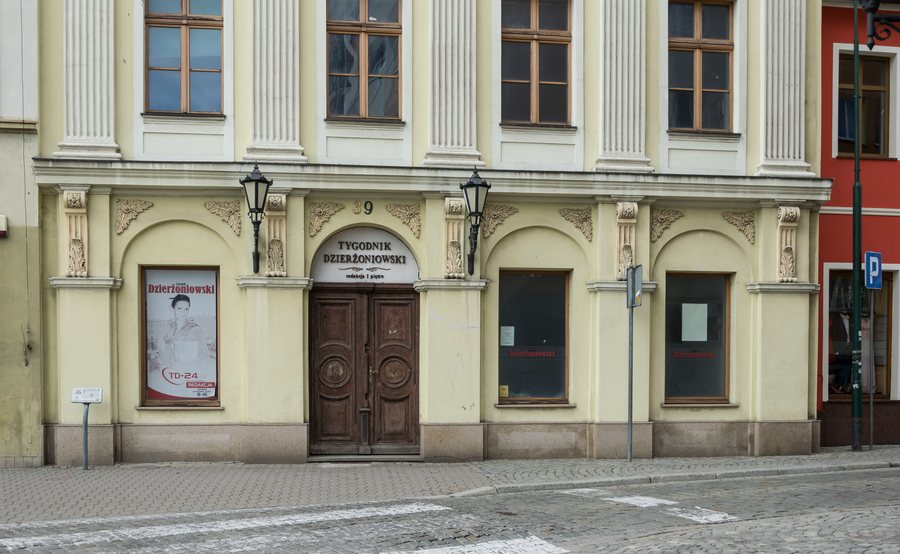
Dzierżoniów at a glance
Key cultural sites include Młyn Hilberta and the Muzeum Miejskie Dzierżoniowa. The city’s history can also be traced through the Mury Obronne and several churches. To help you find your way around, there is a tourist route to the sights, a viewing gallery in the Town Hall tower, and an information center at Rynek 1.
What industrial heritage and museum themes are there?
Młyn Hilberta is a monument of industrial architecture. Carl Sigismund Hilbert and Gottlieb Hilbert built it in 1868; at the time, it was the most modern and largest facility of its kind in Silesia. Today, Młyn is a museum. One-hour tours offer a glimpse into the history of the food industry through historical tools and authentic equipment. Those interested in technology and production will find a different perspective on the city’s history here than in a collection of archaeological finds.
A permanent exhibition at the Muzeum Miejskie Dzierżoniowa is devoted to Zakłady Radiowe DIORA. It has been in place since September 14, 2013, and includes around 100 radio models produced by DIORA. Another archaeological exhibition displays finds from the Dzierżoniów area, dating from the late Paleolithic, around 10,000 BC, to the early modern period of the 16th and 17th centuries. When choosing your cultural interests, you can therefore distinguish between industrial and radio history and a long archaeological time span.
What do the walls and churches tell us about the city?
Dzierżoniów’s Mury Obronne were built toward the end of the 13th century on the orders of Duke Bolko I of Świdnica. Around 30 towers were built along the first ring; 21 of them remain today. The approximate original number and the number of surviving towers describe different states of the fortifications. If you are interested in medieval urban history, you can consider these details alongside the date the walls were built.
The churches also represent different historical contexts. Kościół św. Trójcy probably dates from the end of the 13th century and was likely originally a castle chapel; its exact year of construction is unknown. Kościół Niepokalanego Poczęcia Najświętszej Maryi Panny was probably built by Augustinian hermits in the 14th century. Kościół św. Jerzego houses a monumental Mannerist Salvator altar dating from 1615–1616. The religious heritage thus spans uncertain dates for early origins and a precisely dated work of art.
What orientation and experiences does a stay offer?
Dzierżoniowski Trakt Smoka is a tourist route to Dzierżoniów’s most interesting sights. The gallery in the Town Hall tower offers a view over the Dzierżoniów Valley; a viewing telescope with 25-times magnification is also available there. At the Centrum Informacji Turystycznej at Rynek 1, you can get maps, postcards, brochures and publications about Dzierżoniów and the Góry Sowie, among other things. The center, operated by the Muzeum Miejskie Dzierżoniowa, also offers souvenirs and commemorative coins.
Park Miłośników Dzierżoniowa combines paved paths and paths made of stone grit with benches, LED lighting and a ground-level fountain. New trees and shrubs have also been planted there, and the grounds include waste bins.
If you would like to compare other destinations, you can also find information about Gilów, Pieszyce, Mościsko, Niemcza and Bielawa.
FAQ
What can you see at Młyn Hilberta?
The museum offers one-hour tours featuring historical tools and authentic equipment that tell the story of the food industry.
What themes does the Muzeum Miejskie Dzierżoniowa cover?
Its exhibitions include a permanent display about Zakłady Radiowe DIORA, with around 100 radio models, as well as archaeological finds from the Dzierżoniów area.
How many of the fortification towers remain?
Around 30 towers were built along the first ring; 21 remain today.
For the broader travel overview: Reichenbach.

