
Discover Mościsko: History, Nature and Farm Experiences
Accommodation in Mościsko
Mościsko combines an old church with Gothic wall paintings, historic traces and a rural setting with ponds and walking areas. Ask in advance about specific farm activities for your dates.
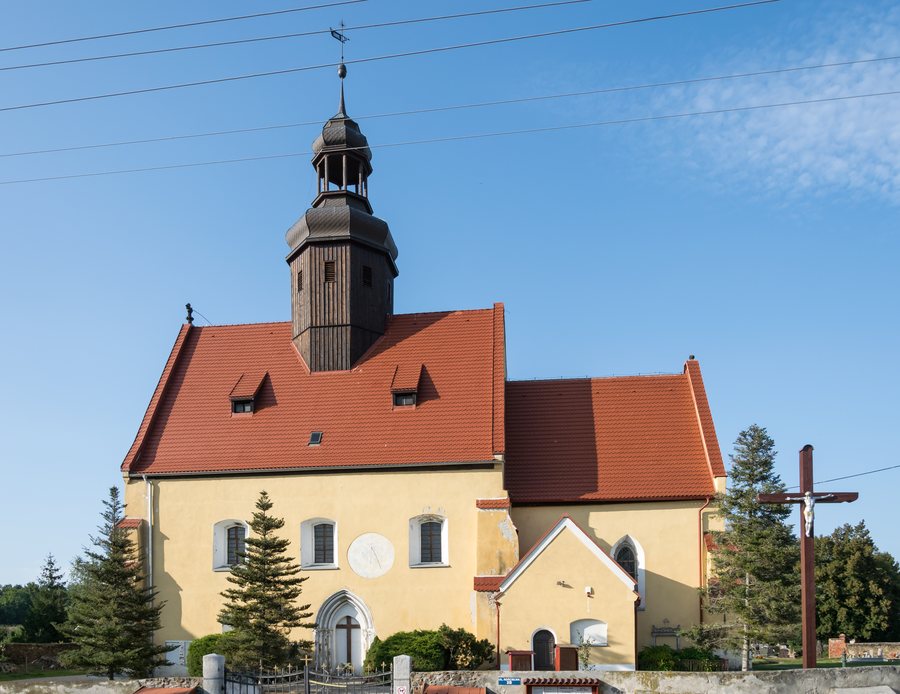 File:2020 Kościół Jana Chrzciciela w Mościsku 3.jpg
Photo: Jacek Halicki via Wikimedia Commons, CC BY-SA 4.0
Mościsko at a glance
- The Church of St John the Baptist is considered one of the oldest churches in Lower Silesia; its chancel features Gothic polychrome paintings.
- The Neo-Gothic bridge in Mościsko dates from the 19th century.
- The 2017 village strategy recorded five ponds: four privately owned and one village pond, which at the time was looked after by the “Przystań Mościsko” association.
- Ostoja Nad Młynówką is an educational farm aimed mainly at children and young people.
What makes the church special?
The Church of St John the Baptist offers two distinct points of interest for culture lovers: it is considered one of the oldest churches in Lower Silesia, and its interior includes a clearly identified pictorial motif. The chancel features Gothic polychrome paintings dating from around the turn of the 14th and 15th centuries. They depict Christ and animals as symbols of the four Evangelists.
The Neo-Gothic bridge in Mościsko is also part of the village’s history, but dates from a different century: it was built in the 19th century. Comparing its date with that of the older wall paintings helps distinguish the different historical layers of the village without treating them as a single building phase.
What historic traces are there?
The 2017 village strategy lists two penitential crosses among Mościsko’s historic monuments. On Lelek Hill, it records the remains of a gallows; it identifies the steps and a wall on ul. Polna as the remains of a castle. These references range from individual structural remnants to an explicitly stated historical interpretation.
If you plan to visit the penitential crosses or the remains, check their current condition and access in advance. That way, you can take the specific visiting conditions into account rather than assuming that a historical designation means you can visit the site.
What do the ponds and walking areas offer?
The ponds offer a different perspective on Mościsko from its church and historic traces. The 2017 village strategy recorded five in total: four privately owned ponds and one village pond, which at the time was looked after by the “Przystań Mościsko” association. If you plan to use the village pond, check the current conditions; the information about who looked after it reflects the situation in 2017.
For one pond, the same strategy noted the possible presence of European pond turtles, swans and several species of wild ducks. This is a specific observation about nature, not a guarantee that you will see these animals during your trip. Góra Lelek is among the areas on the outskirts of Mościsko described as viewpoints and walking areas. If you plan to walk there, check the current trail conditions beforehand. This helps distinguish possible wildlife sightings at the pond from a walk on the outskirts of the village.
What experiences are available for children and young people?
Ostoja Nad Młynówką is an educational farm in Mościsko whose audience is mainly children and young people. Seasonal activities include practical tasks such as sowing seeds, planting seedlings, washing clothes in the river, making hay and digging in the field. Ask in advance which dates and activities are planned for your visit.
Baking and tasting also require participation: participants can knead dough, bake flatbread on a kitchen stove and taste bread baked using a traditional method with natural sourdough in a 100-year-old bread oven. Distinguishing between seasonal fieldwork and culinary activities can help with planning if you are specifically looking for an activity at the farm.
What rural traditions are associated with Mościsko?
The 2017 village strategy noted that rural traditions were being revived and passed on to children. These included washing clothes, Pierzajki, pickling sauerkraut and the annual threshing at harvest time. This description reflects the situation at the time; it does not say whether these customs still take place regularly today. For your trip planning, the distinction matters: the traditions are part of the recorded history of the village, while the activities at Ostoja Nad Młynówką are described as a seasonal educational program.
How can you choose a hotel to suit your stay?
If a visit to the farm is central to your stay, bear in mind that it is aimed at children and young people, and check available dates in advance.
Discover more destinations: Niemcza, Dzierżoniów, Bielawa, Pieszyce, Gilów.
FAQ
What is special about the Church of St John the Baptist?
It is considered one of the oldest churches in Lower Silesia. Its chancel features Gothic polychrome paintings dating from around the turn of the 14th and 15th centuries, depicting Christ and animals as symbols of the four Evangelists.
What nature-related attractions does Mościsko offer?
The 2017 village strategy noted the possible presence of European pond turtles, swans and several species of wild ducks at one pond. Góra Lelek is among the areas on the outskirts described as viewpoints and walking areas. Check current trail conditions before setting out for a walk.
What can participants experience at Ostoja Nad Młynówką?
The educational program includes seasonal practical activities such as sowing, planting and making hay. Participants can also knead dough, bake flatbread and taste bread from a 100-year-old bread oven. Ask in advance about the program for your dates.
Which historic traces are recorded?
The 2017 village strategy lists two penitential crosses, the remains of a gallows on Lelek Hill, and steps and a wall on ul. Polna identified as castle remains. Check their current condition and access before planning a specific visit.
For the wider travel overview: Reichenbach.

