
Karczew
Accommodation in Karczew
Karczew can be understood through its historic urban layout and two cultural points of interest: the Church of St. Vitus and the Jewish cemetery. When comparing hotels in Karczew, this selection can help you match the town’s cultural focus to your travel interests.
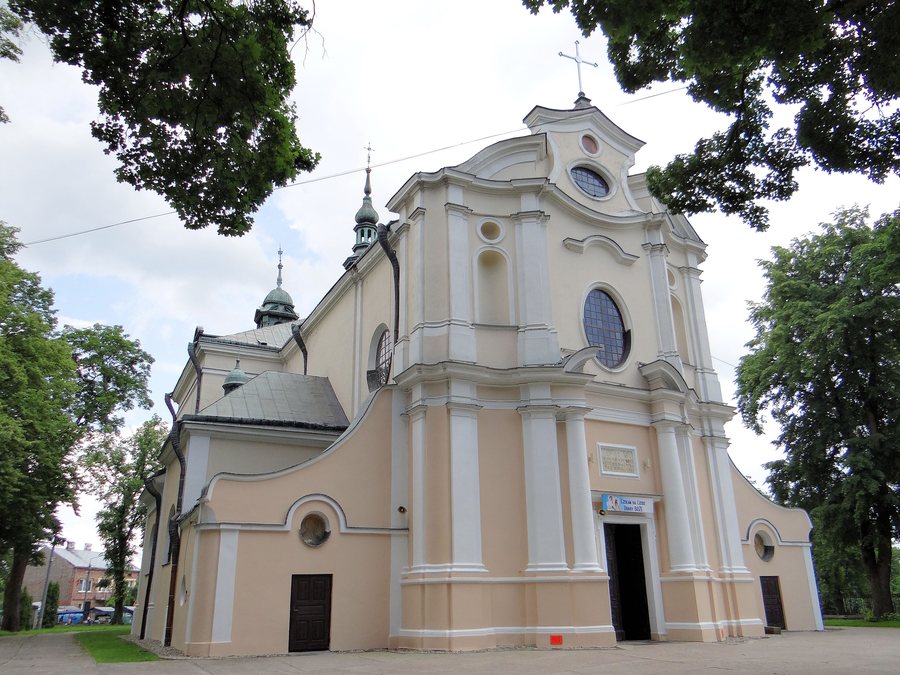 File:2013 Saint Vitus church in Karczew - 02.jpg
Photo: Jolanta Dyr via Wikimedia Commons, CC BY-SA 3.0 pl
Karczew at a glance
- The Church of St. Vitus was built in 1732 in the Piedmontese Baroque style.
- The historic urban layout dating from the town’s founding has been preserved, with a market square and ul. Żaboklickiego as the main thoroughfare.
- The Jewish cemetery was established toward the end of the 18th century on sandy dunes in northern Karczew.
- About 50 tombstones remain at the cemetery on ul. Otwocka; the oldest dates from 1876.
How can Karczew’s historic urban layout be understood?
The preserved urban layout describes Karczew not through a single building, but through the arrangement of the market square and ul. Żaboklickiego as the main thoroughfare. Both are part of the layout dating from the town’s founding. This offers an urban-planning perspective on the town alongside the history of individual buildings: the square and thoroughfare are parts of an inherited pattern, while a construction date places a particular building in time.
The Church of St. Vitus is one such specific point of reference. Its construction date, 1732, and the designation “Piedmontese Baroque style” provide two different kinds of information: the year dates its construction, while the style classifies its architecture. Travelers interested in architectural history can thus consider both the scale of the urban layout and that of an individual church building.
What does the Jewish cemetery tell us?
The Jewish cemetery was established toward the end of the 18th century on sandy dunes in northern Karczew. About 50 tombstones remain at the cemetery on ul. Otwocka. The oldest dates from 1876. The number is approximate; the year identifies the oldest surviving tombstone.
The cemetery’s founding period and the age of its oldest surviving tombstone are therefore two different points in time. The cemetery dates to the late 18th century, while 1876 is the stated date of a tombstone. This distinction makes the information easier to compare: the cemetery was established before the oldest tombstone that survives here. Its location on sandy dunes in the north and ul. Otwocka add two specific geographical references to the historical context.
Which historical themes suit your interests?
Karczew’s features offer different perspectives rather than representing just one period. If you are particularly interested in urban history, the layout dating from the town’s founding and its named elements take center stage. For those interested in architecture, the church offers a distinct point of reference, with a precise construction date and a named style. The Jewish cemetery, in turn, brings together an approximately dated founding period, an approximate count of surviving tombstones and a specific date for the oldest one.
For comparisons over time, it is important to note what each date refers to: the founding period of the urban layout, the church’s construction in 1732, the cemetery’s establishment toward the end of the 18th century, or the oldest surviving tombstone from 1876. If you are looking for accommodation in Karczew, these distinctions can help you choose the historical focus of your trip without conflating the different themes into a single building phase.
Discover more destinations: Józefów, Sobienie Szlacheckie, Wiązowna, Wola Ducka, Nowe Kościeliska, Zakręt, Osieck, Glinianka.
FAQ
When was the Church of St. Vitus built?
The church was built in 1732 in the Piedmontese Baroque style.
What is known about the Jewish cemetery?
It was established toward the end of the 18th century on sandy dunes in northern Karczew. About 50 tombstones remain at the cemetery on ul. Otwocka; the oldest dates from 1876.
Which features are part of the historic urban layout?
The market square and ul. Żaboklickiego, the main thoroughfare, have been preserved.
For the broader travel overview: Otwock.

