
Wiązowna: Local History and Running Tradition
Accommodation in Wiązowna
Wiązowna combines traces of history with a recurring running event and trails that are used year-round. When planning your trip, you can choose between local history, physical activity, and the experience of attending an event.
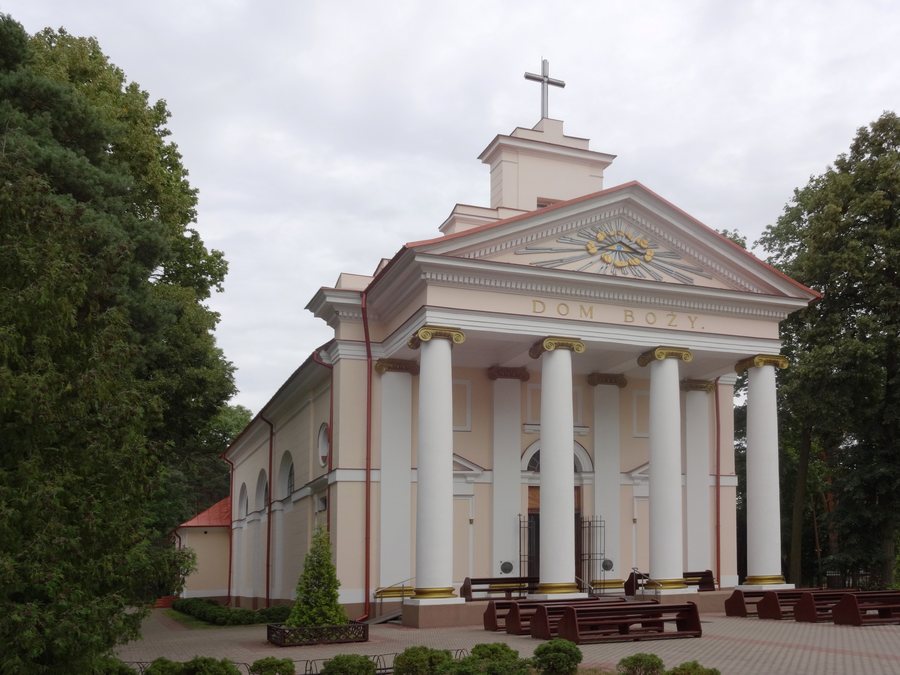 File:PL Wiązowna Adalbert of Prague church exterior.jpg
Photo: Happa via Wikimedia Commons, CC BY 3.0
File:PL Wiązowna Adalbert of Prague church exterior.jpg
Photo: Happa via Wikimedia Commons, CC BY 3.0
Wiązowna at a glance
- Prince Józef Poniatowski had his quarters in Wiązowna in 1809.
- The town’s first wooden church was built in 1580 and later destroyed.
- The final section of the Halinów–Wiązowna hiking trail leads to a church.
- Several trails pass through Wiązowna and are used year-round by cyclists and pedestrians.
- According to the local account, the Półmaraton Wiązowski takes place annually in late February or early March.
What does the town’s history tell us?
Wiązowna’s history spans several different periods. The first wooden church was built in 1580 and later destroyed. In 1589, the parish of Saint Adalbert, Bishop and Martyr, was established by decree of Łukasz Kościelecki, Bishop of Poznań. For travelers interested in cultural history, these details offer insight into the town’s early religious history.
Another historical connection is Prince Józef Poniatowski, who had his quarters in Wiązowna in 1809. The final section of the Halinów–Wiązowna hiking trail leads to a church. This lets you connect some of the town’s history with a walk, without limiting your visit to a single historical topic.
Local tradition also offers explanations for the name Wiązowna. One possible explanation is that it refers to the elm trees said to grow here in great numbers. Another links the name to fetters or chains; according to local tradition, criminals were held in Wiązowna and neighboring villages. Both explanations are possibilities. They add another, folkloric perspective to the town’s history.
What do the trails and running event have to offer?
Several trails pass through Wiązowna and are used year-round by pedestrians and cyclists. If you enjoy walking or would like to include a bike ride in your trip, this is another way to get to know the town beyond its historical connections. You can consider the trails for a walk or bike ride.
The Półmaraton Wiązowski is a seasonal highlight. According to the local account, thousands of people come each year in late February or early March for the half marathon, the 5 km race, or to watch. The event is described there as a recurring competition that has been held for four decades. This brings together different interests: you may be interested in taking part in the race, the shorter distance, or watching. If you want to plan your trip around the event, check the dates of that year’s edition in advance.
How do you choose the focus of your trip?
A simple distinction can help with planning: the town’s history offers several historical points of interest, while the running event and trails provide different ways to stay active. The half marathon takes place toward the end of winter, whereas the trails are described as being used by cyclists and pedestrians year-round. You can shape your trip around what matters most to you: a particular event, history, or physical activity.
If you’re looking for a hotel in Wiązowna, the purpose of your trip can help narrow down your options: would you like to explore the town’s history, experience the Półmaraton, or use the trails as a pedestrian or cyclist?
Discover more destinations: Glinianka, Wola Ducka, Wiązowna Kościelna, Józefów, Lipowo, Otwock Mały, Sobienie Jeziory, Sobienie Szlacheckie.
FAQ
When does the Półmaraton Wiązowski take place?
According to the local account, it is held annually in late February or early March. Check the dates for the edition that might fit your trip.
What activities can you do in Wiązowna?
Several trails pass through the town and are used year-round by pedestrians and cyclists. There is also the Półmaraton Wiązowski, with a half marathon and a 5 km race.
What historical connections does the town have?
Notable historical events include the first wooden church, built in 1580, the establishment of the parish in 1589, and Prince Józef Poniatowski’s quarters in 1809. The final section of the Halinów–Wiązowna hiking trail leads to a church.
For the broader travel overview: Otwock.

