
Sobienie Jeziory: Church Architecture and Places of Remembrance
Accommodation in Sobienie Jeziory
For a stay in Sobienie Jeziory, the cultural highlights can be explored through specific architectural and commemorative sites. The brick parish church of All Saints and a brick wayside shrine offer points of architectural comparison; a monument in the market square and graves in the parish cemetery provide different forms of remembrance.
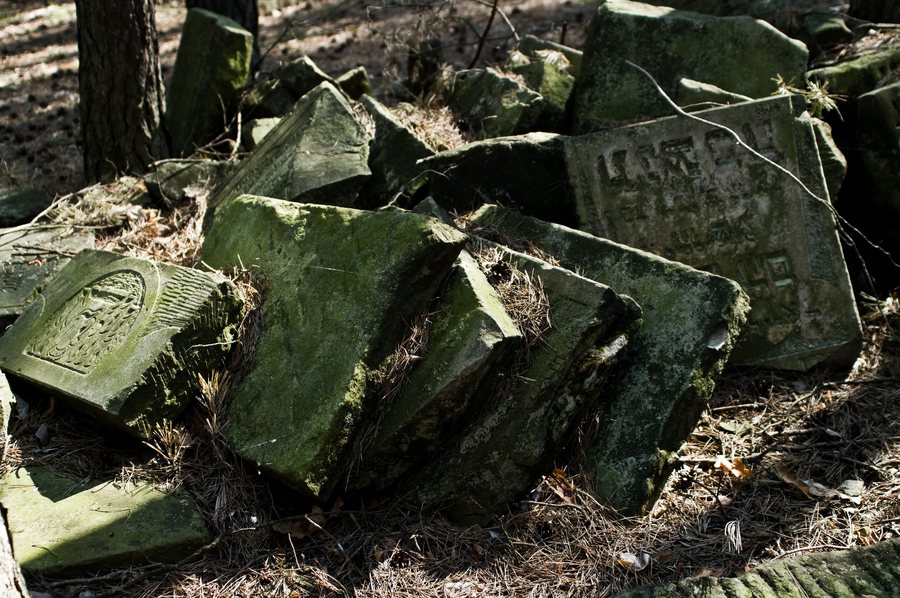 File:Jewish cemetery Sobienie Jeziory IMGP2931.jpg
Photo: Nikodem Nijaki via Wikimedia Commons, CC BY-SA 3.0
Sobienie Jeziory at a glance
- The parish church of All Saints was built by Karol Jezierski in 1806.
- Its unusually tall tower has multi-tiered buttresses at the corners.
- A red-brick wayside shrine on Piwonińska Street has three levels; the two upper levels have a circular ground plan.
- An inscribed monument in the market square commemorates soldiers and residents who lost their lives during the Second World War.
- The parish cemetery contains a mass grave and an individual grave of Polish soldiers who fell on August 26, 1944.
What architectural features define Sobienie Jeziory?
The All Saints Church was built by Karol Jezierski in 1806. Its brick construction and unusually tall tower are two distinct features: the construction date places its origins in time, while the multi-tiered buttresses at the tower’s corners describe its exterior structure. Buttresses are projecting sections of a wall; here, their stepped arrangement at the corners is a particularly distinctive feature of the tower’s architecture.
A second example is the brick wayside shrine made of red brick on Piwonińska Street. It has three levels, with a circular ground plan for the two upper levels. The church and wayside shrine can therefore be compared in terms of material and structure: the church’s form is defined by its tower and buttresses, while the shrine’s is shaped by its stacked levels and the circular form of its upper levels.
How do the places of remembrance differ?
The inscribed monument in the market square commemorates soldiers and residents who lost their lives during the Second World War. The parish cemetery, by contrast, contains a mass grave and an individual grave of Polish soldiers who fell on August 26, 1944. The individual grave is that of the officer Kazimierz Świgoń.
The sites of remembrance thus have different focuses: the monument commemorates soldiers and residents who fell in the war, while the cemetery graves add a specific date and the name of an officer to the act of remembrance. The inscribed monument and the graves are different forms of commemoration, even though both are connected with the consequences of war.
What does the parish cemetery reveal about its layout?
In addition to the soldiers’ graves, the paths and trees shape the description of the parish cemetery. The path follows an irregular course; the historic trees include horse chestnuts, small-leaved lime trees, pedunculate oaks, and Scots pines. This adds spatial and landscape features to the history of the graves, offering a different perspective on the cemetery than the specific date on which the soldiers fell or the name Kazimierz Świgoń.
Which cultural themes suit your travel interests?
You can organize the themes around two main areas: architectural forms and remembrance. The church and wayside shrine offer different architectural features for comparison; the monument and soldiers’ graves differ in their forms of commemoration and their historical context. The cemetery adds its irregular path and historic trees to these themes. This can help you decide whether architecture, commemorative culture, or a combination of the two is of particular interest when planning your trip.
Discover more destinations: Otwock Mały, Glinianka, Sobienie Szlacheckie, Otwock, Nowe Kościeliska, Wola Ducka, Wiązowna, Zakręt.
FAQ
When was the parish church of All Saints built?
Karol Jezierski built the brick church in 1806. Its unusually tall tower has multi-tiered buttresses at the corners.
What is the wayside shrine on Piwonińska Street like?
The brick wayside shrine is made of red brick and has three levels. The two upper levels have a circular ground plan.
What do the places of remembrance in Sobienie Jeziory commemorate?
The monument in the market square commemorates soldiers and residents who fell in the Second World War. The parish cemetery contains a mass grave and an individual grave of Polish soldiers who fell on August 26, 1944; Kazimierz Świgoń is buried in the individual grave.
To the broader travel overview: Otwock.

