
Paczynka: Wayside Crosses and Roadside Chapels
Accommodation in Paczynka
Four religious structures stand on Wiejska Street in Paczynka; the tourist Szlak Okrężny Wokół Gliwic also passes through the village. The structures date from the 18th century to 1901. This gives you a way to understand Paczynka through specific architectural forms and a named route.
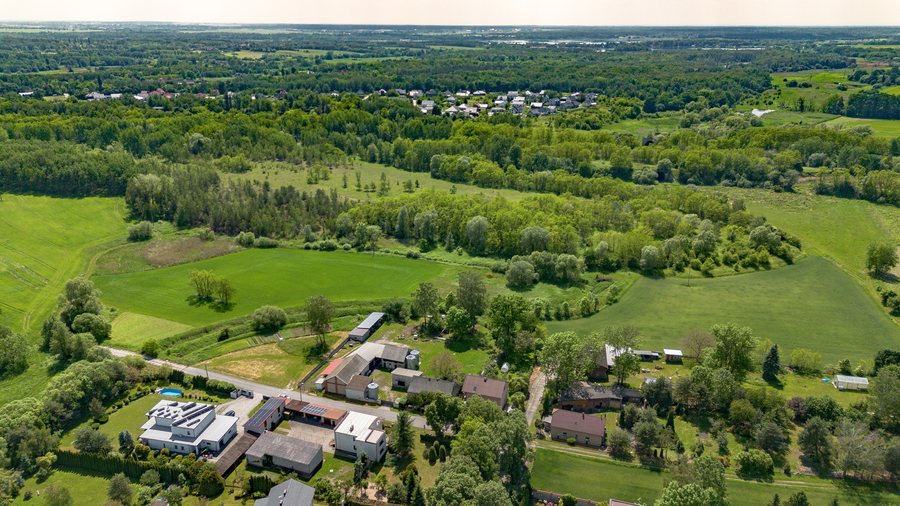 File:Pozostałość po równi stacyjnej budowanej stacji zaplecza technicznego Kolei Ruchu Regionalnego (KRR) w Pyskowicach (Paczynka).jpg
Photo: Piotr Borowiak via Source, CC BY 4.0
Paczynka at a glance
- Wiejska Street 11: a plastered brick wayside cross dating from 1901.
- Stone wayside cross dating from 1896 near the municipal boundary with Pyskowice: it depicts Jesus; a niche contains a figure of the Virgin Mary. The cross was polychromed at a later date.
- Opposite house number 2: a plastered brick roadside chapel dating from the 18th century.
- Opposite house number 6: a brick roadside chapel dating from the 19th century.
- The tourist Szlak Okrężny Wokół Gliwic passes through Paczynka.
How do the two roadside chapels differ?
The century and the materials are the clearest points of comparison between the roadside chapels. Opposite house number 2 is a plastered brick roadside chapel dating from the 18th century; opposite house number 6 is a brick roadside chapel dating from the 19th century. The descriptions therefore distinguish the structures both by period and by construction. Plastered brickwork and brick construction provide two specific architectural descriptions, while the fact that they date from different centuries adds a historical comparison. If you are interested in architecture, these details offer a way to explore Paczynka beyond the shared label of “roadside chapel.”
What do the wayside crosses tell us about when they were built?
The stated construction dates of the wayside crosses are five years apart: the stone cross near the municipal boundary with Pyskowice dates from 1896, and the plastered brick cross at Wiejska Street 11 dates from 1901. The five-year gap also spans the turn of the century: 1896 falls in the late 19th century, while 1901 falls in the early 20th century. The 1896 cross has specific pictorial details: it depicts Jesus, and a niche contains a figure of the Virgin Mary. It was polychromed at a later date. Polychromed means painted in several colors and here refers to a later application of color to the cross. The construction dates and materials can be compared for both crosses; the 1896 cross also has pictorial motifs and a later painted finish.
What role does the route play in planning your trip?
The tourist Szlak Okrężny Wokół Gliwic passes through Paczynka. When choosing a destination, it offers a different perspective from the wayside crosses and roadside chapels: you can consider the route by its course, and the structures by their dates, materials, and design. If you plan to follow the route, check its current condition and accessibility in advance.
Discover more destinations: Bojszów, Paniówki, Rudziniec, Sośnicowice, Chudów, Niewiesze, Knurów, Przyszowice.
FAQ
What structures are on Wiejska Street?
There are two wayside crosses and two roadside chapels: the cross at house number 11, the chapel opposite number 2, a chapel opposite number 6, and the stone cross near the municipal boundary with Pyskowice.
What does the 1896 stone wayside cross depict?
It depicts Jesus; a niche contains a figure of the Virgin Mary. The cross was polychromed at a later date.
Which tourist route passes through Paczynka?
The Szlak Okrężny Wokół Gliwic passes through the village. Before visiting, check the route’s current condition and accessibility.
Go to the main travel overview: Gliwice.

