
Poniszowice: Wooden Church, Park and Hiking Trail
Accommodation in Poniszowice
Poniszowice offers points of interest for travelers interested in historic architecture and a marked hiking trail. The wooden church, churchyard and park each offer something different; the trail continues from Poniszowice toward Gliwice-Łabędy.
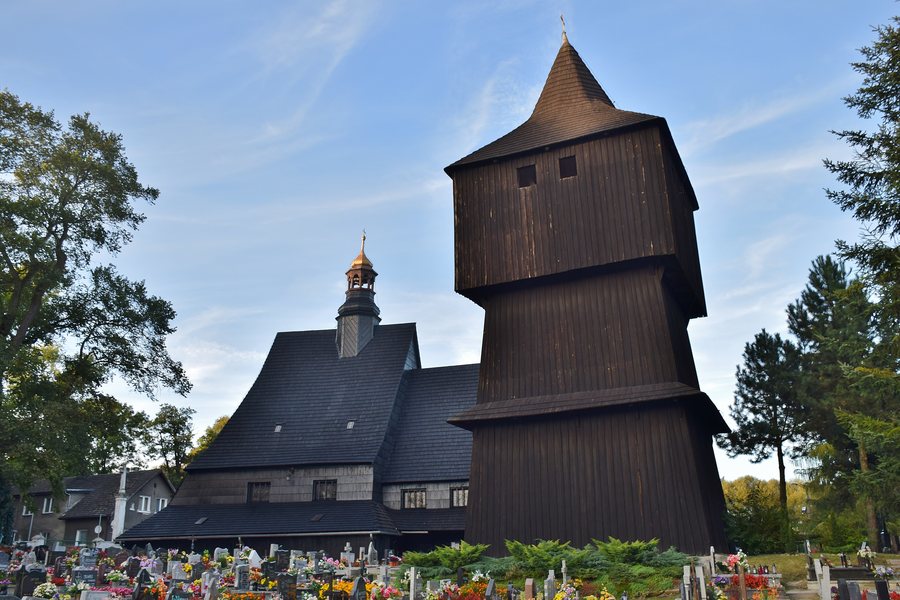
Poniszowice at a glance
The wooden church is dedicated to St. John the Baptist and Our Lady of Częstochowa and is part of the Silesian Wooden Architecture Trail. Its freestanding bell tower dates from the 16th century. The churchyard dates back to the 15th century; a stone cross within the churchyard wall on Cicha Street dates from 1844. The park belonging to the manor and park complex on Parkowa Street dates from 1830. The red-marked Szlak Ziemi Gliwickiej hiking trail passes through Poniszowice.
What historic traces can you discover?
The wooden church’s construction history can be traced through several dates: it was built in 1499, extended with a side chapel in the 17th century, and expanded in the second half of the 18th century. The freestanding bell tower, dating from the 16th century, adds another layer to this picture. If you are interested in historic architecture, you can distinguish between different periods of construction rather than reducing the church’s history to a single date. Its place on the Silesian Wooden Architecture Trail also situates it within the broader context of traditional wooden architecture.
The churchyard around the Church of St. John the Baptist is another historic point of interest. Its origins date back to the 15th century. A stone cross from 1844 stands within the churchyard wall on Cicha Street. The dates associated with the churchyard and the cross differ considerably, making the site interesting even if you want to notice specific historic details beyond the church itself.
What is known about the park?
The park belonging to the manor and park complex on Parkowa Street is dated to 1830. It offers another historic point of interest in Poniszowice, separate from the church’s construction history. In a notice dated January 23, 2026, the municipality announced that the park revitalization had been completed. This included maintenance work, tidying the grounds, and installing new recreational infrastructure.
When planning your trip, it is helpful to treat the historic park and the completed work as two separate aspects: 1830 refers to the park’s origins, while the revitalization concerns later improvements. This helps distinguish the site’s history from its more recent development.
Where does the hiking trail lead?
The red-marked Szlak Ziemi Gliwickiej leads from Poniszowice through Niewiesze and Rzeczyce to Gliwice-Łabędy. This sequence of places gives you a clear overview of the route described. If you are mainly interested in a marked hiking route when planning your trip, you can consider this trail separately from the historic buildings.
The route and the sights answer different planning questions: the trail follows a named route through several places, while the church, churchyard and park offer historic points of interest in Poniszowice. So first consider whether you are more interested in architectural history and cultural heritage or in the course of a hiking route. These are two different ways to explore Poniszowice.
If you would like to compare other destinations, also discover Knurów, Rudziniec, Chudów, Paniówki, Bojszów, Pyskowice, Przyszowice and Sośnicowice.
FAQ
When was the wooden church built?
The wooden church in Poniszowice was built in 1499. A side chapel was added in the 17th century, and the church was expanded in the second half of the 18th century.
Where does the Szlak Ziemi Gliwickiej lead?
The red-marked hiking trail leads from Poniszowice through Niewiesze and Rzeczyce to Gliwice-Łabędy.
What work did the park revitalization involve?
The municipality announced that the revitalization had been completed and mentioned maintenance work, tidying the grounds, and the installation of new recreational infrastructure.
For the wider travel overview: Gliwice.

