
Bagicz – Walking Route, Airfield and History
Accommodation in Bagicz
Bagicz combines a green-marked circular walking route with an airfield associated with tourist sightseeing flights and a military past. There is also a former Protestant cemetery with surviving grave monument remains. For your planning, there is a choice of different themes: a route on foot, flights by plane or powered paraglider, and historical traces in the village.
Bagicz at a glance
- An approximately 26-kilometre green-marked circular walking route passes through Bagicz and several other places.
- Bagicz Airfield is associated with tourist sightseeing flights by plane and powered paraglider; their availability may vary depending on operations.
- The airfield was built in 1935–1936 as a base for the German Luftwaffe and, after 1945, was one of the largest Soviet Army bases in Poland until 1992.
- The Protestant cemetery dates from the late 19th century and is entered in the monument register and the list of monuments.
What routes and experiences are available?
The circular walk starts in Ustronie Morskie and runs via Sianożęty, Bagicz, Kukinia, Rusowo, Gwizd and Wieniatowo before returning to Ustronie Morskie. Bagicz is therefore a place along the described route, not its starting or ending point. The route is approximately 26 kilometres long; the green markers and the named stops give you concrete reference points for understanding its course. The trail also heads towards the natural monuments of the “Bolesława” and “Warcisława” oaks. Check local conditions before setting out.
Tourist sightseeing flights by plane and powered paraglider, associated with Bagicz Airfield, offer a different kind of experience. This puts a marked walking route and sightseeing flights side by side as distinct options. If you are planning a flight, check availability in advance: it may vary depending on operations. The approximate length and route of the walk are concrete reference points for your planning; for flights, by contrast, the practical point to consider is current availability.
What do the airfield and cemetery tell us about history?
The airfield was built in 1935–1936 as a base for the German Luftwaffe. After 1945, it served as one of the largest Soviet Army bases in Poland until 1992. These dates make clear that the airfield’s history extends far beyond the tourist sightseeing flights associated with it. Its historical military use and the sightseeing flights are two distinct aspects of the airfield.
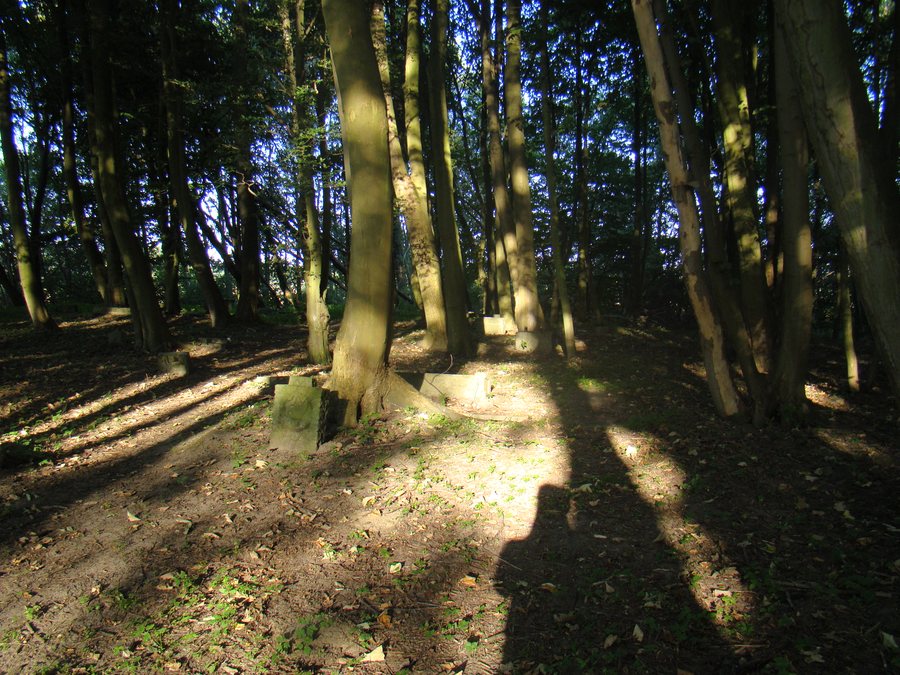
The former Protestant cemetery also offers a tangible glimpse into local history. It was in use around the turn of the 20th century. The remains of broken gravestones and grave slabs, as well as metal crosses, have survived. Names and dates of birth and death are still legible on some of them. The cemetery dates from the late 19th century and is entered in both the monument register and the list of monuments. When it was located within the grounds of a Soviet military unit, it was inaccessible to outsiders; this is part of its history at the time.
How can you choose a focus for your stay?
To choose between the experiences described, it helps to start by considering the type of activity. The walk offers a clearly described circular route with an approximate length, green markers, several stops and a route towards two named natural monuments. Sightseeing flights are a different option, and you should check their availability in advance. The cemetery adds historical traces to these two themes: grave monument remains, legible inscriptions and its listing as a monument. You can plan around whether the route, a sightseeing flight or local history is your main interest, without having to combine these different offerings into a single outing.
Discover more destinations: Stramnica, Grzybowo, Dygowo, Bogusławiec, Nowogardek, Charzyno, Dzwirzyno, Goscino.
FAQ
How long is the circular walking route?
The green-marked route is about 26 kilometres long and runs from Ustronie Morskie via several places, including Bagicz, before returning to Ustronie Morskie.
What tourist flights are associated with the airfield?
Sightseeing flights by plane and powered paraglider are mentioned. Availability may vary depending on operations.
What traces have survived at the cemetery?
The remains of broken gravestones and grave slabs, as well as metal crosses, can be seen; names and dates of life are legible on some of them.
For the broader travel overview: Kolberg.

