
Năsăud: Museums, Churches and the Someșul Mare
Accommodation in Năsăud
Năsăud is home to a striking historic landmark: the building of the Muzeul Grăniceresc Năsăudean (“Şvarda”). It is the former barracks of the 2nd Romanian Border Regiment, built in 1770 and considered a historic monument.
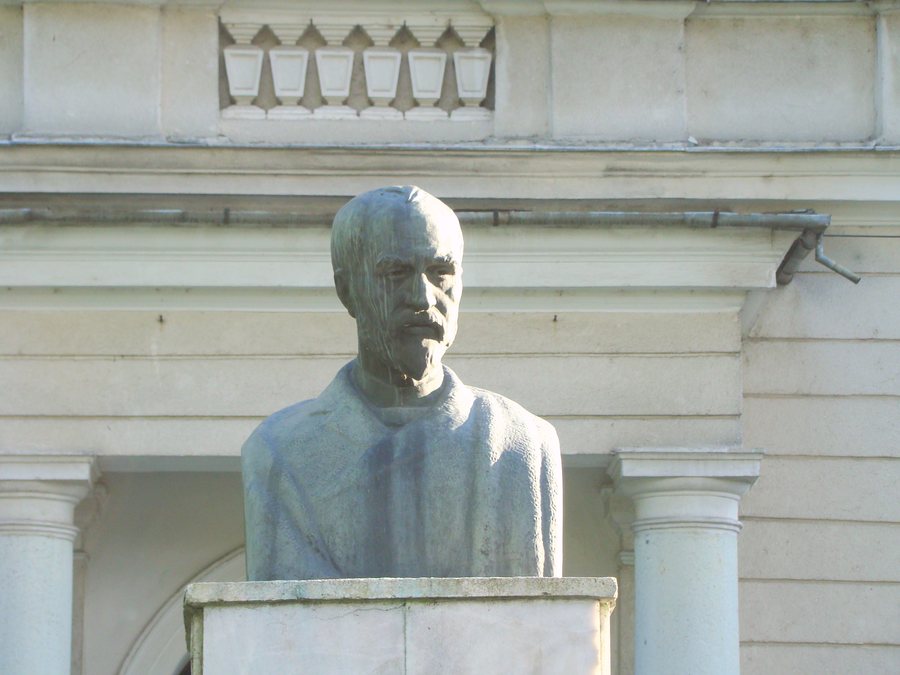 File:RO BN Bustul lui George Cosbuc din Nasaud (1).jpg
Photo: Țetcu Mircea Rareș via Wikimedia Commons, CC BY-SA 4.0
File:RO BN Bustul lui George Cosbuc din Nasaud (1).jpg
Photo: Țetcu Mircea Rareș via Wikimedia Commons, CC BY-SA 4.0
Culture and History
The Muzeul Grăniceresc Năsăudean includes an ethnographic open-air section in the rear courtyard, completed in 2010. It contains a farmhouse from Ilva Mare, a draw well, a large press for must and oil, a cart, a sled, a courtyard gate and a boundary stone.
The Muzeul Memorial “Liviu Rebreanu” displays personal belongings and photographs of the writer. They document his life from his youth through his final year, 1944. The museum opened on 2 June 1957 in a house built according to the floor plan of the former house in Prislop, where the writer’s parents lived. The house stands on the edge of the village on the side facing Năsăud.
A permanent book exhibition at the Muzeul Memorial “Liviu Rebreanu” covers Liviu Rebreanu’s complete works, including numerous translations into more than twenty foreign languages.
The Orthodox church “Sf. Nicolae” stands in the city centre. It is listed in the register of historic monuments under monument code BN-II-m-B-21123. The church is located on the eastern side of the central market square and dates from 1880 to 1884. The Roman Catholic church “Sf. loan Nepomuk” dates from the second half of the 18th century.
The “Someşana” folklore ensemble was founded in 1963. The programme of the 2023 edition of the Maialului Elevilor Năsăudeni included a parade in traditional costumes.
The cultural highlights thus range from personal literary history and ethnographic objects to church architecture, folklore and an event programme tied to a specific period.
Năsăud’s intermodal transport area is located around Năsăud railway station and the adjacent bus station.
The cultural sites mentioned and the intermodal transport area relate directly to Năsăud. The protected area, by contrast, extends as a continuous corridor from Năsăud to Ilva Mică and includes not only the low-water and flood channels but also the floodplain and slopes. The urban sites relate directly to Năsăud, whereas the protected area relates to the continuous corridor from Năsăud to Ilva Mică.
When choosing a hotel in Năsăud, travel dates, room category and cancellation conditions can be compared as criteria for timing, room selection and flexibility.
You can find more destinations for comparing trips with Romuli, Poiana Ilvei, Piatra Fântânele, Zagra, Uriu, Sângeorz-Băi, Valea Borcutului and Crainimăt.
Nature
The site of community interest R0SCI0232 Someșul Mare Superior is located in Bistrița-Năsăud County, in the northeastern part of the Transylvanian Basin. It extends as a continuous area along the Someșul Mare corridor between Năsăud and Ilva Mică. The protected area includes sections of the low-water channel, flood channel, floodplain and slopes; among other places, it lies within the territory of the city of Năsăud.
For the higher-level travel overview: Bistrita-Nasaud.

.jpg)