
Discover Crainimăt: Church Ensemble, History and Landscape
Accommodation in Crainimăt
Crainimăt is characterized by a Bronze Age settlement, a fortified evangelical church ensemble and several named landscape features. Archaeology, church architecture and regional natural features represent different facets of the place.
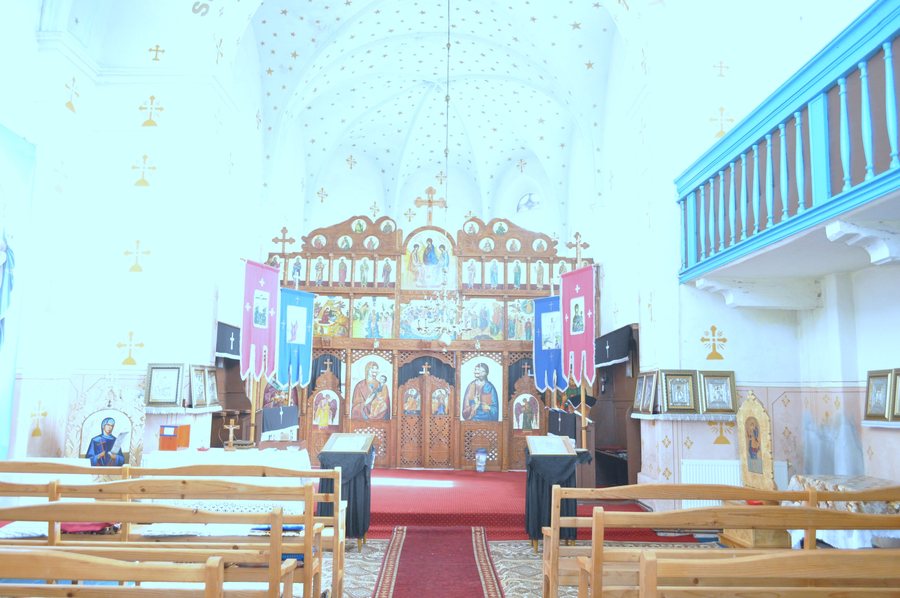 File:RO BN Biserica evanghelica din Crainimat (1).jpg
Photo: Țetcu Mircea Rareș via Wikimedia Commons, CC BY-SA 4.0
File:RO BN Biserica evanghelica din Crainimat (1).jpg
Photo: Țetcu Mircea Rareș via Wikimedia Commons, CC BY-SA 4.0
History
In Crainimăt, a Bronze Age settlement is registered as a historic monument under LMI code BN-I-s-B-01327. The archaeological site is classified as a settlement or habitation site and is located at the exit from Crainimăt, on the right-hand side of DJ Crainimăt–Șieu. The medieval name “villa Querali” is part of Crainimăt’s local history.
The site thus links a specific location with a Bronze Age settlement and its designated monument status. The medieval name “villa Querali” adds an older designation for Crainimăt to this historical context.
Culture
The church is located in the southern part of Crainimăt, on a hill. The enclosing wall of the evangelical church ensemble in Crainimăt dates from the 16th century. On the northern side of the enclosing wall of Crainimăt’s fortified church, as viewed from the village, stands a square gate tower with three storeys. After the exodus of the Transylvanian Saxons, the church was purchased by the Orthodox community. After the interior was adapted for Orthodox worship, the church in Crainimăt was dedicated to “Sfântul Mare Mucenic Dimitrie, izvorâtorul de mir”.
The architectural features include the church’s elevated location, the historic enclosing wall and the three-storey gate tower on its northern side. Its later use by the Orthodox community and the dedication to “Sfântul Mare Mucenic Dimitrie, izvorâtorul de mir” are also part of the history of this church building.
Landscape
The hydrographic reference point of the church ensemble is the Șieu stream. Dealul Budurlenilor is a hill in the wider regional surroundings of Crainimăt. Dealul Săsarmului is a hill in the wider regional surroundings of Crainimăt, as is Dealul Măluţ. Izvoarele Mestecenilor is a spring in the wider regional surroundings of Crainimăt. The stream is associated with the church ensemble, while the named hills and the spring are each located in the wider regional surroundings of Crainimăt.
Thus, the church ensemble has an associated watercourse, while several independently named landscape features are located in the wider regional surroundings: the hills Dealul Budurlenilor, Dealul Săsarmului and Dealul Măluţ, as well as the spring Izvoarele Mestecenilor.
For your planning, it is useful to consider the church ensemble and the archaeological site as two separate points of reference: the church is located in the southern part of the village, on a hill, while the Bronze Age settlement is at the exit from the village, on the right-hand side of DJ Crainimăt–Șieu.
When choosing a hotel in Crainimăt, travel dates, room category and cancellation conditions can serve as practical points of comparison.
Surroundings
The wider regional surroundings of Crainimăt include Biserica Ortodoxă Fântâniţa, Biserica Reformată Nouă Fântâniţa, Biserica Reformată Fântâniţa and Biserica Ortodoxă Delureni.
Other places: Bistriţa, Telciu, Şieu-Măgheruş, Bretea, Uriu, Zagra, Sângeorz-Băi, Sebiş
For the higher-level travel overview: Bistrita-Nasaud.

.jpg)