
Şieu-Măgheruş between Archaeology and Salt Massif
Accommodation in Şieu-Măgheruş
Şieu-Măgheruş has a clear historical focal point in the village centre: the archaeological site Situl arheologic de la Şieu-Măgheruş - Vatra Satului lies on the middle terrace in the centre of Şieu-Măgheruş, around the former evangelical church.
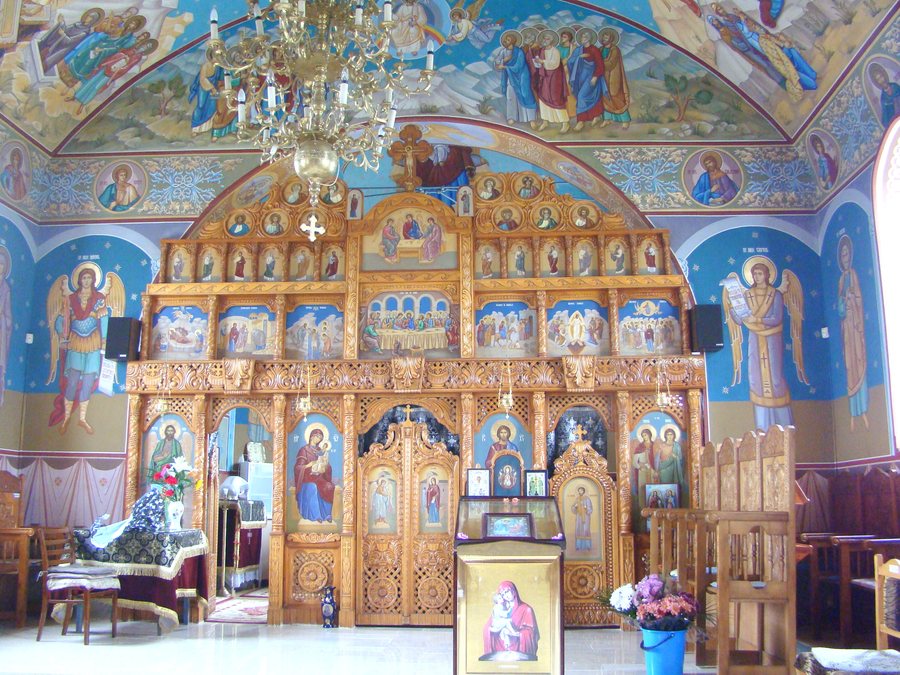 File:RO BN Biserica Sfintii Arhangheli din Sieu-Magherus (1).jpg
Photo: Țetcu Mircea Rareș via Wikimedia Commons, CC BY-SA 4.0
File:RO BN Biserica Sfintii Arhangheli din Sieu-Magherus (1).jpg
Photo: Țetcu Mircea Rareș via Wikimedia Commons, CC BY-SA 4.0
Culture
The site includes open settlements from the Eneolithic, Bronze Age, Hallstatt period and Middle Ages. A Neolithic settlement near Şieu-Măgheruş is dated to 3500–3200 BC; ceramic fragments and worked stone or stone intended for working were found at the Neolithic settlement. The dating and the finds provide specific indications of the archaeological focus.
The historical references therefore extend from early settlements to evidence of the village’s history from the 18th, 19th and 20th centuries. Rákóczi Castle dates from the 18th century. There was a synagogue in the village by 1830 at the latest. From 1880 to 1930, the village’s Jewish community had its own rabbi. Archaeological, architectural and community-history details thus stand alongside one another as distinct historical themes.
Nature
In the municipality of Şieu-Măgheruş, the Sărățel salt massif is designated as a geological reserve; there is also an outcrop with exposed salt, saline springs and sapropelic mud. Near Sărățel there are naturally formed saltwater pools where people bathe and apply clay or mud. The natural area therefore includes both geological formations and water and mud deposits.
The Arcalia dendrological park contains more than 150 species of trees and shrubs. The Arcalia complex can be reached via the Cluj-Napoca–Dej–Bistrița road and via Arcalia railway station. Geological features, saltwater pools, and tree and shrub species represent different focal points. The information thus connects Sărățel with its salt deposits and Arcalia with the diversity of the dendrological park.
The three thematic areas differ clearly: early settlement history, geological natural features, and the diversity of the dendrological park. In the surrounding region, churches, hills and a spring add to this context.
Surrounding Region
In the wider region surrounding Şieu-Măgheruş lies Dealul Budurlenilor hill. The churches Biserica Ortodoxă Fântâniţa, Biserica Reformată Nouă Fântâniţa and Biserica Reformată Fântâniţa are also located there. Biserica Ortodoxă Delureni is likewise in the wider region surrounding Şieu-Măgheruş. The wider region also includes Dealul Săsarmului hill, Dealul Măluţ hill and the Izvoarele Mestecenilor spring. The regional context thus includes named hills, churches and a spring.
When choosing a hotel in Şieu-Măgheruş, booking pages can show travel dates, room category and cancellation policies together. The travel period, preferred room type and respective conditions remain separate details and can be distinguished in terms of their relevance to personal planning, without being merged into a single feature.
Further pages for local destinations lead to Bistriţa, Romuli, Sebiş, Năsăud, Valea Borcutului, Zagra, Poiana Ilvei and Sângeorz-Băi.
For the higher-level travel overview: Bistrita-Nasaud.

.jpg)