
Nehoiu: Hiking, Water and Historical Traces
Accommodation in Nehoiu
Nehoiu lies along the upper Buzău River at an altitude of 450–500 meters, in the basin of the same name at the foot of the Munții Siriu and Podu Calului mountains. From Nehoiu, hiking routes lead toward the Munții Siriu, Podu Calului and Penteleu mountains. In the wider regional area around Nehoiu, the Masivul Penteleu massif has marked hiking trails that are accessible to both beginners and experienced hikers.
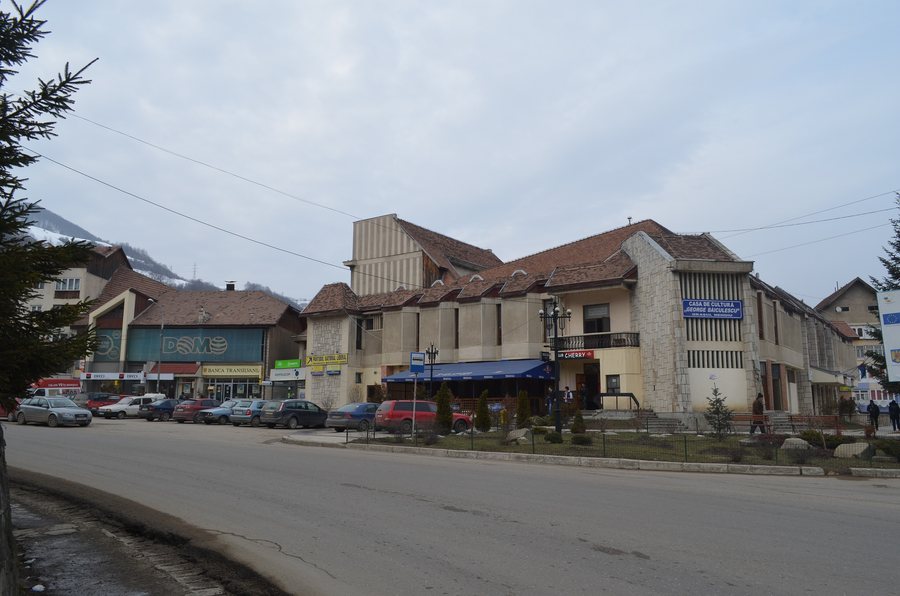
When choosing a hotel in Nehoiu, travel dates, room category and cancellation conditions can be considered as separate comparison points. These factors stand alongside the themes of mountains, water, cycling routes and history. The different themes can be considered separately in Nehoiu: water and cycling each follow their own route logic, while hikes are oriented toward several mountain areas. Culture and history focus on different points, ranging from religious buildings to the Göetz sawmill and the former railway station. When choosing a hotel in Nehoiu, travelers can weigh these three details alongside their personal priorities of hiking, water, cycling and culture. This keeps the comparison clear, even when a trip combines several different themes around Nehoiu.
Water and Cycling
On the Buzău, the rafting and kayaking route begins at the Nehoiașu hydroelectric power station near the confluence of the Bâsca and Buzău rivers. It heads toward Nehoiu and extends to the Valea Lupului area near Pătârlagele. The rafting route on the Buzău is of medium difficulty and alternates between fast-flowing and calm sections. When comparing activities, the course of the waterway, hiking area and cycling route can be considered as distinct planning lines.
The Nehoiu–Lacul Siriu–Gura Siriului–Nehoiu cycling route starts in Nehoiu and leads via Lacul Siriu and Gura Siriului back to Nehoiu. Those who combine cycling with hiking and water activities can structure the sequence of days according to the desired type of activity.
Culture
The Orthodox Cathedral of “Sfântul Mare Mucenic Gheorghe” in Nehoiu was built in the old Romanian style and shows influences from the Brâncovenesc period. The historic industrial complex of the Göetz sawmill in Nehoiu was built between 1908 and 1910 by the Austrian company Göetz to process timber from the Buzău Mountains along the upper reaches of the river. The wooden church of “Adormirea Maicii Domnului” in Nehoiașu – Nehoiu town, Buzău County – is a historic monument. Gaura Tătarilor is one of the two rock settlements discovered within the boundaries of Nehoiu and is located near Mlăjet. Nehoiu therefore brings together religious architecture, industrial history and a rock settlement as distinct cultural points of interest.
History
The former railway station building in Nehoiu was inaugurated in 1909. The Buzău–Nehoiașu railway line connects the city of Buzău with places in the Buzău Valley.
More destinations: Cozieni, Buzău, Valea Sălciilor, Măgura, Fântânele, Berca, Ciuta, Cislău.
The Centrul Național de Informare Turistică Nehoiu is located at Calea Mihai Viteazu No. 43b in Nehoiu.
For the higher-level travel overview: Buzau.

.JPG)