
Mangalia – Callatis, Sulfur Springs and Harbor Cruises
Accommodation in Mangalia
Mangalia is a seaside resort with mineral, sulfur and mesothermal springs. At this destination, historical, nature-related and maritime interests can be considered separately.
History and Culture
The Callatis Archaeological Museum in Mangalia presents a permanent exhibition with approximately 4,000 objects. The papyrus tomb in the Callatis Archaeological Museum dates from the 4th century BC and has been restored and preserved as part of the permanent exhibition. The papyrus found in the papyrus tomb is considered the only artifact of its kind discovered in Romania and the oldest papyrus in Europe.
The ancient city of Callatis was founded at the end of the 6th century BC by Dorian colonists from Heracleea Pontică. Part of a Roman-Byzantine quarter of Callatis, which developed between the 4th and 7th centuries, has been preserved beneath the Hotel President in Mangalia. The ruins of Callatis include the Syrian Basilica, a Christian religious building unique in Dobruja.
The Esmahan Sultan Mosque is located on Oituz Street at the edge of the ancient city of Callatis. It is considered Romania’s oldest Muslim place of worship and was built in 1575. The Esmahan Sultan Mosque is also a stop on Mangalia’s historical city tour.
The Mangalia Marine Museum displays navigational and maritime cultural heritage objects in two exhibition rooms and a thematic library.
The historical sites represent different periods and forms of cultural heritage: Callatis connects the history of Greek colonization with Roman-Byzantine traces, while the mosque and the Marine Museum open up additional religious and maritime perspectives on Mangalia.
Nature and Water
The ecosystem of Mangalia’s sulfur-bearing aquifer comprises onshore sulfur springs in Mangalia and the surrounding area, as well as underwater sulfur springs on the floor of the Black Sea. The shallow underwater sulfur springs in Mangalia’s sulfur groundwater system are accessible at depths of 0 to 25 meters by scuba diving and snorkeling.
The different locations are relevant when classifying the water attractions: the onshore springs belong to the aquifer in Mangalia and the surrounding area, while the other springs lie on the floor of the Black Sea. The stated depth of 0 to 25 meters describes the range in which the underwater springs are accessible by scuba diving and snorkeling. The springs, beach and harbor therefore remain separate topics.
Coast and Harbor
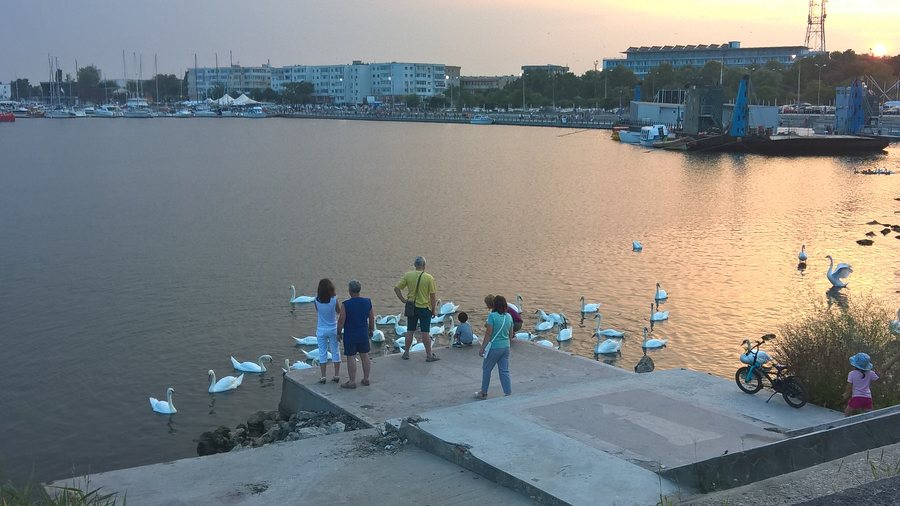
Mangalia Beach is part of Constanța County’s cultural tourism route. The Mangalia tourist harbor is a departure point for yacht trips; boat tours and fishing trips are also available from there.
At the harbor, the options mentioned differ in purpose: yacht trips, boat tours and fishing trips are listed separately. The beach, by contrast, is not presented as a harbor offering, but as part of a cultural route in Constanța County. This makes it possible to clearly distinguish the coastal area, maritime activities and cultural context.
In 2026, Mangalia hosted the 22nd edition of the International Festival of Light Music and Folklore, “Festivalul Tinereții”.
When comparing hotels in Mangalia, you can review travel dates, room category and cancellation conditions side by side on the offers page. Depending on your travel plans, the three details can be weighted differently and complement the content-oriented overview of culture, nature, beach and harbor.

.jpg)